


Uncategorised
Why reduce indoor odors: health and comfort explained

People spend approximately 90% of their time indoors, where pollutant levels run 2 to 5 times higher than outdoors. Understanding why reduce indoor odors matters starts here: indoor smells are not mere nuisances. They are signals that harmful compounds, including volatile organic compounds (VOCs), biological contaminants, and combustion byproducts, are present in the air you breathe. The US Environmental Protection Agency (EPA) and independent researchers confirm that persistent indoor odors trigger measurable physical symptoms and long-term health decline. Addressing them protects both your health and your daily comfort.
Why do indoor odors signal a health risk?
Indoor odors are produced by identifiable pollutant sources, not abstract “bad air.” The most common sources include tobacco smoke, mould and bacterial growth, VOCs from furnishings and cleaning products, cooking byproducts, and human body odours. Each of these releases chemical compounds that mix into the air you breathe continuously.
The health consequences are well documented. Persistent indoor odors have been linked to Sick Building Syndrome (SBS) and Building-Related Illnesses (BRI), conditions that cause headaches, nausea, and vomiting in affected occupants. SBS is particularly significant because symptoms appear without a single identifiable cause, making odor-laden air a silent contributor to chronic ill health.
“Indoor odors activate the behavioural immune system via the vagus nerve, causing stress, headaches, nausea, and respiratory irritation. The biological plausibility between malodours and Sick Building Syndrome symptoms is now well established in the scientific literature.”
Indoor Odor Pollution: An Interdisciplinary Review
The key pollutant categories behind indoor smells include:
- VOCs from paints, adhesives, synthetic furnishings, and cleaning sprays
- Bio-odorants from mould colonies, bacteria, and damp materials
- Combustion gases from cooking, candles, and tobacco
- Human odours from skin, breath, and metabolic processes
Understanding indoor pollutant sources helps you target the right solution rather than reaching for a spray can.
How does your body respond to bad indoor smells?
The human olfactory system is not passive. It processes odor signals within 300 milliseconds as an evolutionary defence mechanism, triggering avoidance behaviour before conscious thought occurs. That instinctive recoil from a bad smell is your body protecting itself.
This response is part of what researchers call the behavioural immune system. Unpleasant odors act as innate warning signs, prompting the body to mount a stress response even when the source is not immediately dangerous. The result is a cascade of physical and psychological effects:
- Elevated cortisol and stress hormone levels
- Headaches and difficulty concentrating
- Nausea and appetite suppression
- Heightened anxiety and irritability
The long-term picture is equally concerning. Chronic exposure to indoor odors leads to mental fatigue, disrupted sleep quality, and a measurable decline in general well-being. This matters particularly in the UAE, where residents spend extended periods indoors due to heat, making indoor air quality a year-round concern rather than a seasonal one.
Pro Tip: If you or your family regularly experience unexplained headaches or fatigue at home, check for persistent low-level odors first. They are often the overlooked cause.

What are the most effective methods to reduce indoor odors?
The EPA recommends a clear hierarchy of controls for managing indoor air quality: source control first, ventilation second, and filtration third. Skipping to filtration without addressing the source produces limited results.
Step 1: Source control
Source control means removing or reducing the origin of the odor. This includes:
- Eliminating tobacco smoke indoors entirely
- Repairing water leaks and treating mould growth promptly
- Replacing high-VOC products with low-VOC alternatives
- Disposing of waste and organic matter regularly
- Cleaning soft furnishings, carpets, and upholstery that trap bio-odorants
Low-VOC materials and moisture control significantly decrease odor emissions, particularly in new buildings where VOC concentrations are at their highest during the first 3 to 6 months of occupancy.
Step 2: Ventilation
Ventilation dilutes and removes odor-laden air. Natural ventilation is cost-effective but depends on outdoor air quality, which in urban UAE environments can be poor due to dust and traffic pollution. Mechanical ventilation offers controlled airflow but consumes more energy. The right choice depends on your building type and local outdoor conditions.
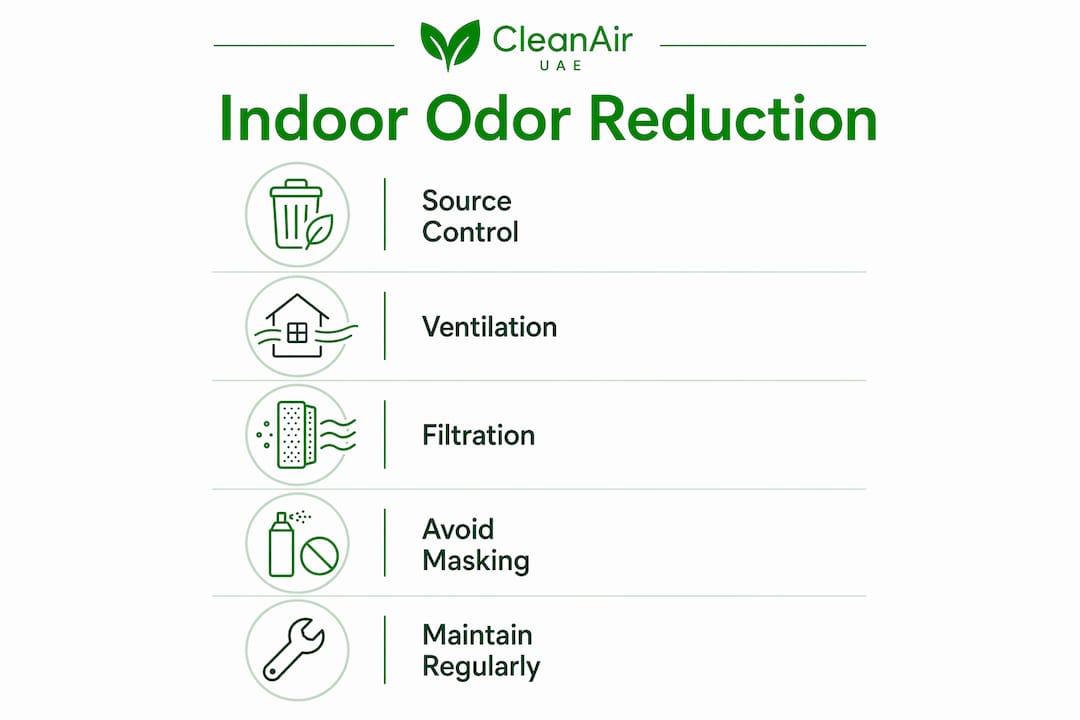
Step 3: Filtration
Filtration supplements source control and ventilation. The filter type matters enormously.
| Filter type | What it removes | Effective for odors? |
|---|---|---|
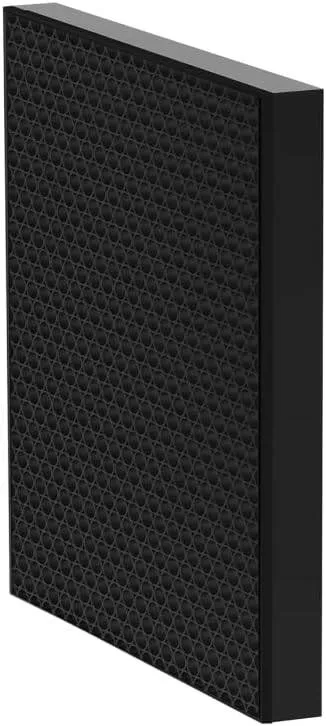
| HEPA filter | Particles (dust, pollen, mould spores) | No |
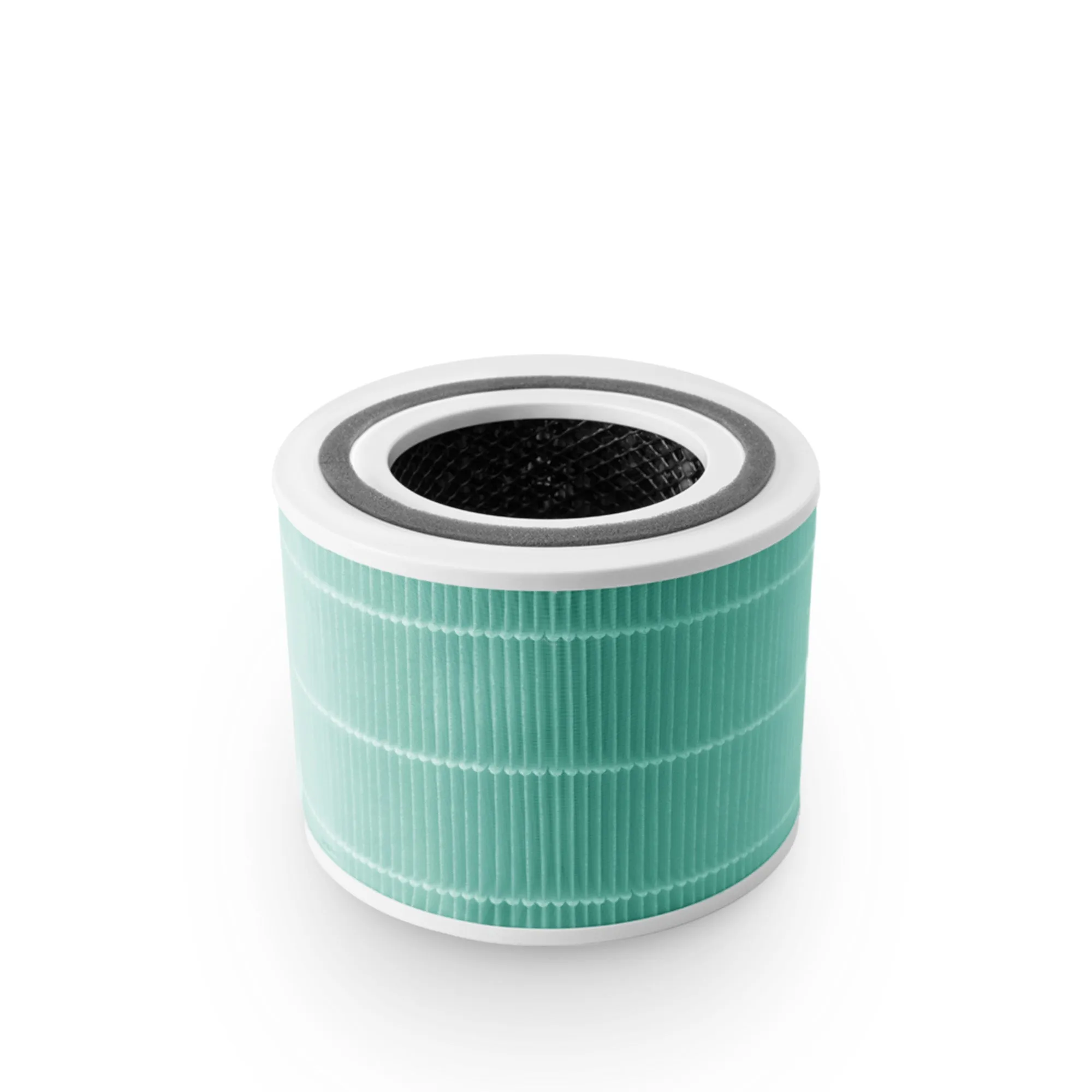
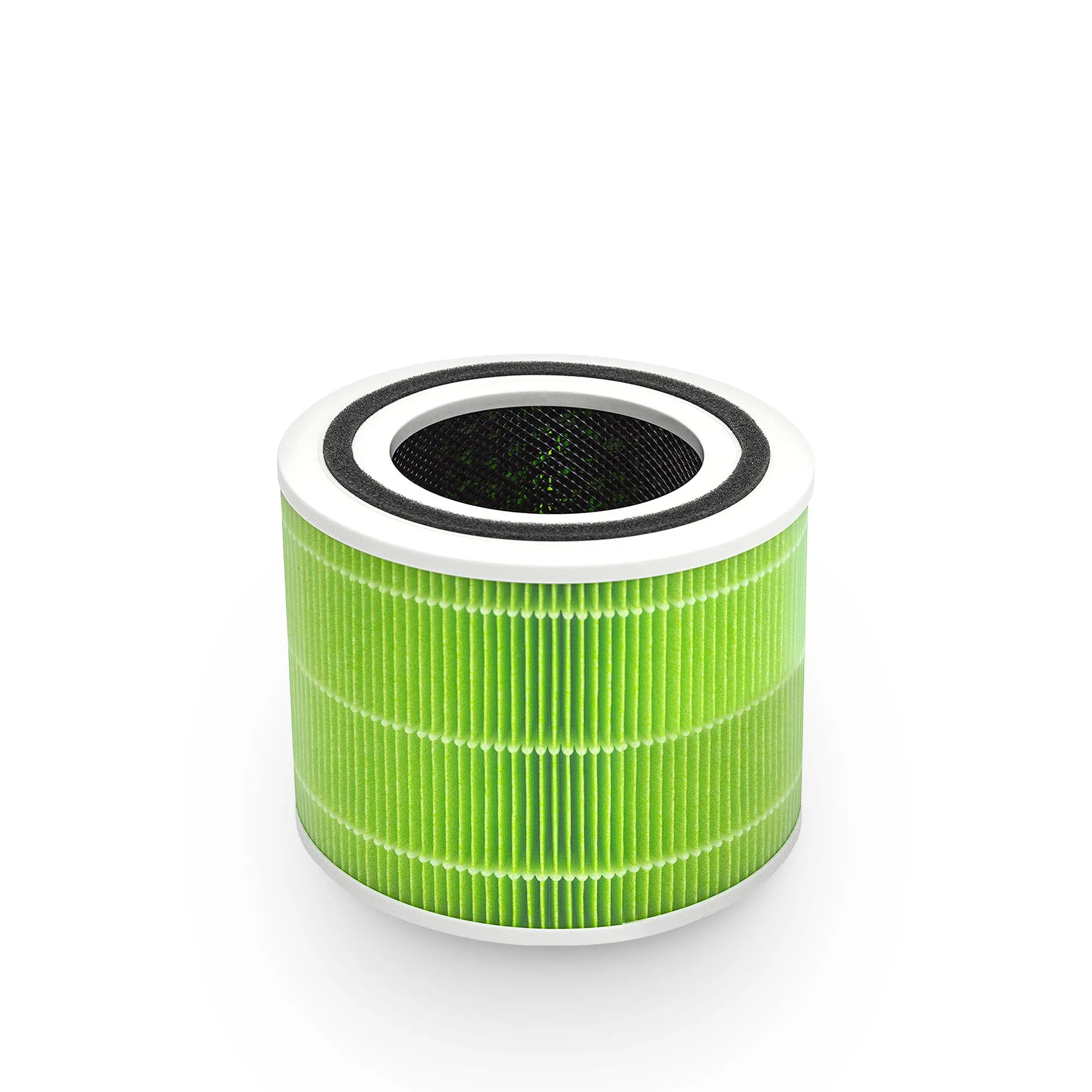
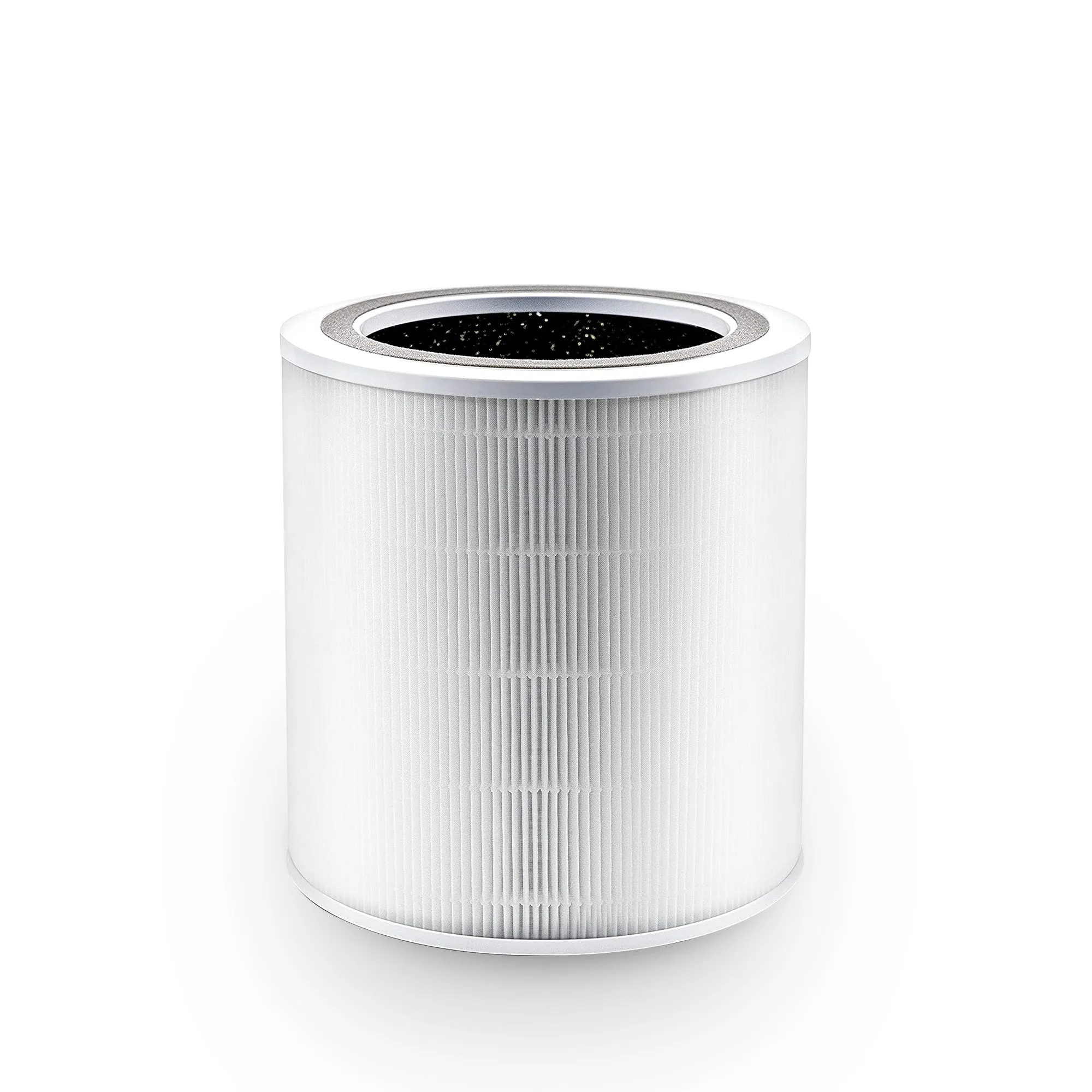
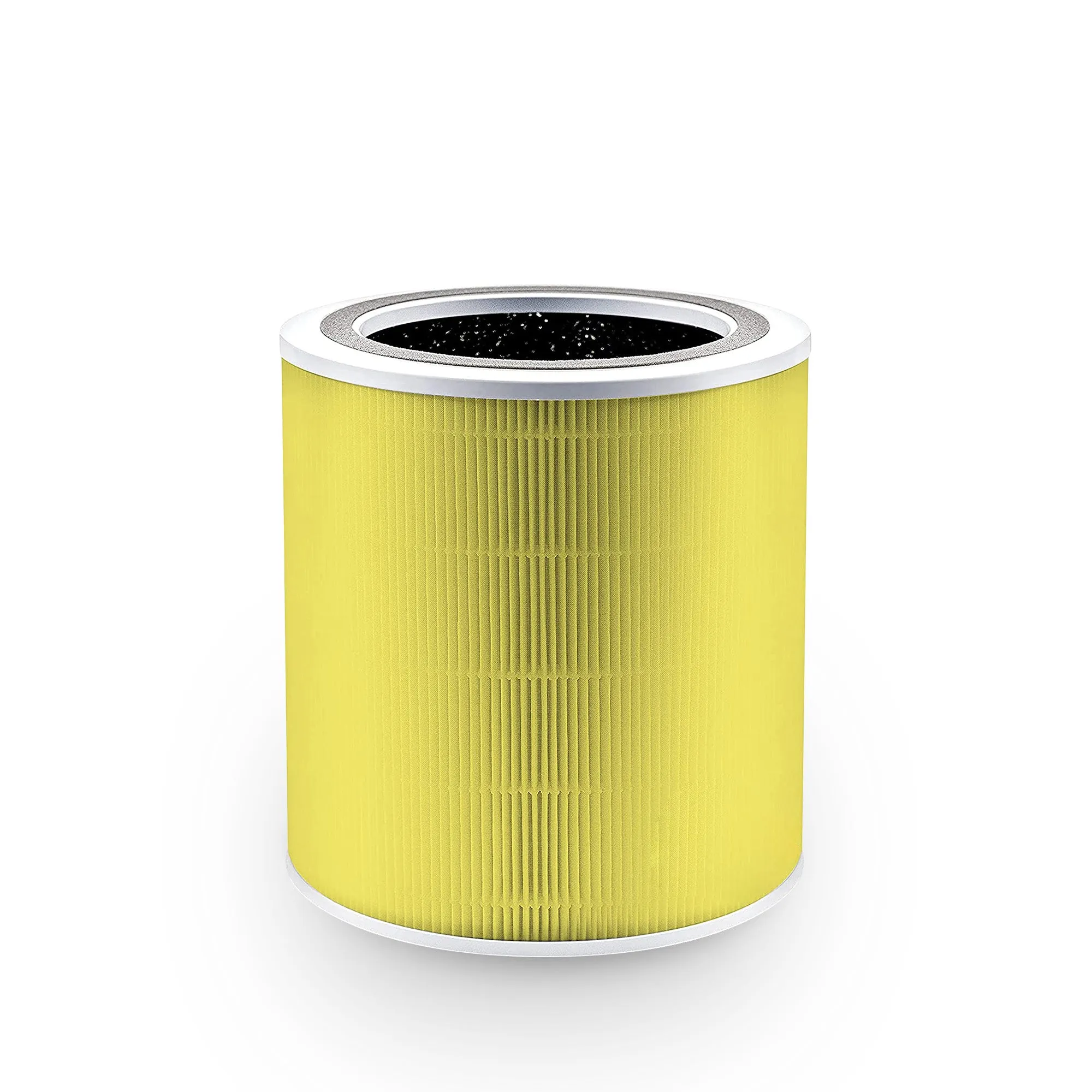
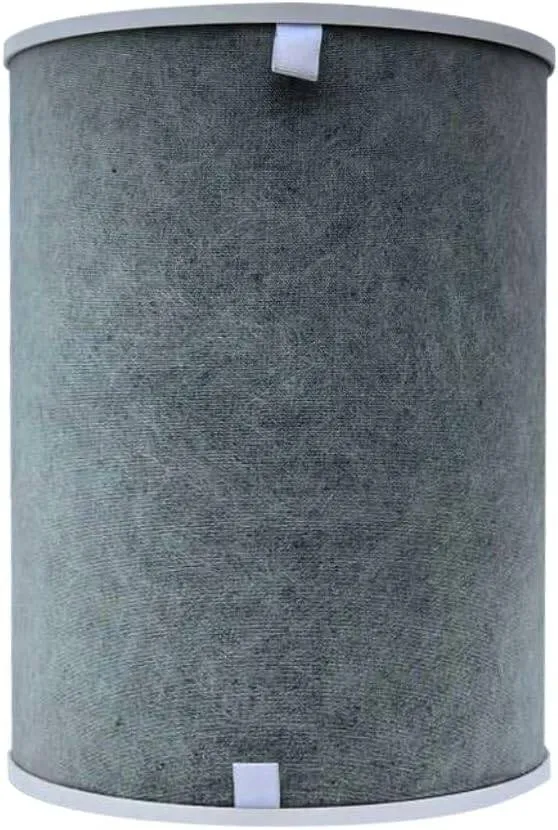
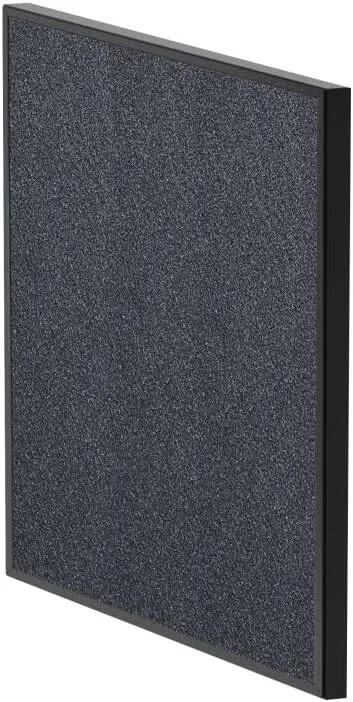
| Activated carbon filter | VOCs and gaseous compounds | Yes |
| Combined HEPA + carbon | Particles and gases | Yes, most complete |
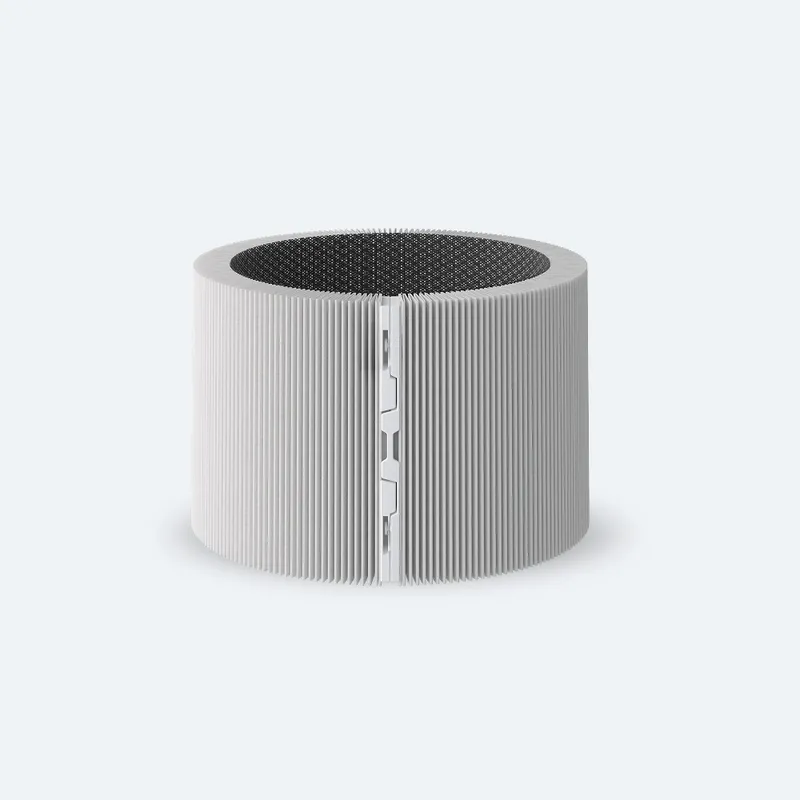
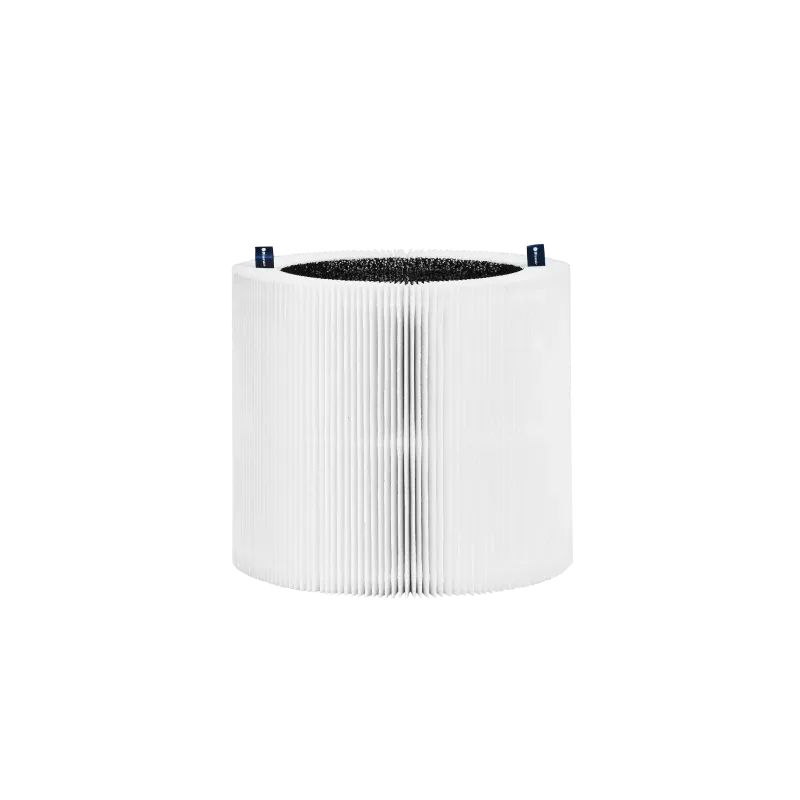
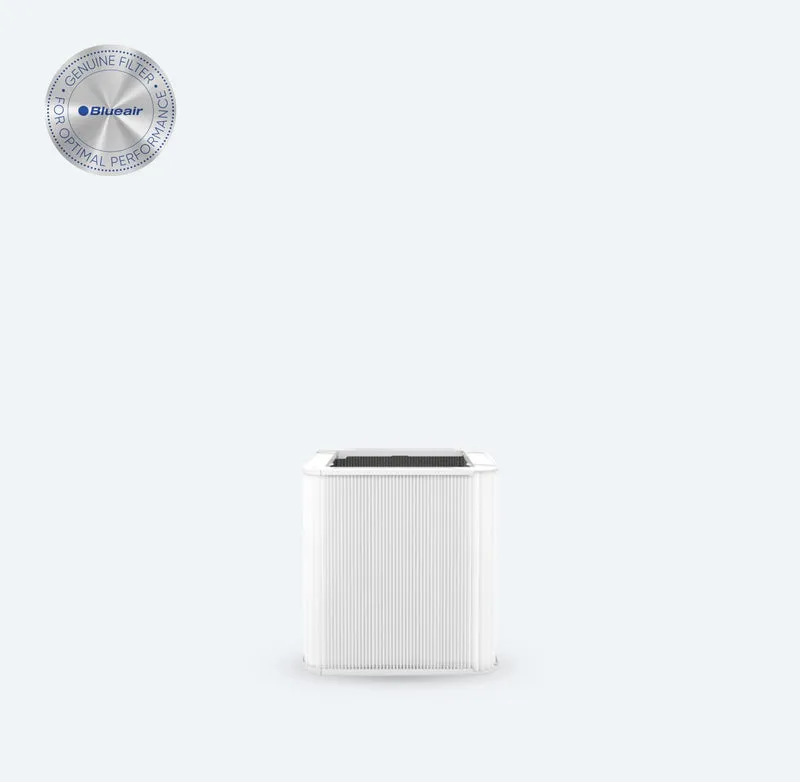
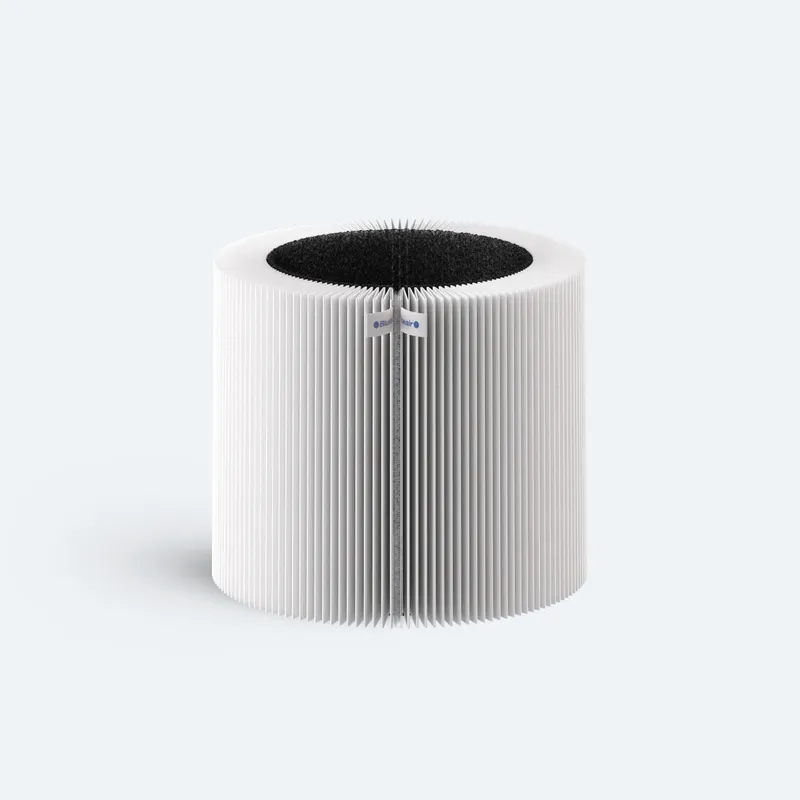
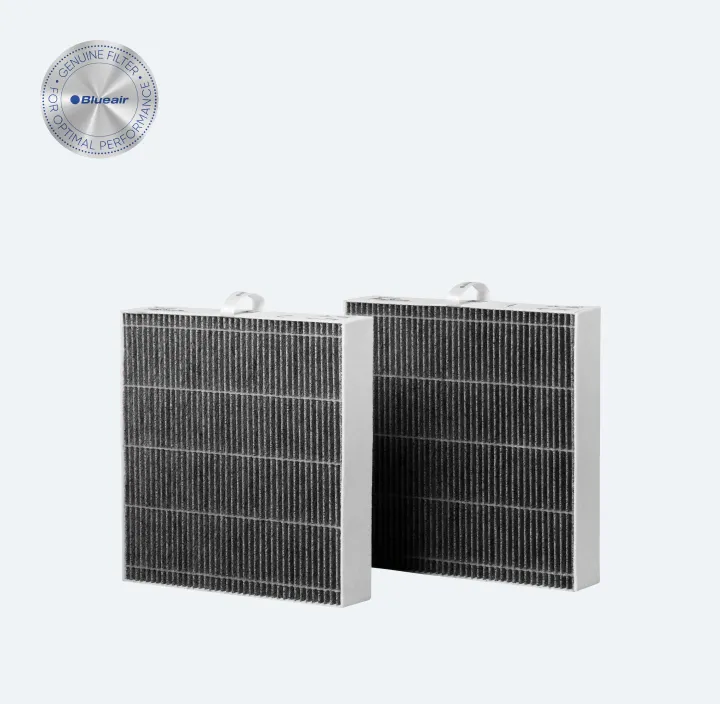
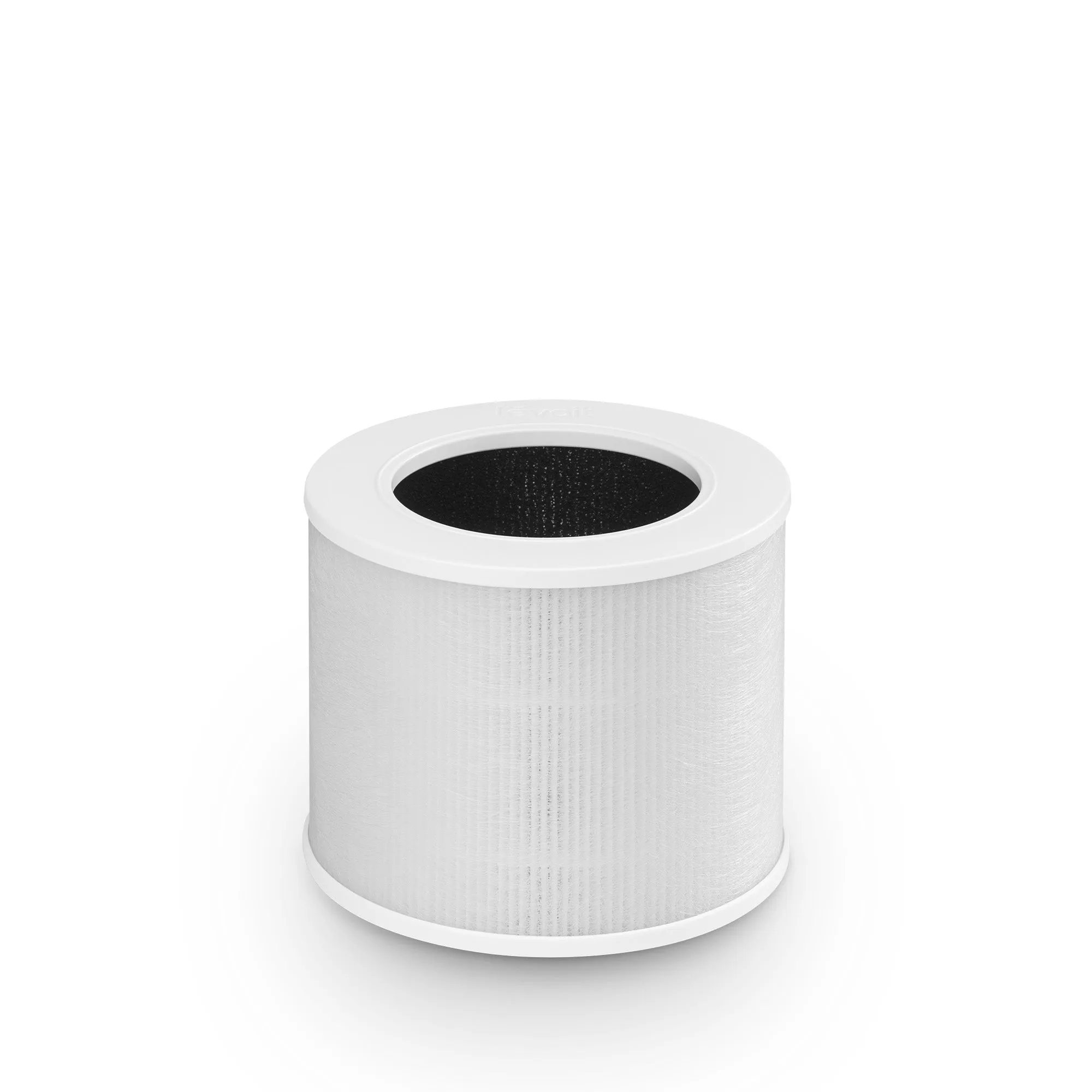
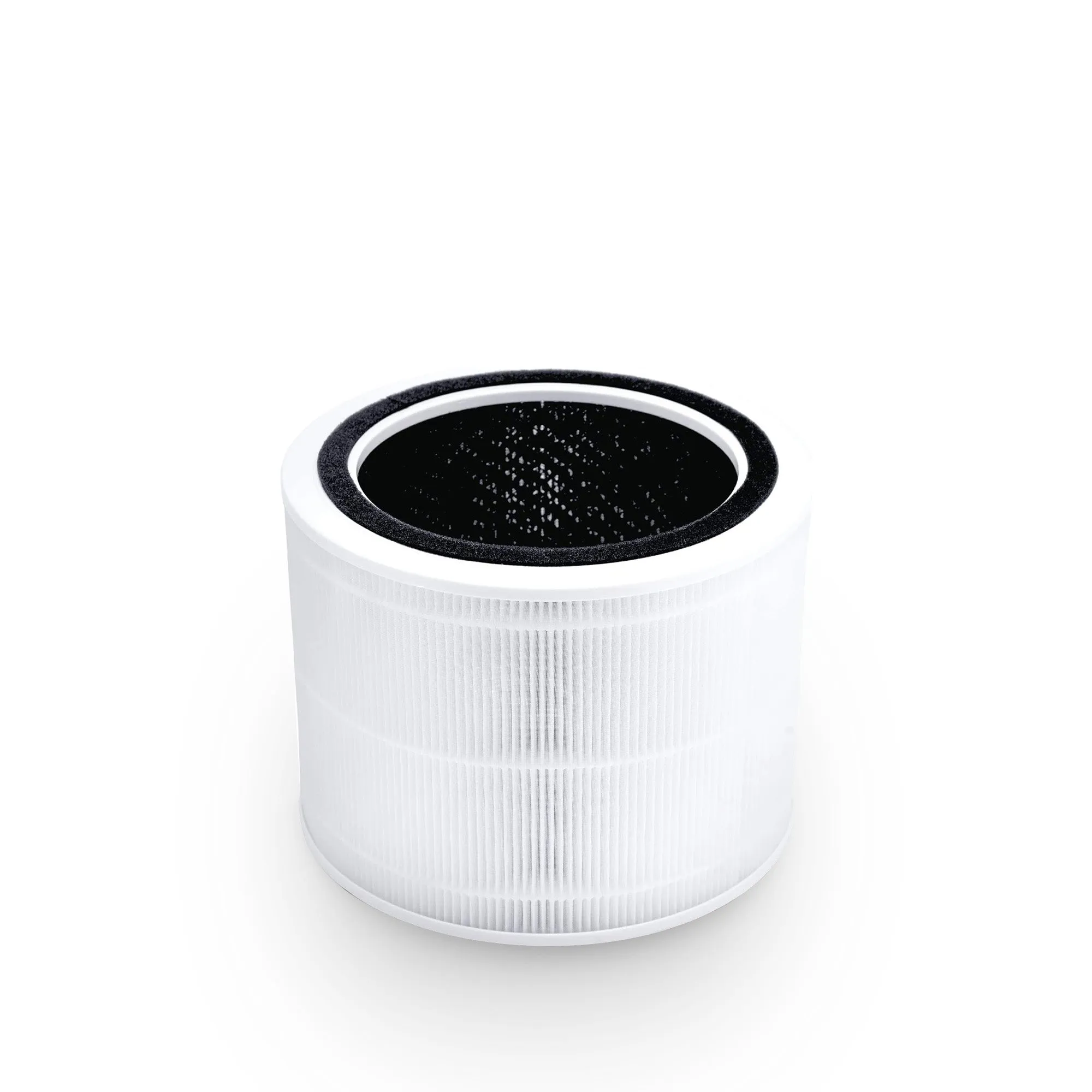
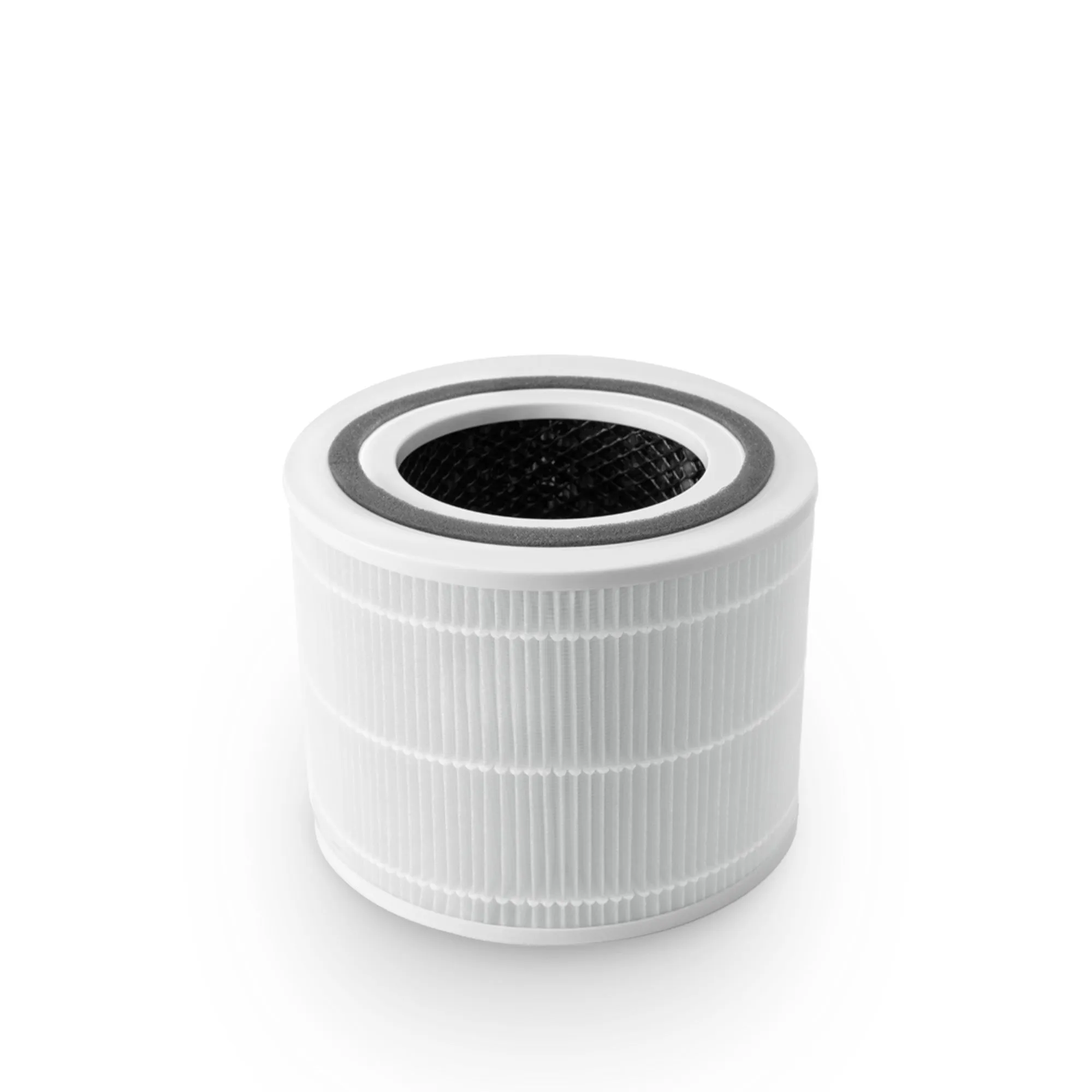
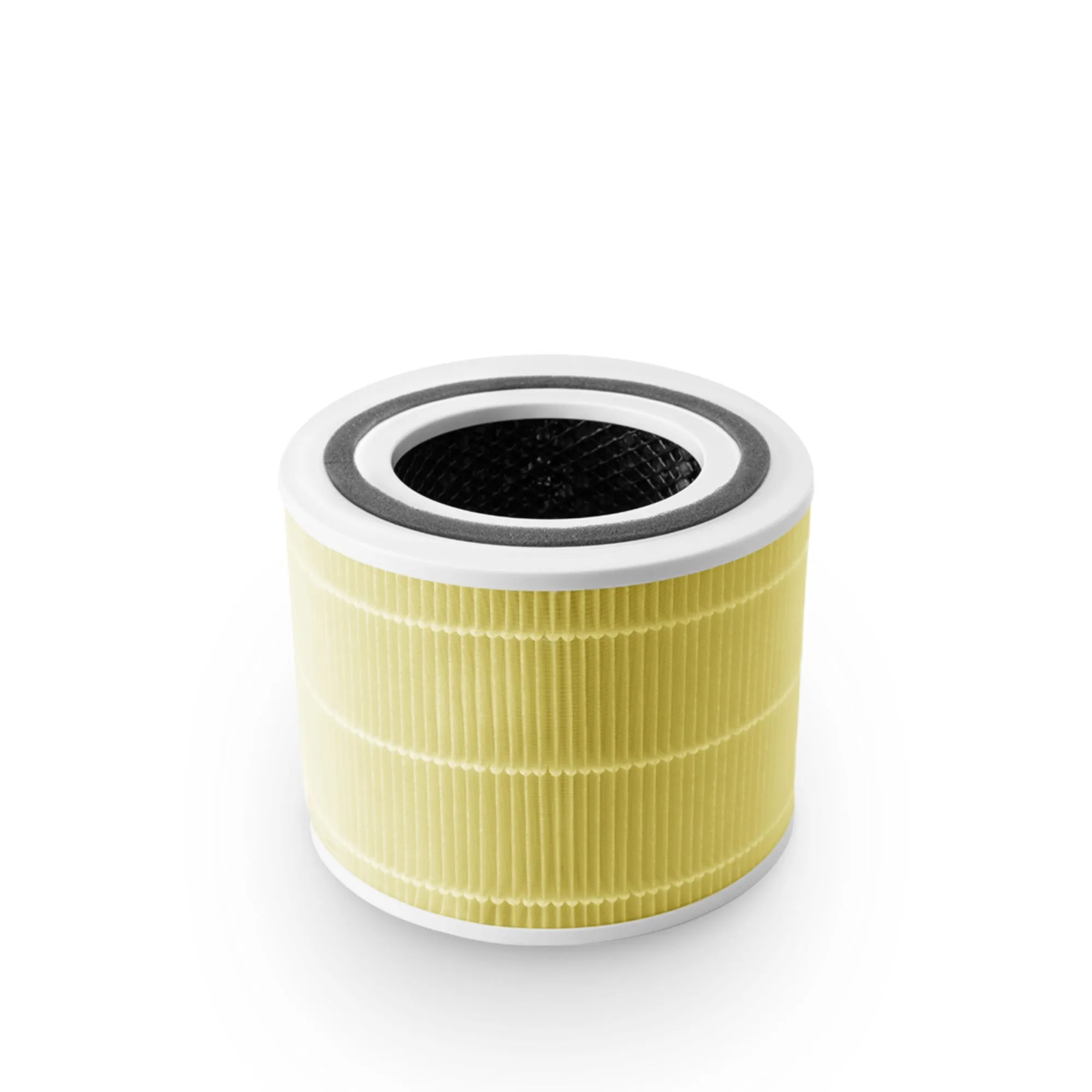
Activated carbon filters capture the volatile organic compounds responsible for most indoor odors. HEPA filters are effective only for particles, not gases. Using HEPA alone will not address chemical or biological odors.
What about air fresheners and sprays?
Masking odors with perfumes or sprays does not eliminate the cause. It adds chemical irritants to the air, which can provoke allergies and respiratory discomfort in sensitive individuals. The smell disappears temporarily; the pollutant does not.
Pro Tip: Check your air purifier’s filter specification before purchasing. A unit without an activated carbon layer will not remove cooking smells, pet odors, or VOCs from furniture.
How to apply odor reduction strategies at home
Sustained odor control requires consistent habits, not one-off fixes. The indoor air quality checklist approach works best: address each source category in turn rather than treating the whole problem as one task.
Practical steps that deliver lasting results:
- Control moisture. Humidity above 60% encourages mould and bacterial growth, both major bio-odor sources. A dehumidifier or well-ventilated bathroom reduces this risk directly.
- Choose materials carefully. In new builds or renovations, specify low-VOC paints, adhesives, and flooring. VOC off-gassing from synthetic materials continues for months after installation.
- Clean regularly and specifically. Carpets, curtains, and upholstered furniture absorb and re-release odors. Vacuuming with a HEPA-equipped vacuum and washing soft furnishings monthly reduces accumulated bio-odorants.
- Use air purification as a supplement. An air purifier with both HEPA and activated carbon filtration addresses residual particles and gases after source control and ventilation are in place. It is not a substitute for the first two steps.
- Avoid scented products. Plug-in air fresheners, scented candles, and essential oil diffusers introduce additional VOCs. They mask odors while adding to the chemical load in your indoor air.
For UAE residents, the most effective air cleaning practices account for local conditions: high dust levels, limited natural ventilation in many apartments, and extended indoor time due to heat. Filtration technology suited to these conditions differs from what works in temperate climates.
Key takeaways
Reducing indoor odors is the most direct way to lower pollutant exposure, protect health, and maintain a comfortable living environment.
| Point | Details |
|---|---|
| Odors signal real pollutants | Indoor smells indicate VOCs, bio-odorants, or combustion gases, not just unpleasantness. |
| Health effects are measurable | Persistent odors cause headaches, nausea, stress, and long-term sleep disruption. |
| Source control comes first | Remove the odor source before relying on ventilation or filtration. |
| Filter type determines results | Activated carbon removes VOCs and odors; HEPA alone does not. |
| Masking worsens air quality | Sprays and fresheners add chemical irritants without removing the underlying pollutant. |
Odors as health signals: what I’ve learnt from years in indoor air quality
Most people treat a bad smell as a comfort problem. After years working with indoor air quality, I see it differently. An odor is a diagnostic signal. It tells you something is present in the air that should not be. The instinct to reach for a spray or light a candle is understandable, but it is the wrong response. It is the equivalent of covering a warning light on your dashboard.
The cases that stay with me are families who had lived with persistent headaches and fatigue for months, attributing them to stress or poor sleep. In nearly every instance, the real cause was a combination of mould growth, high-VOC furnishings, and inadequate ventilation. Once the sources were addressed and proper filtration was added, the symptoms resolved. No medication required.
My honest recommendation: treat every persistent indoor odor as a prompt to investigate, not to mask. Identify the source, remove it, improve airflow, and then use filtration to manage what remains. That sequence works. Shortcuts do not.
— Wojciech
Cleanair-ae products for indoor odor control

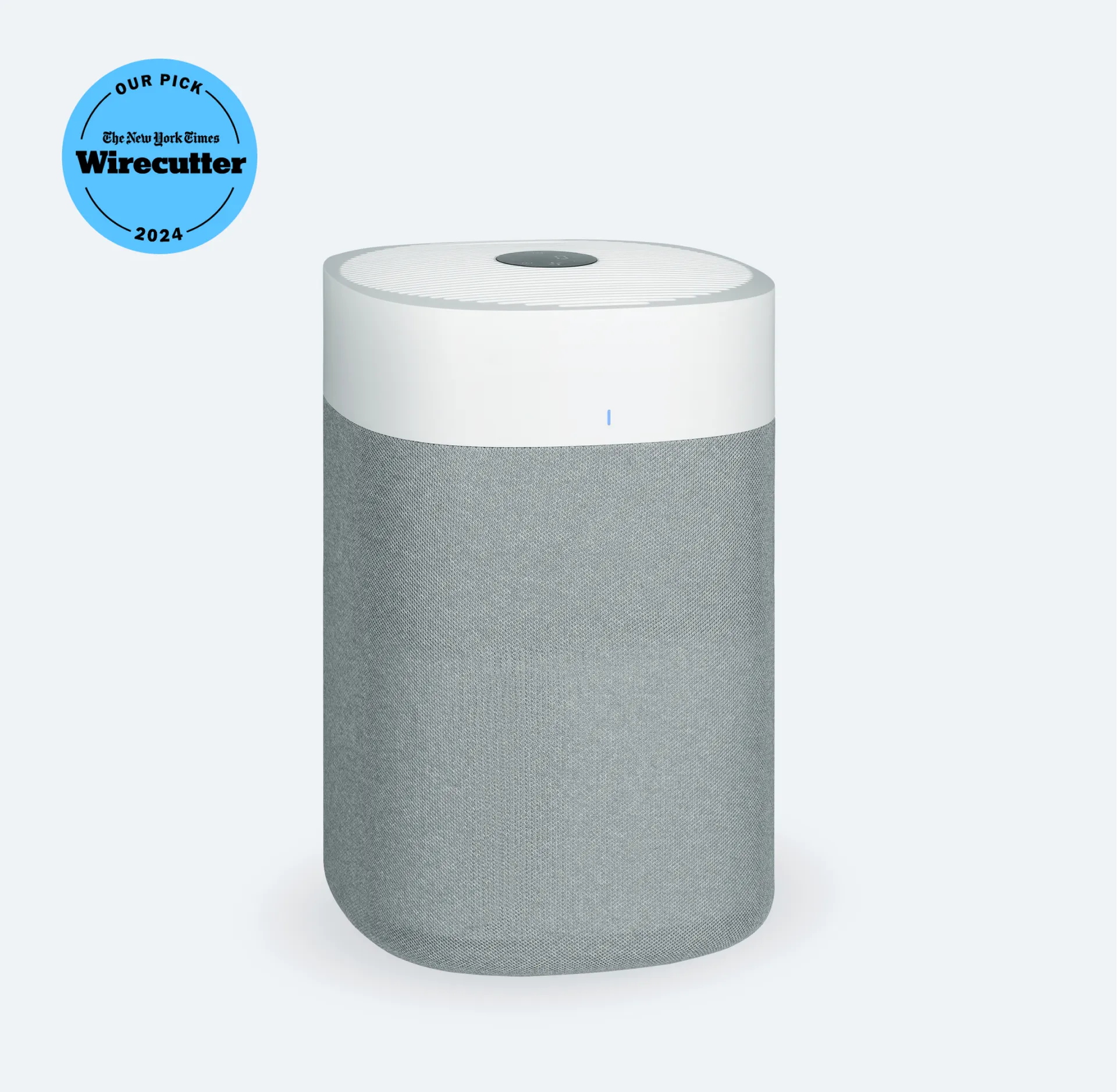
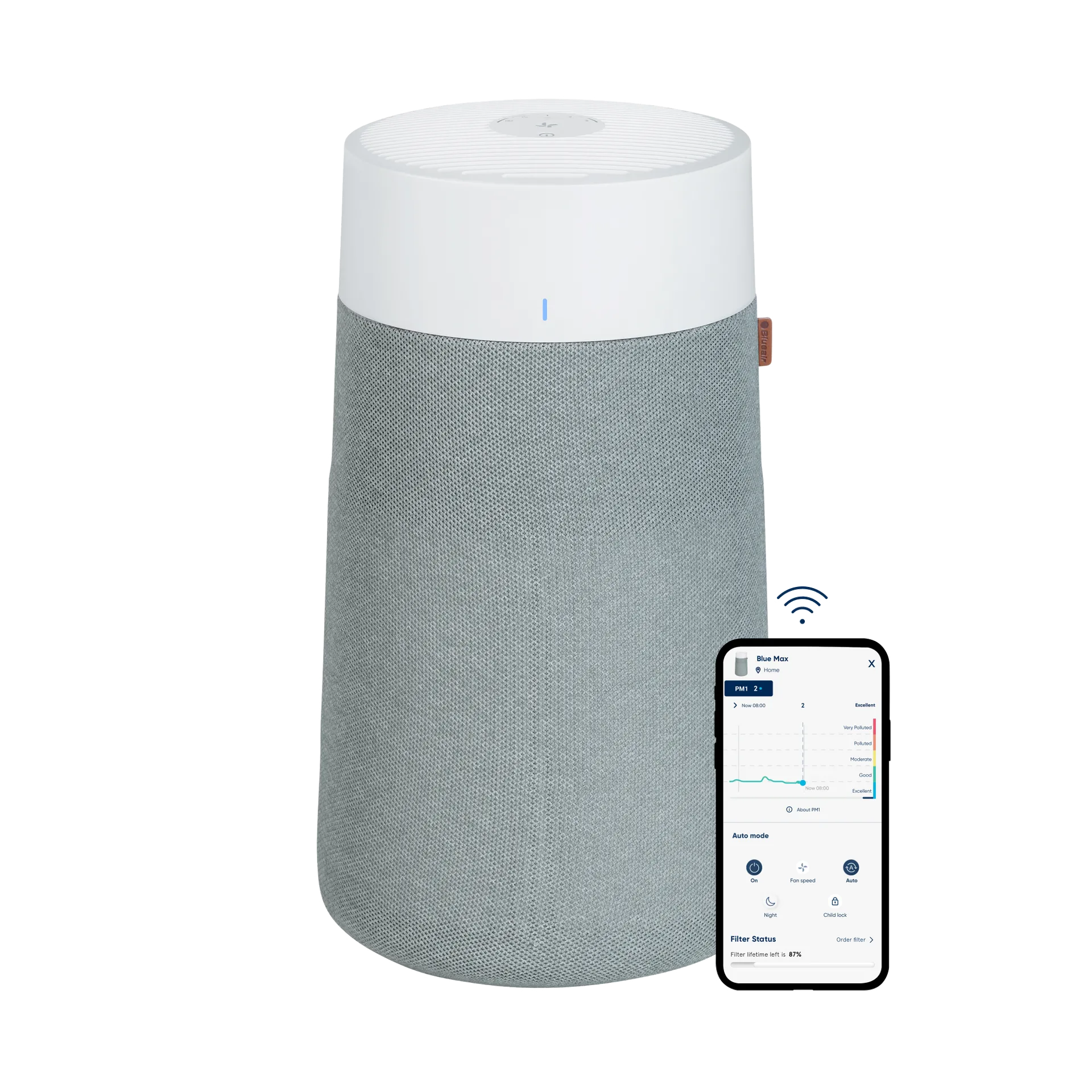
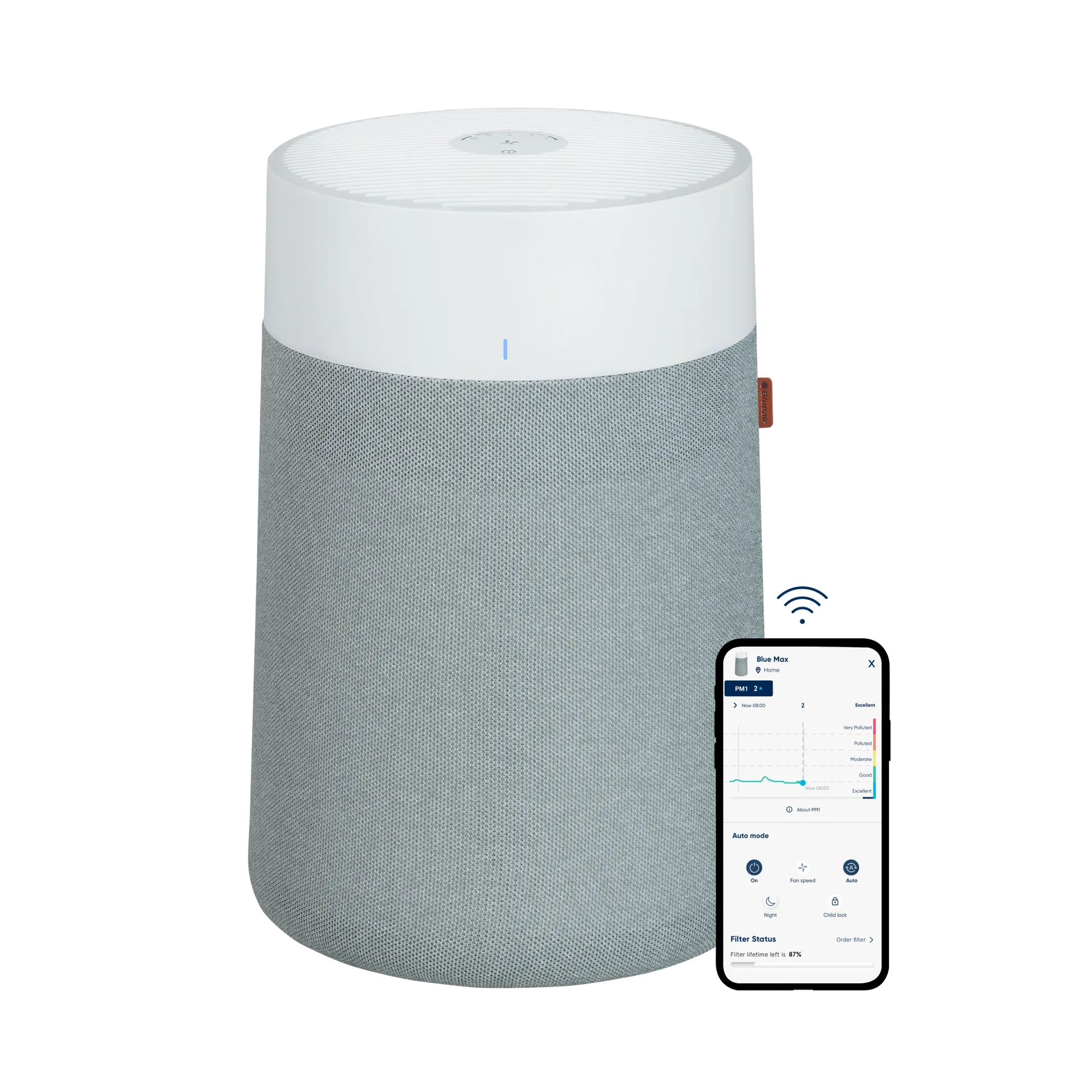
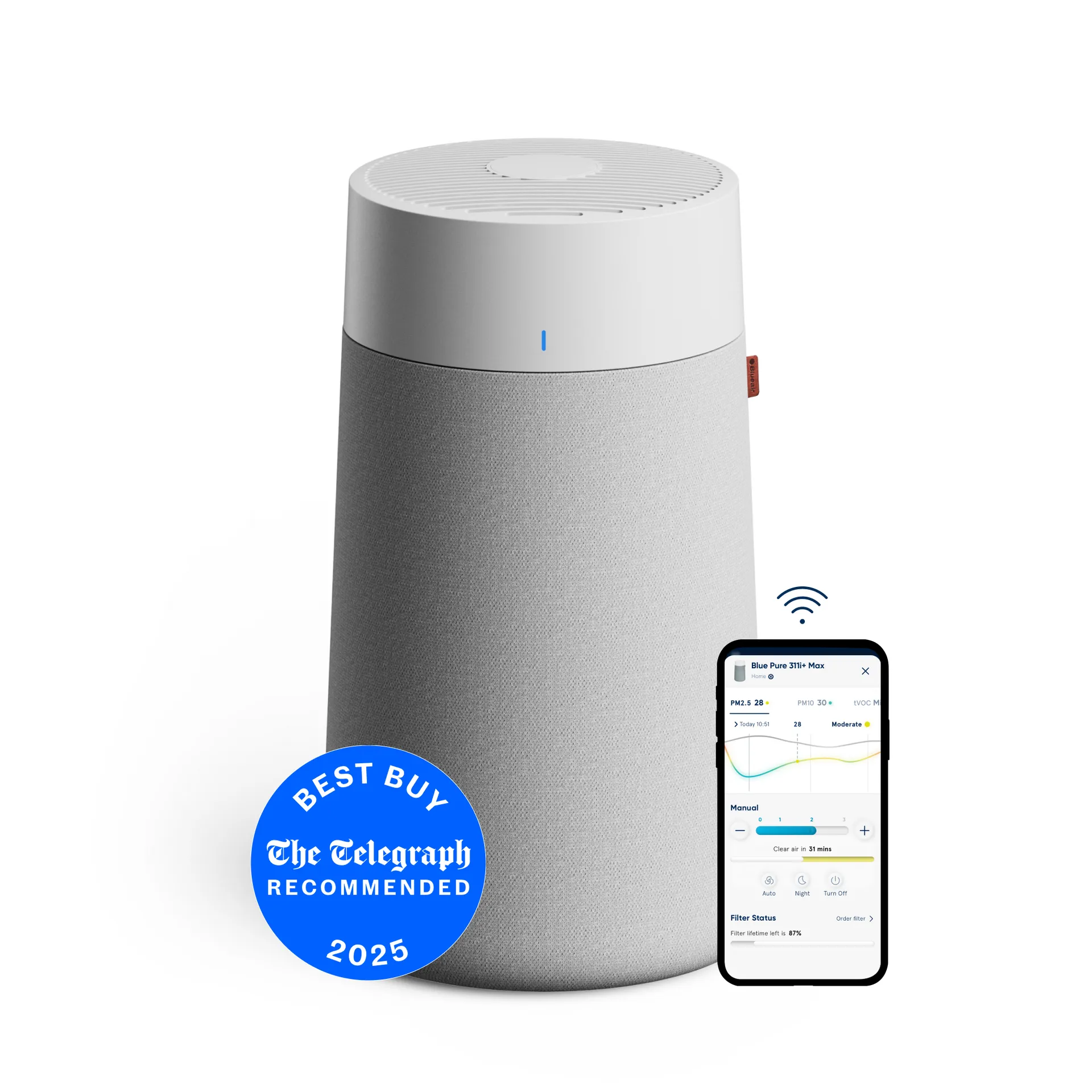
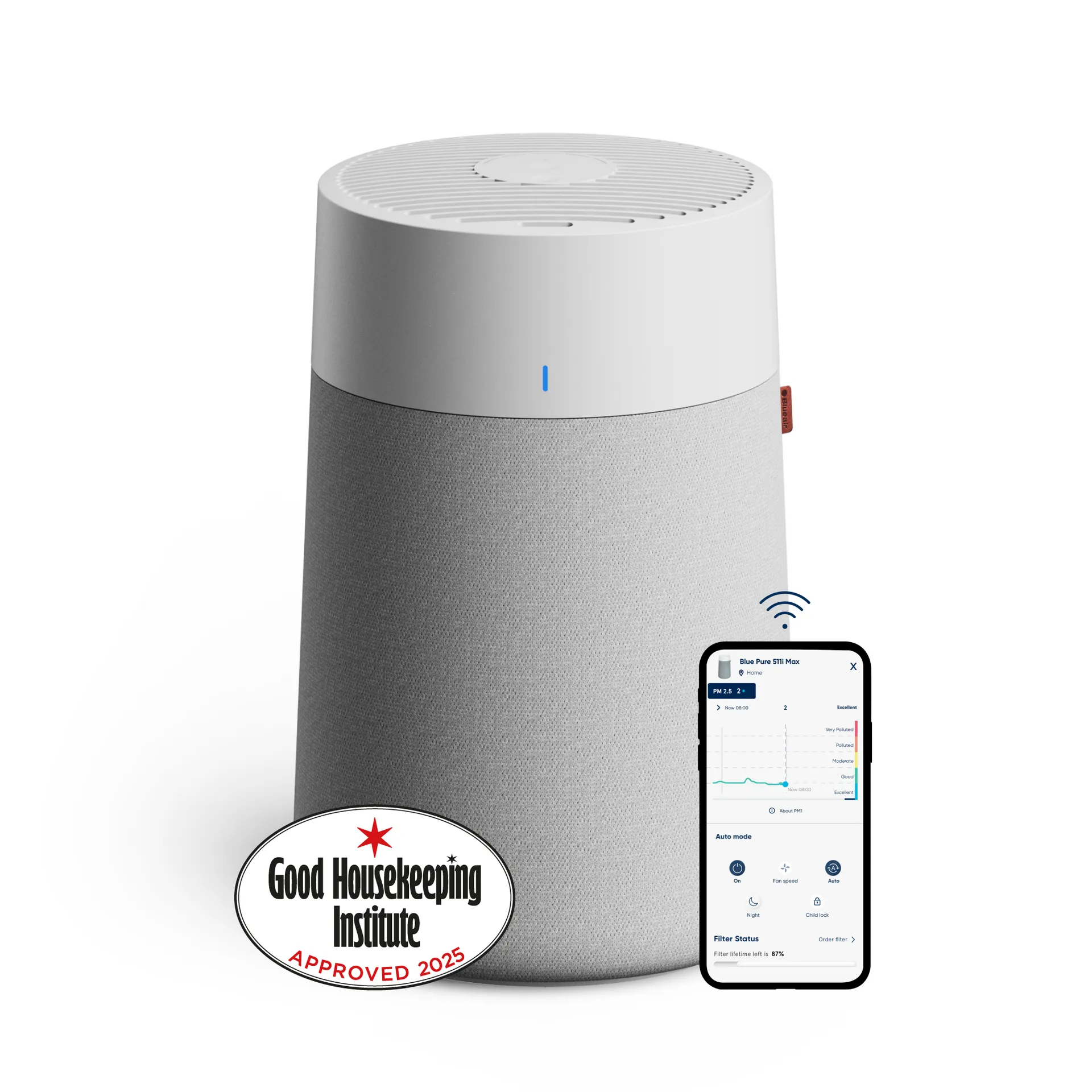
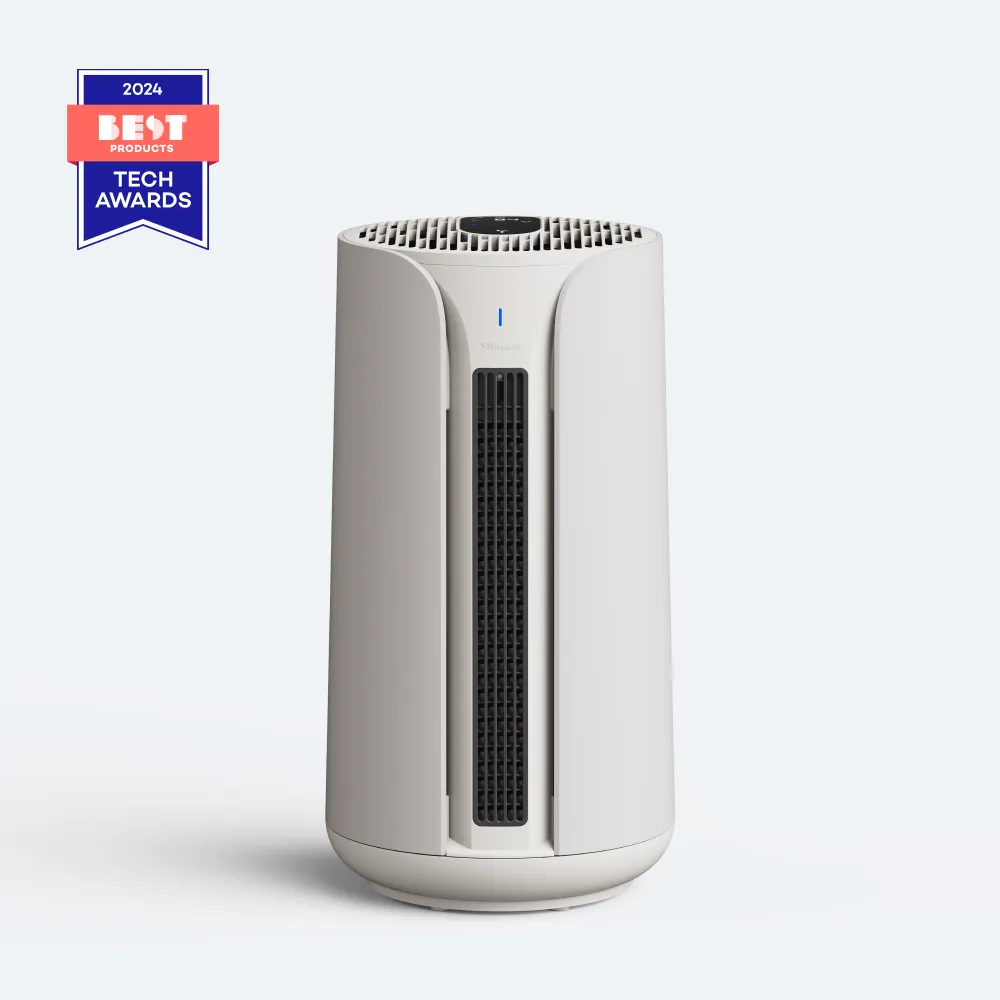
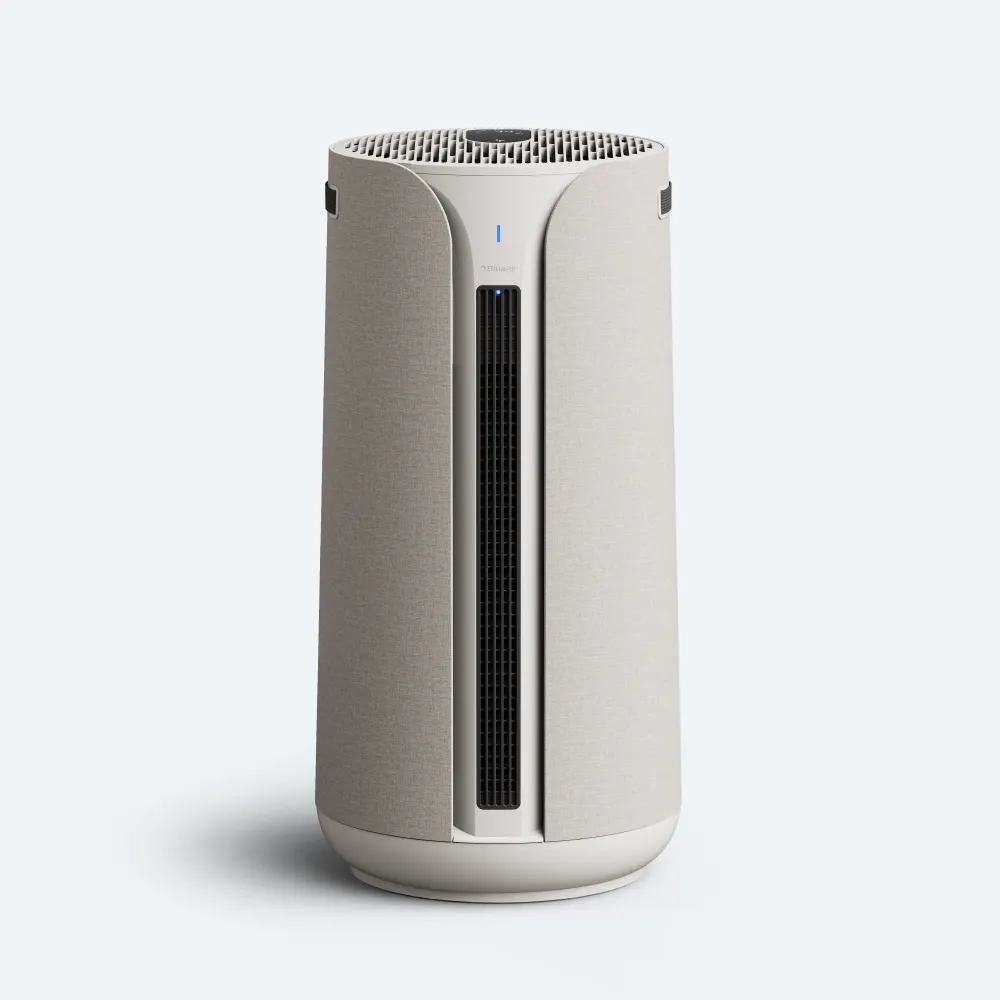
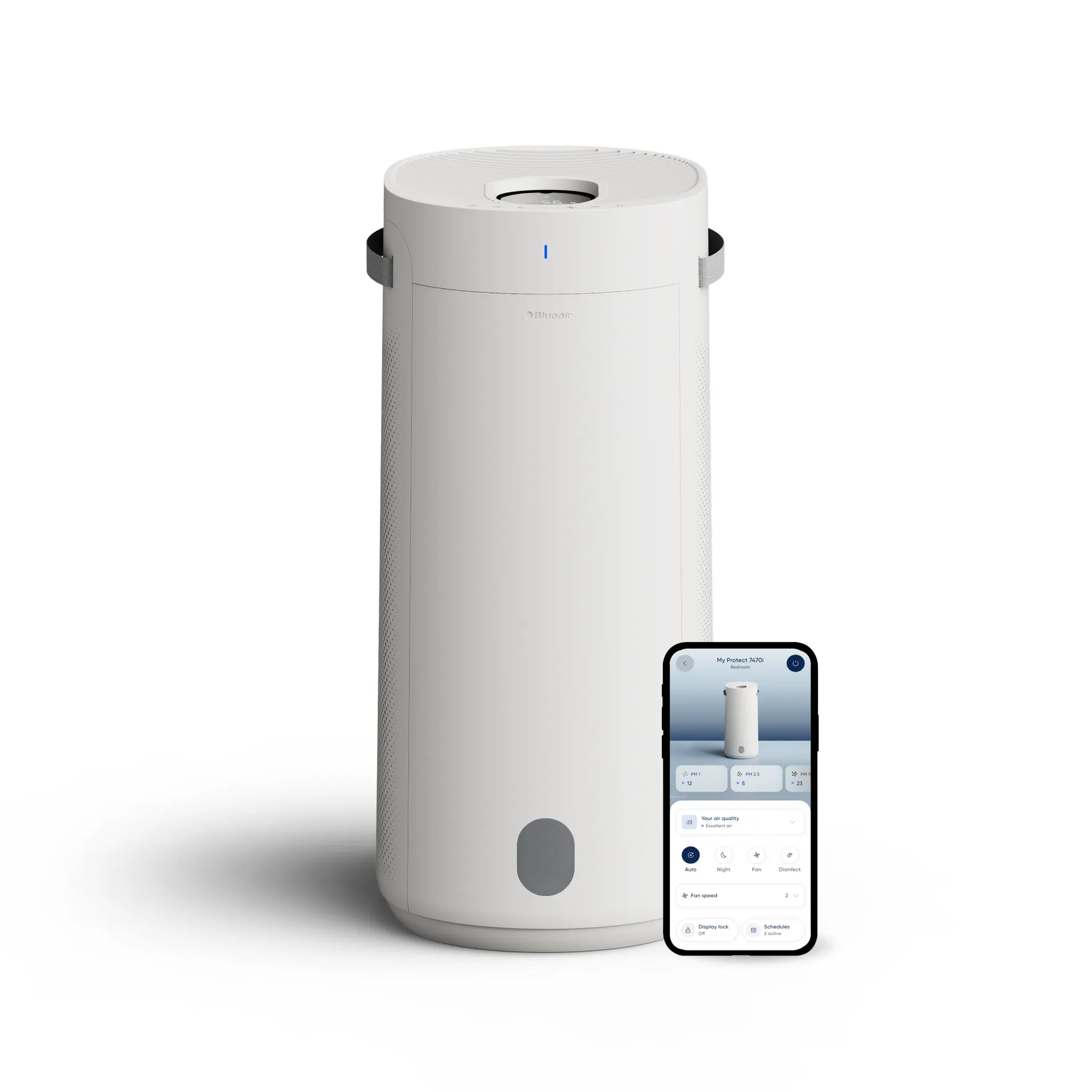
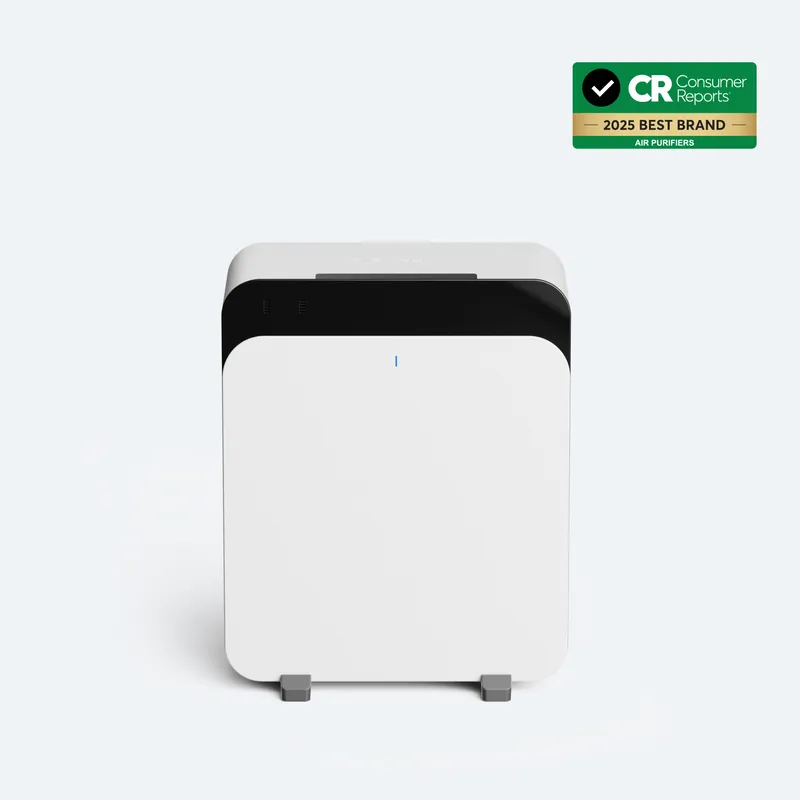
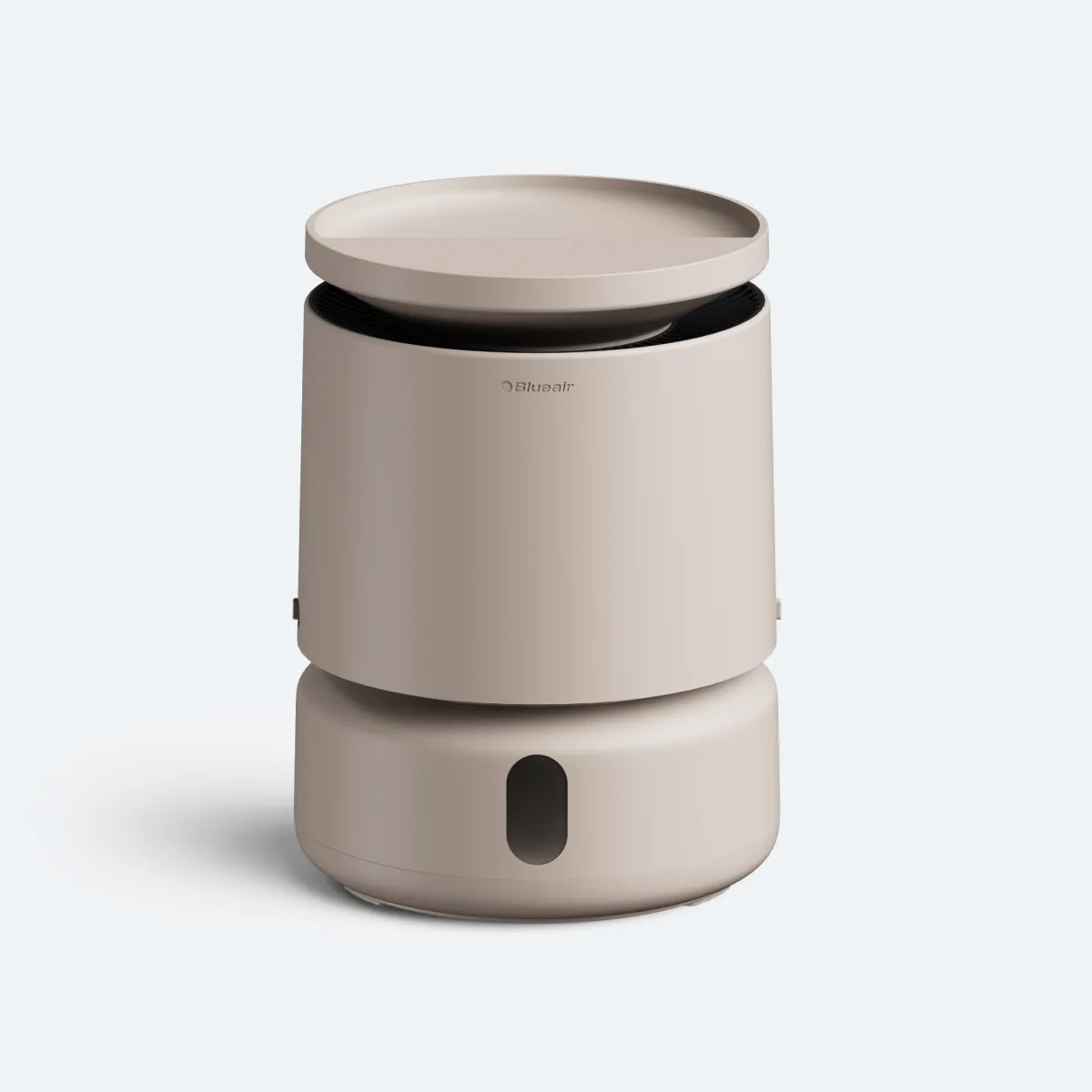
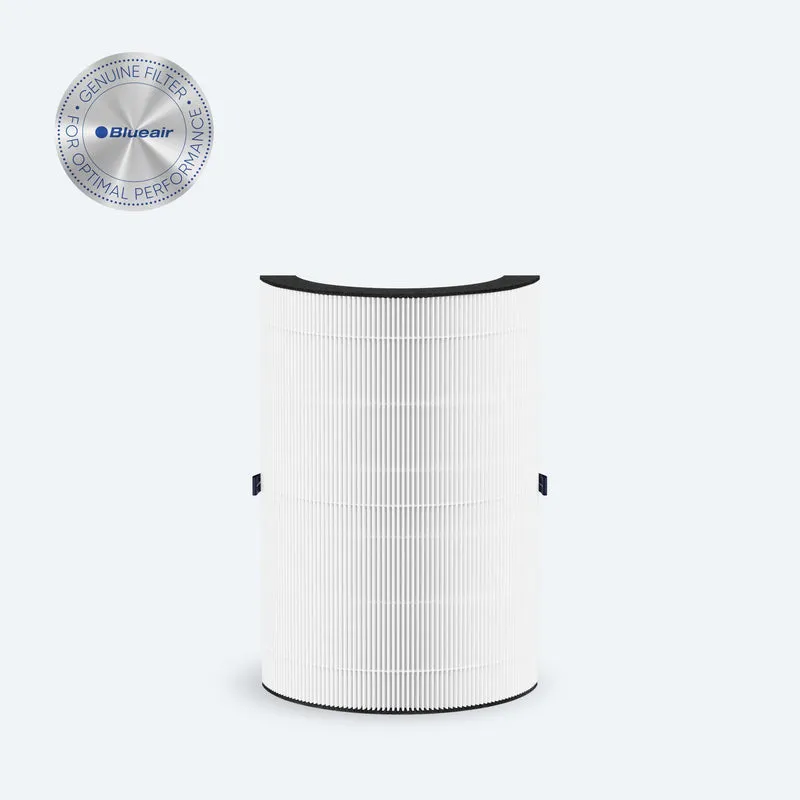
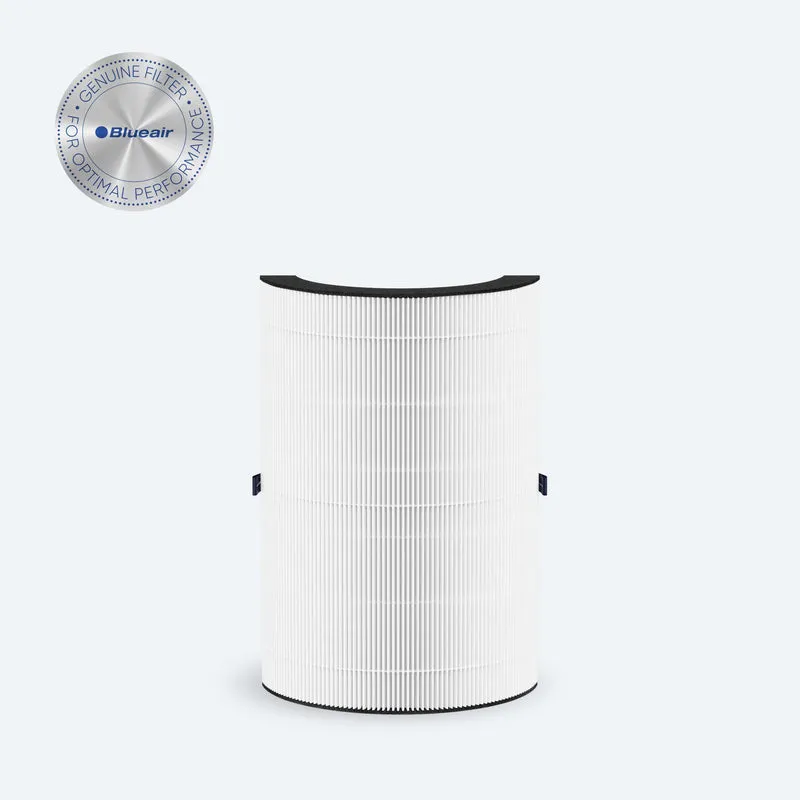
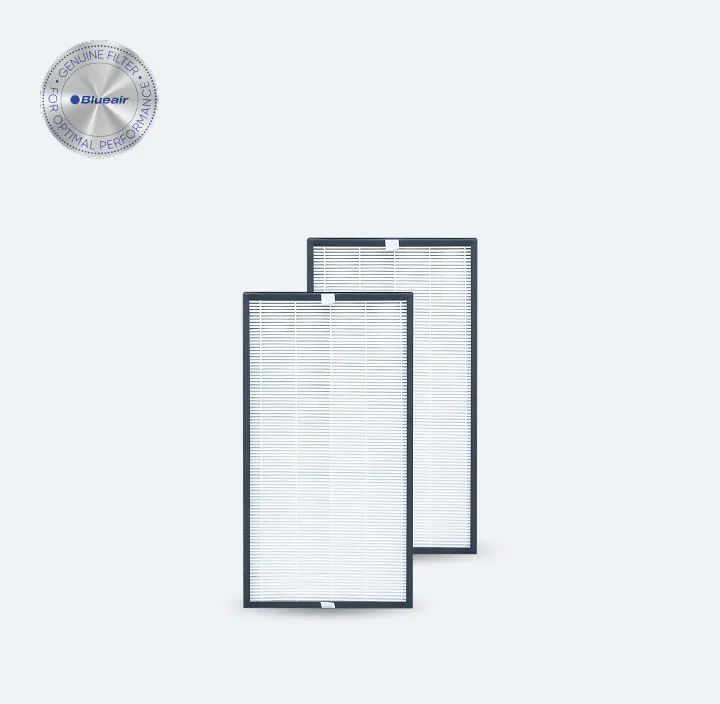
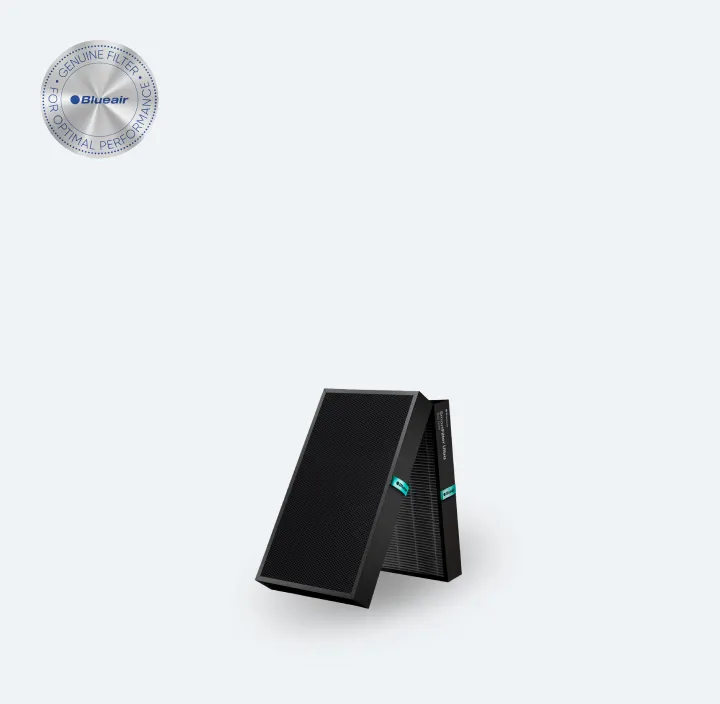
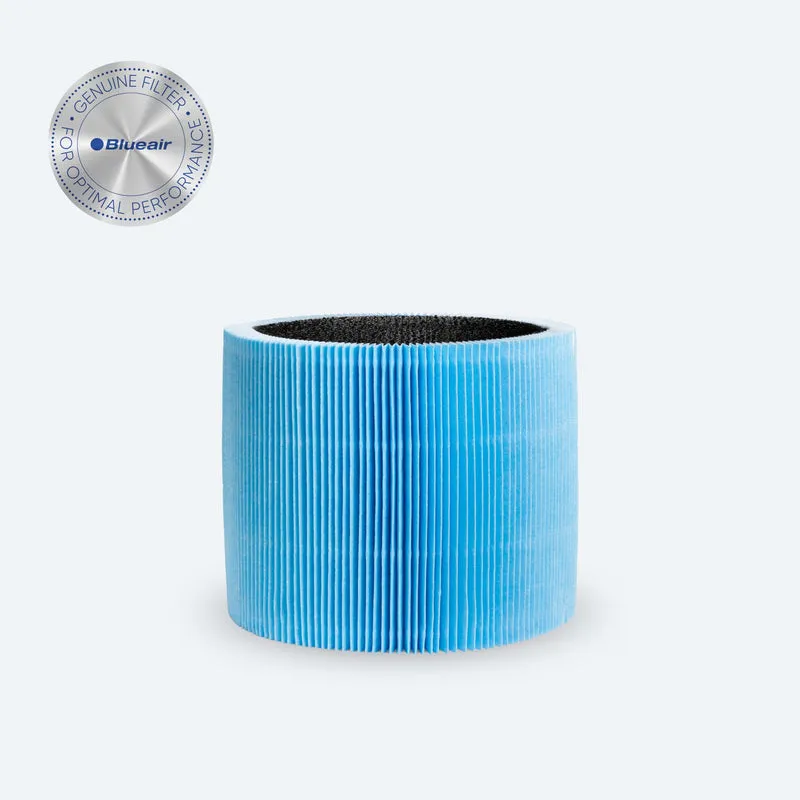
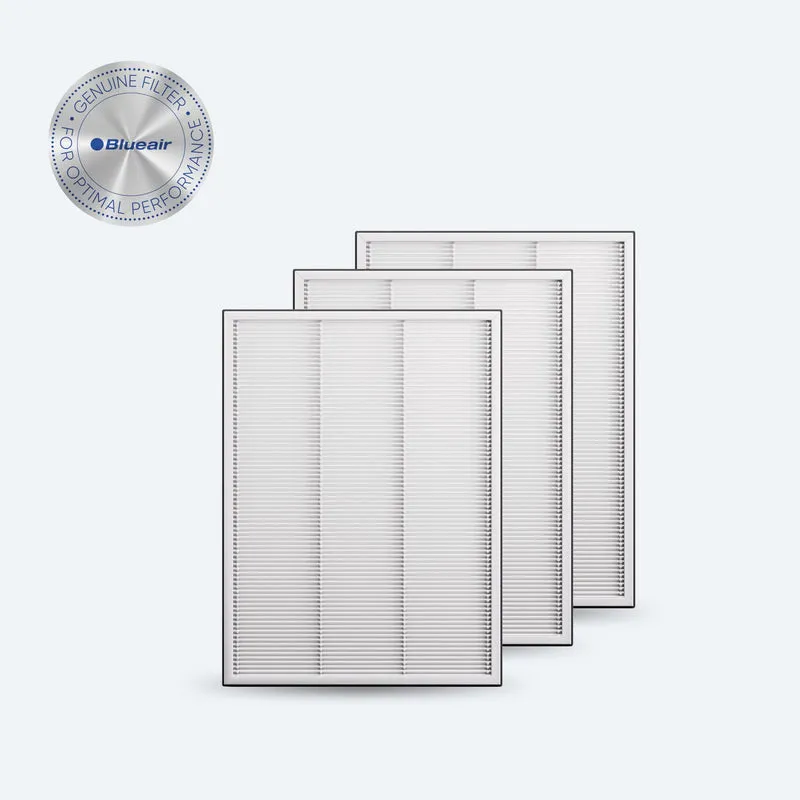
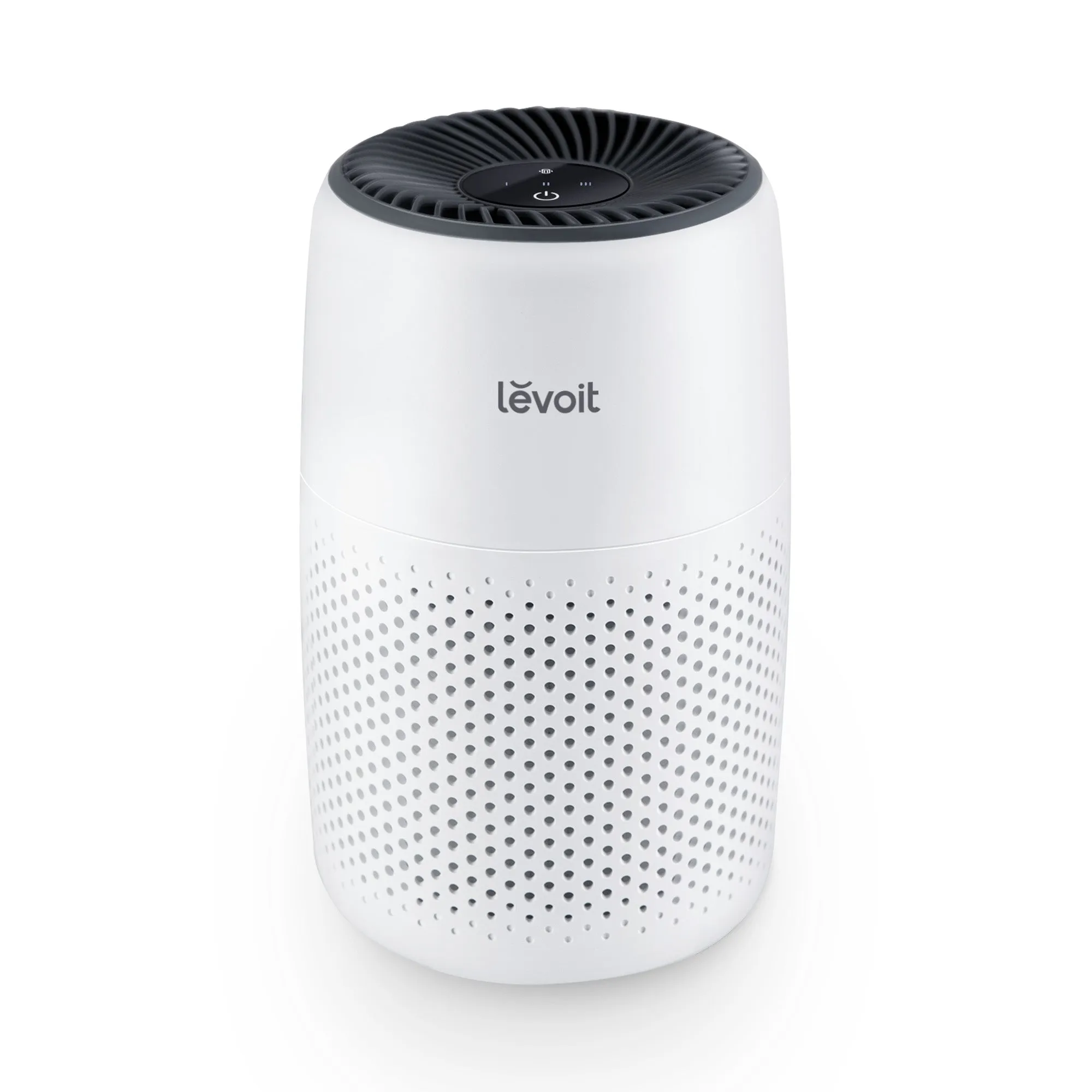
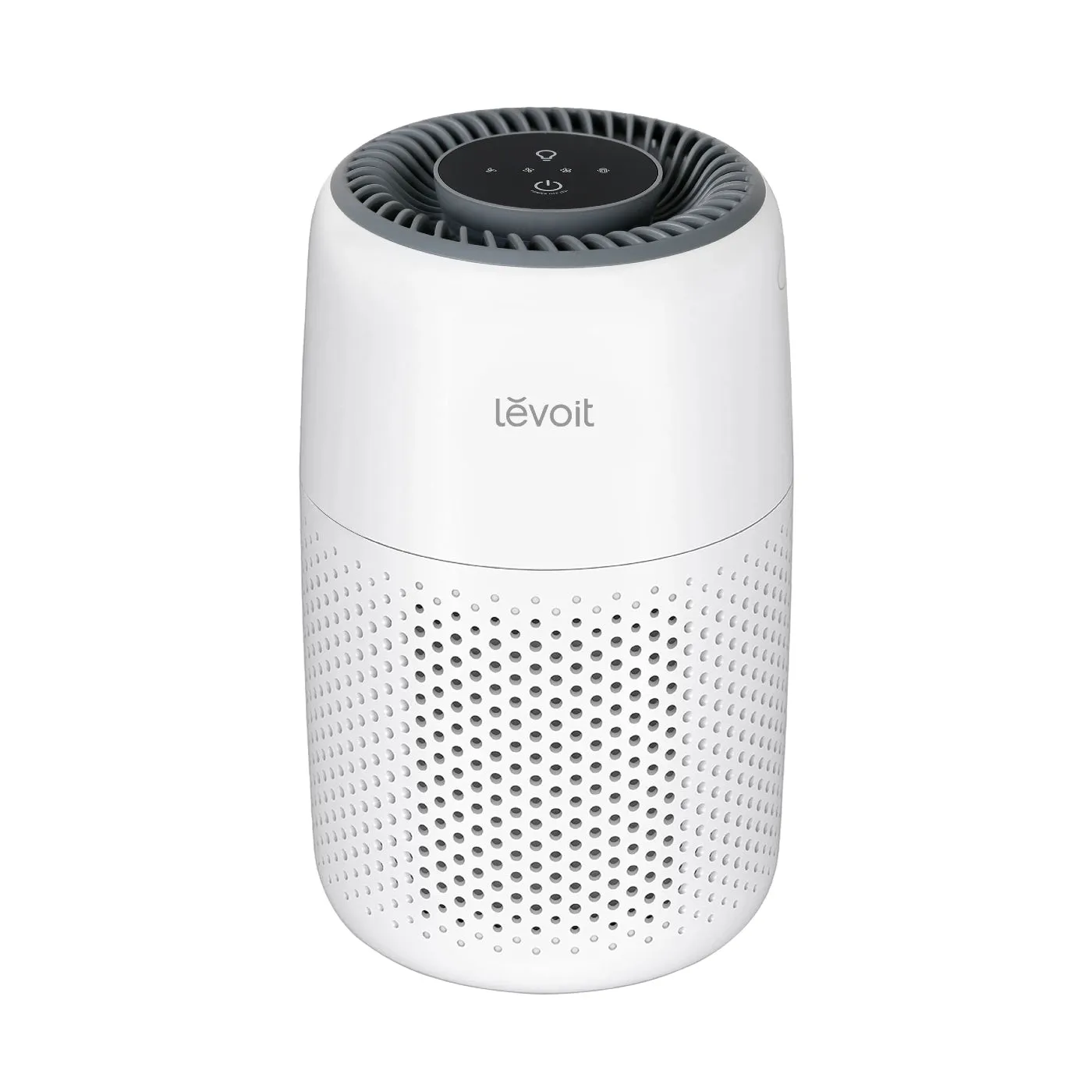
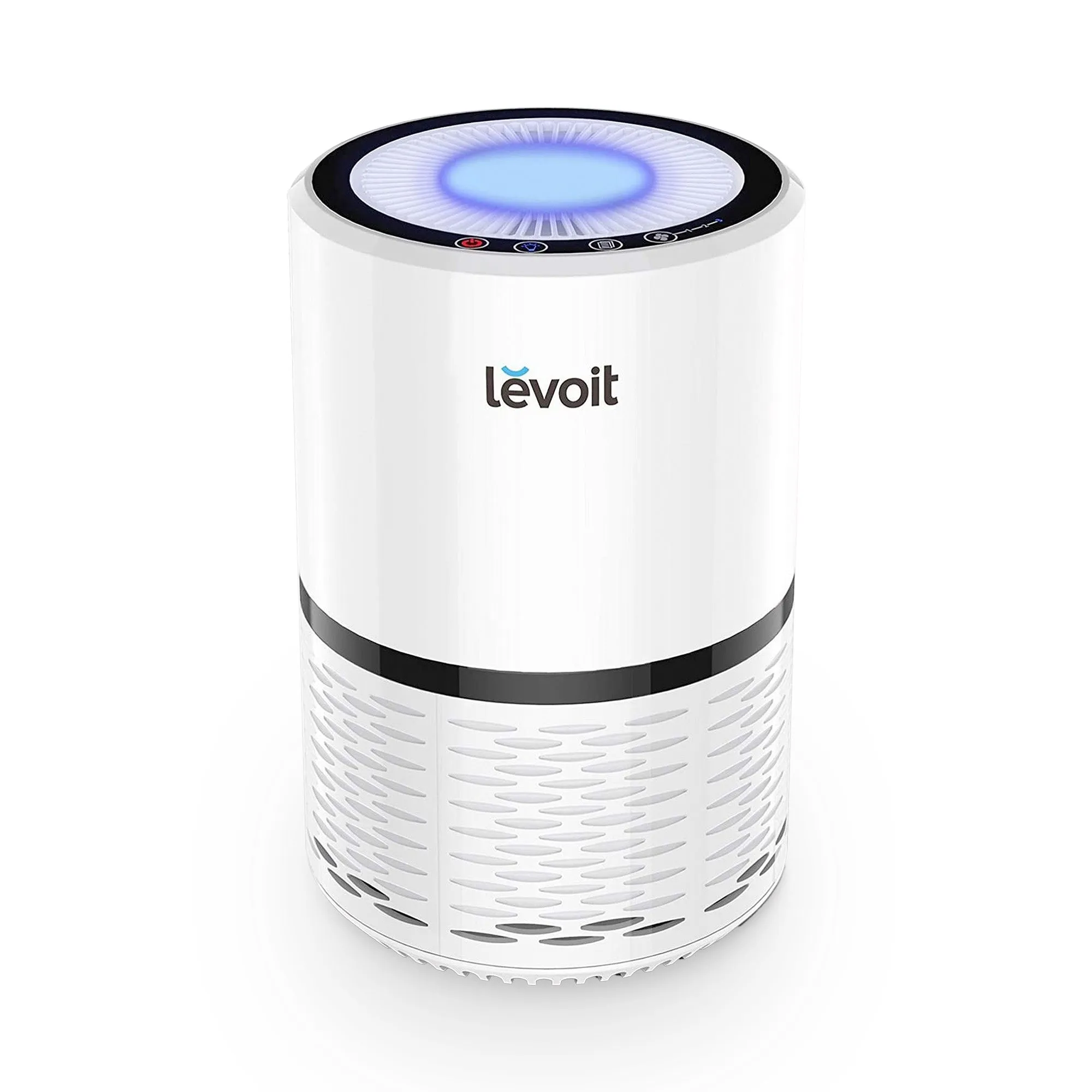
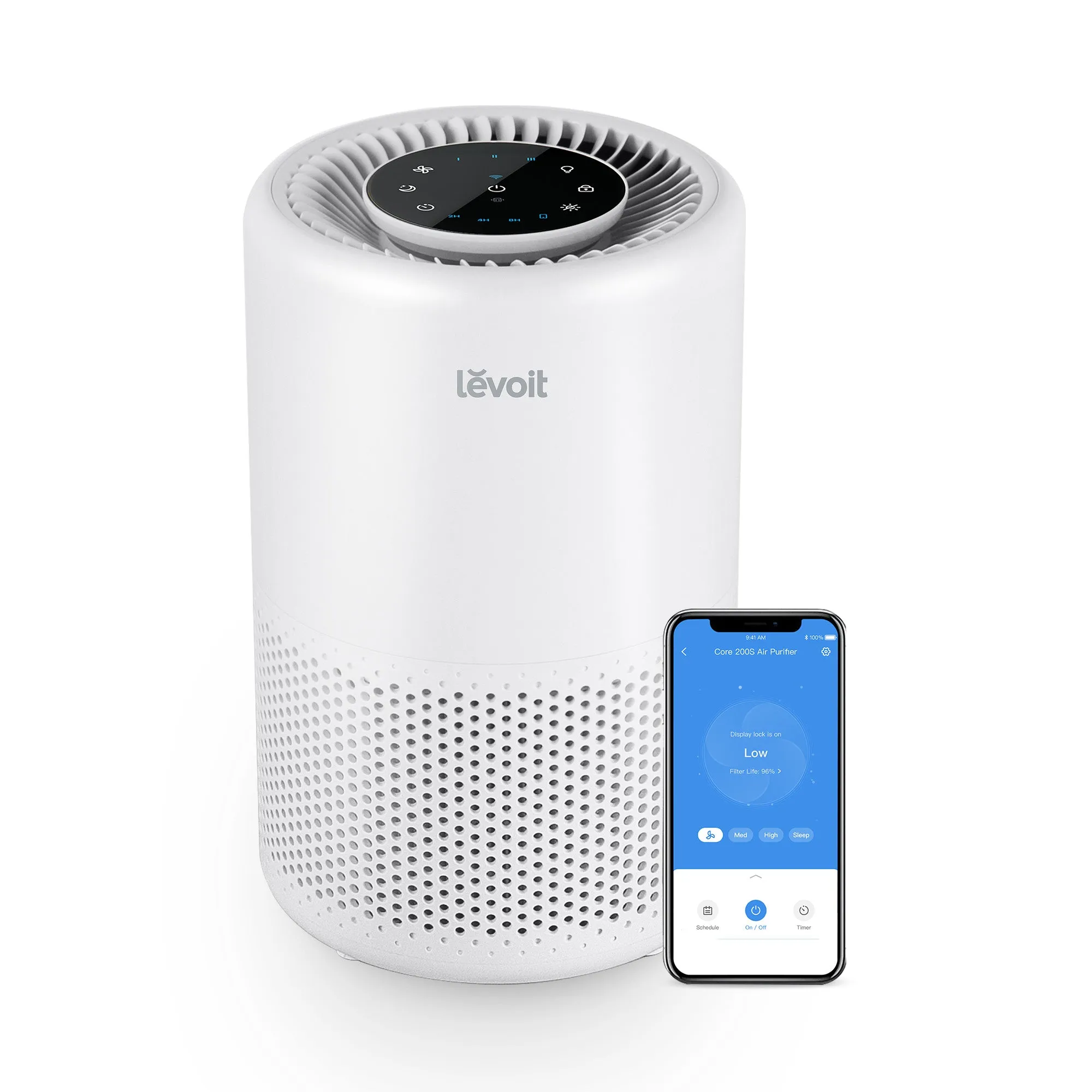
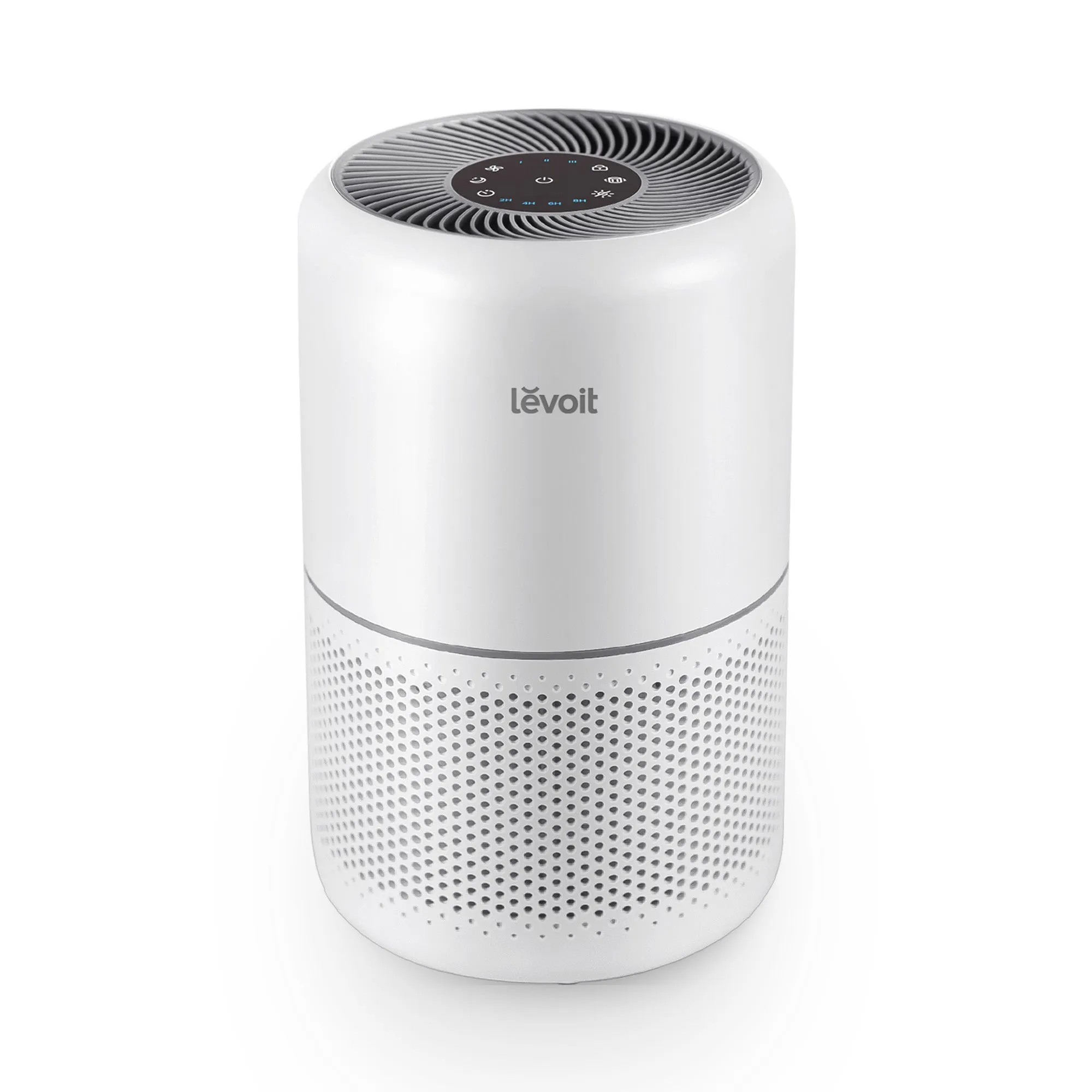
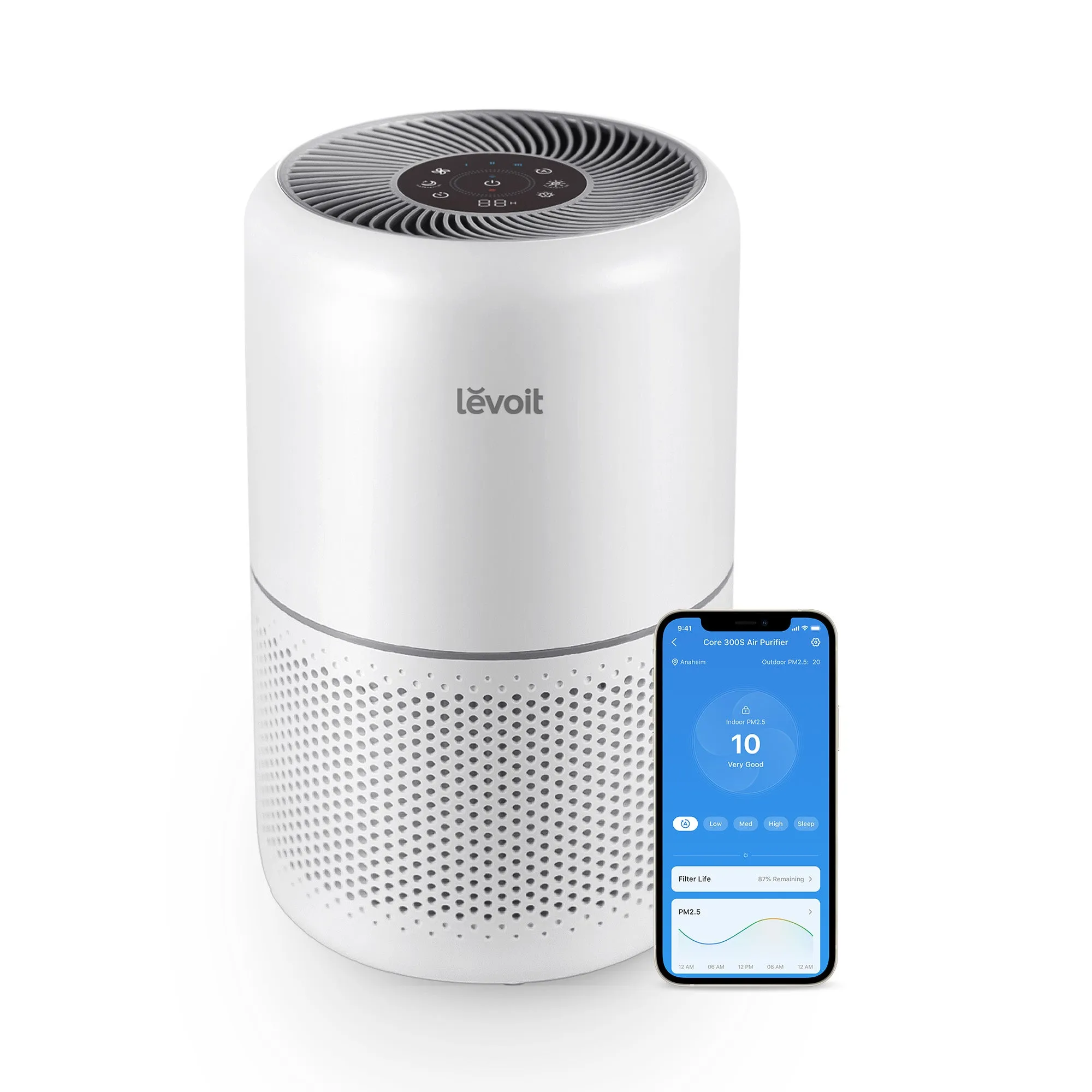
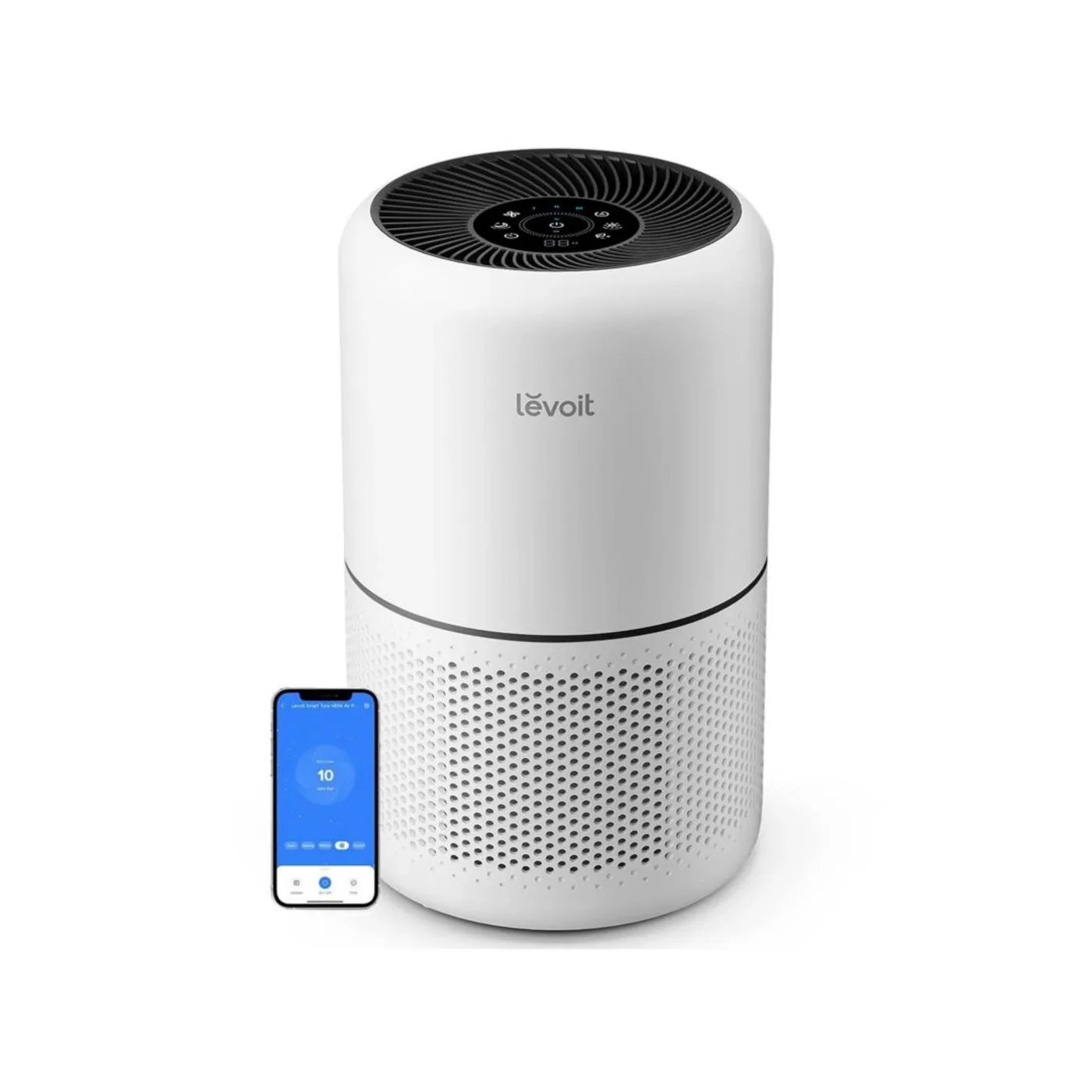
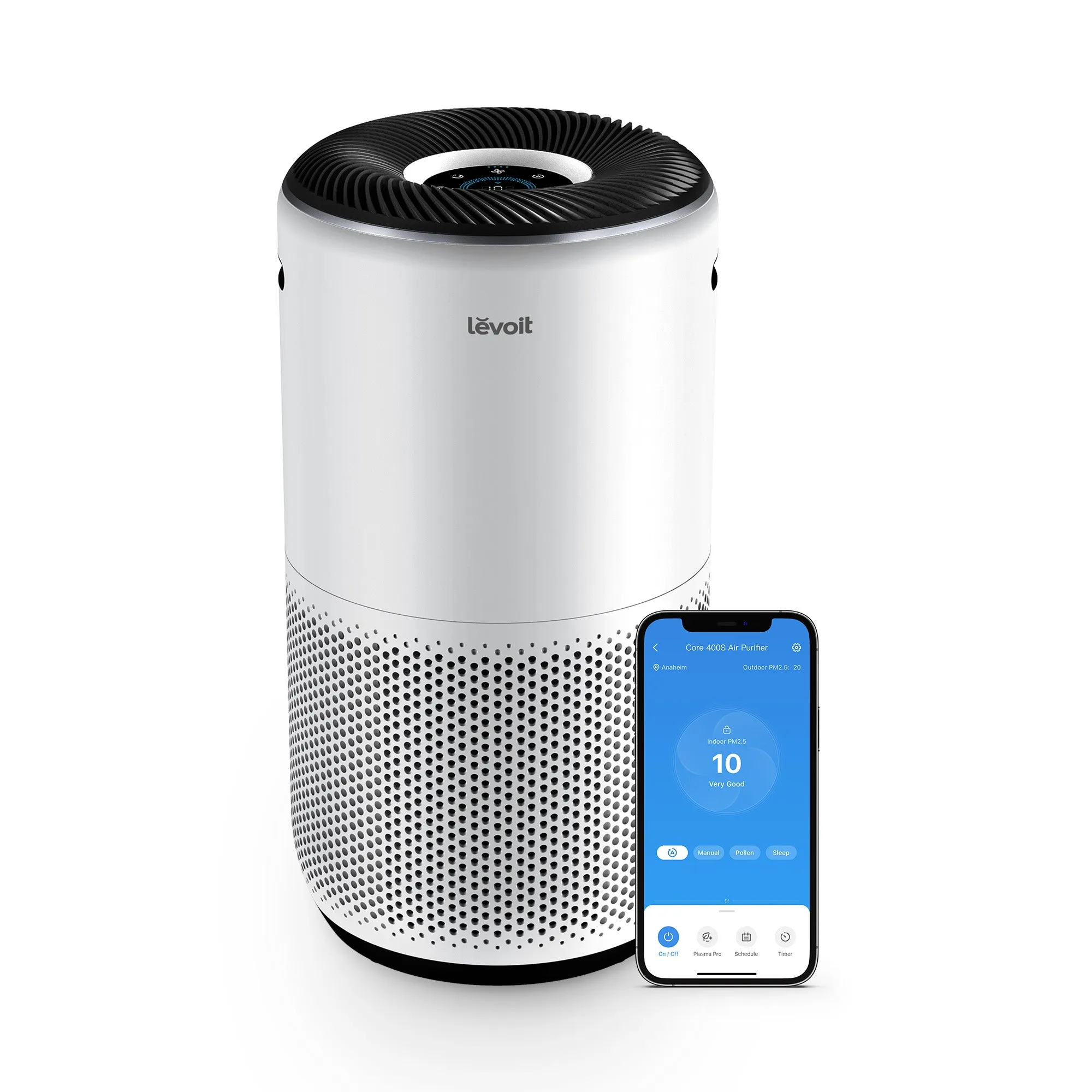
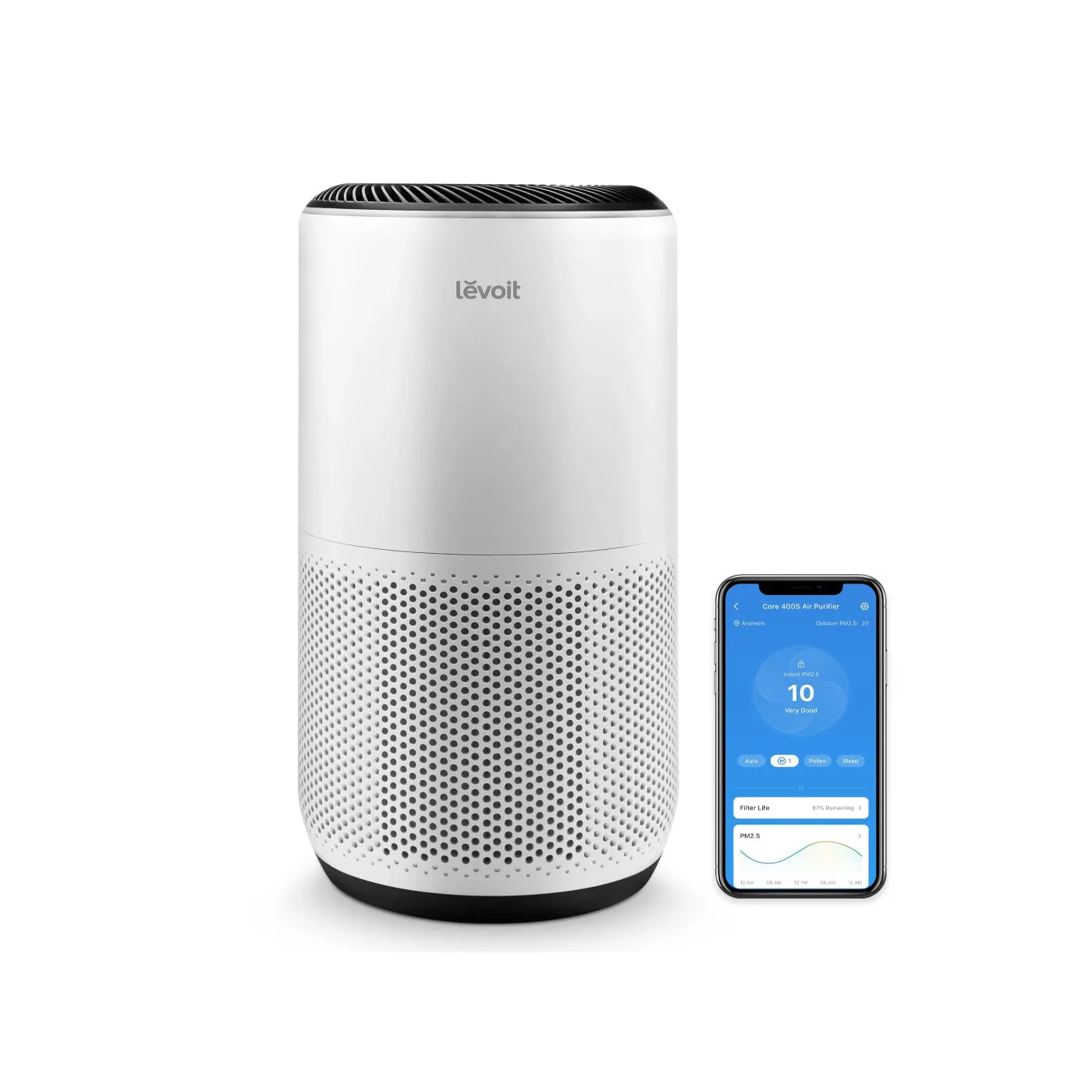
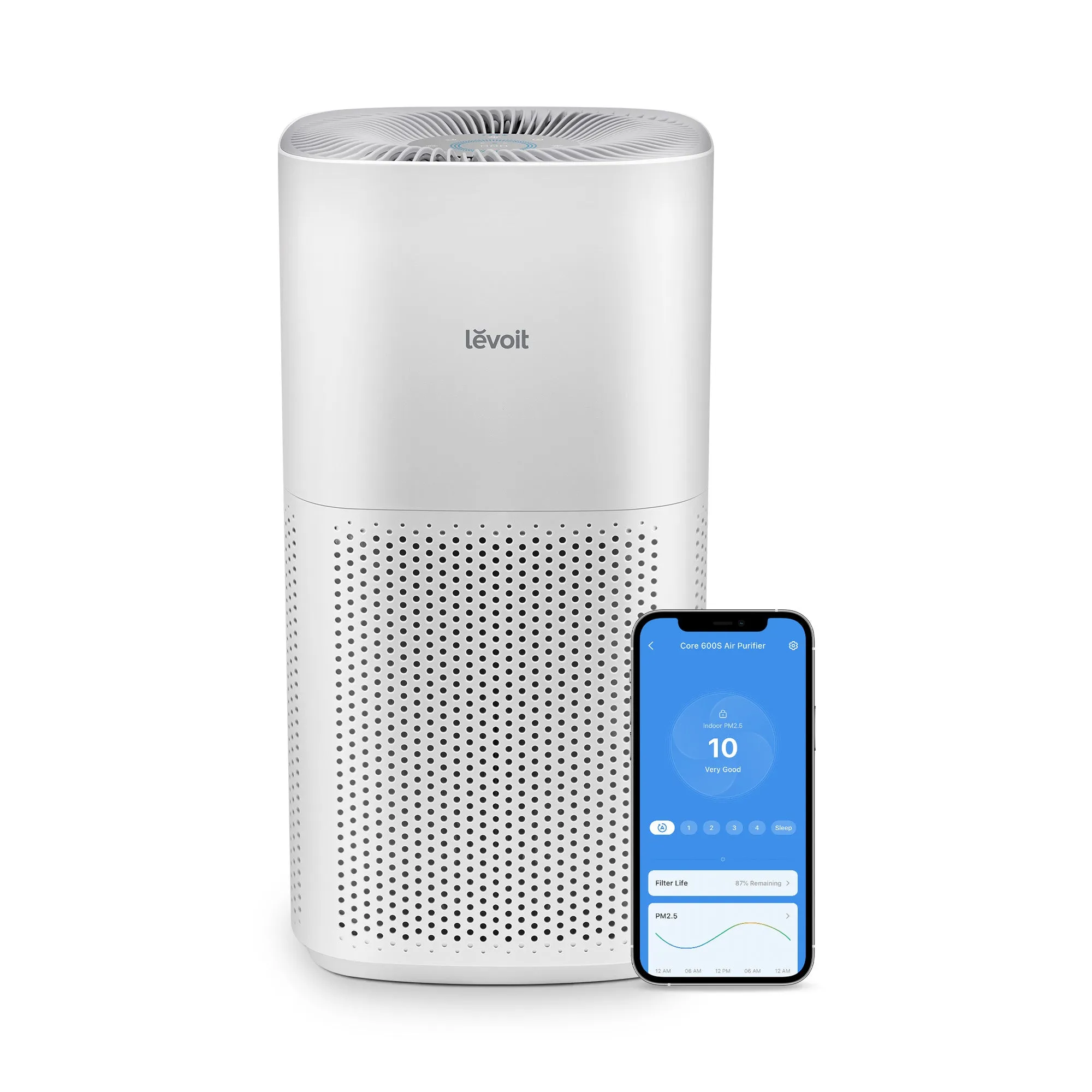
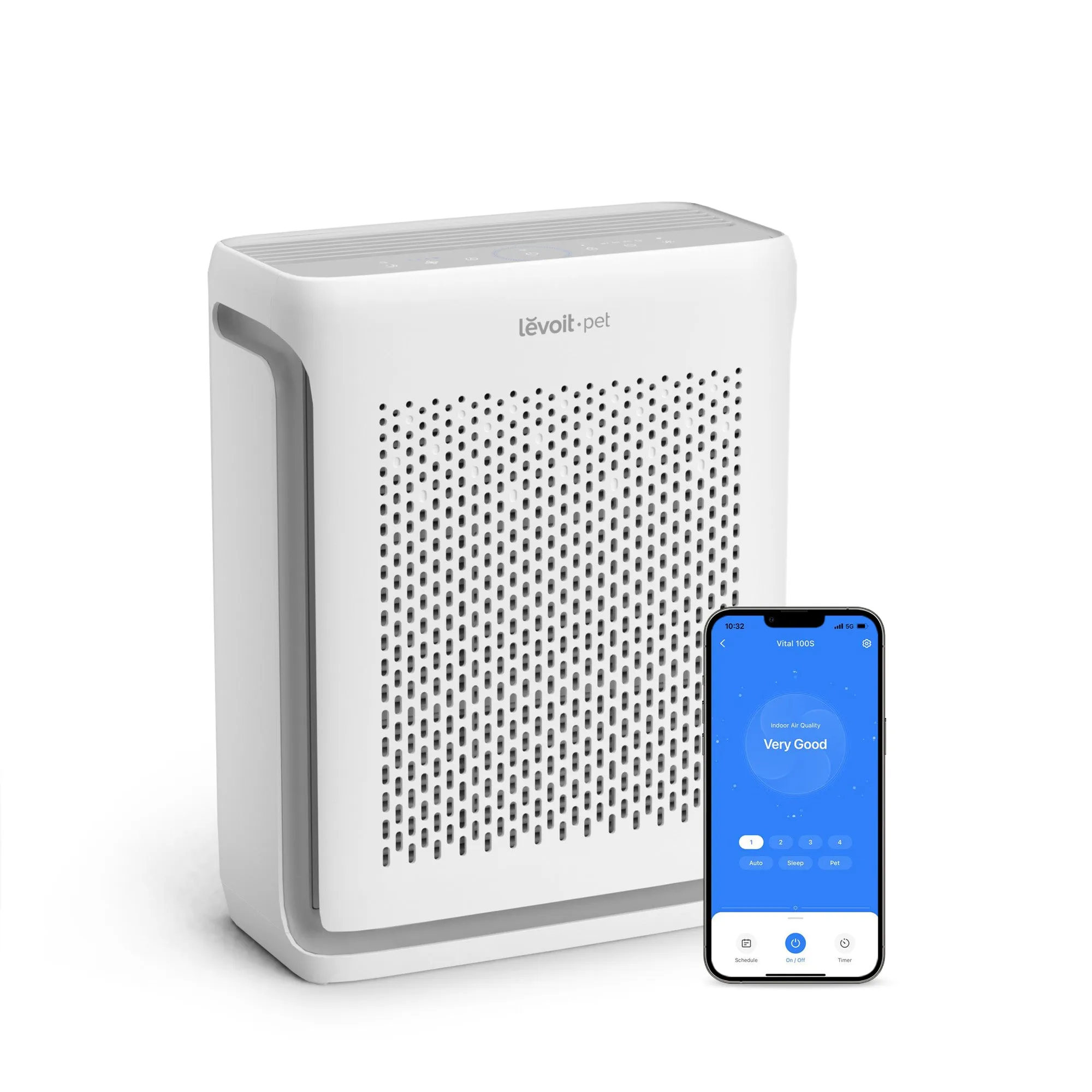
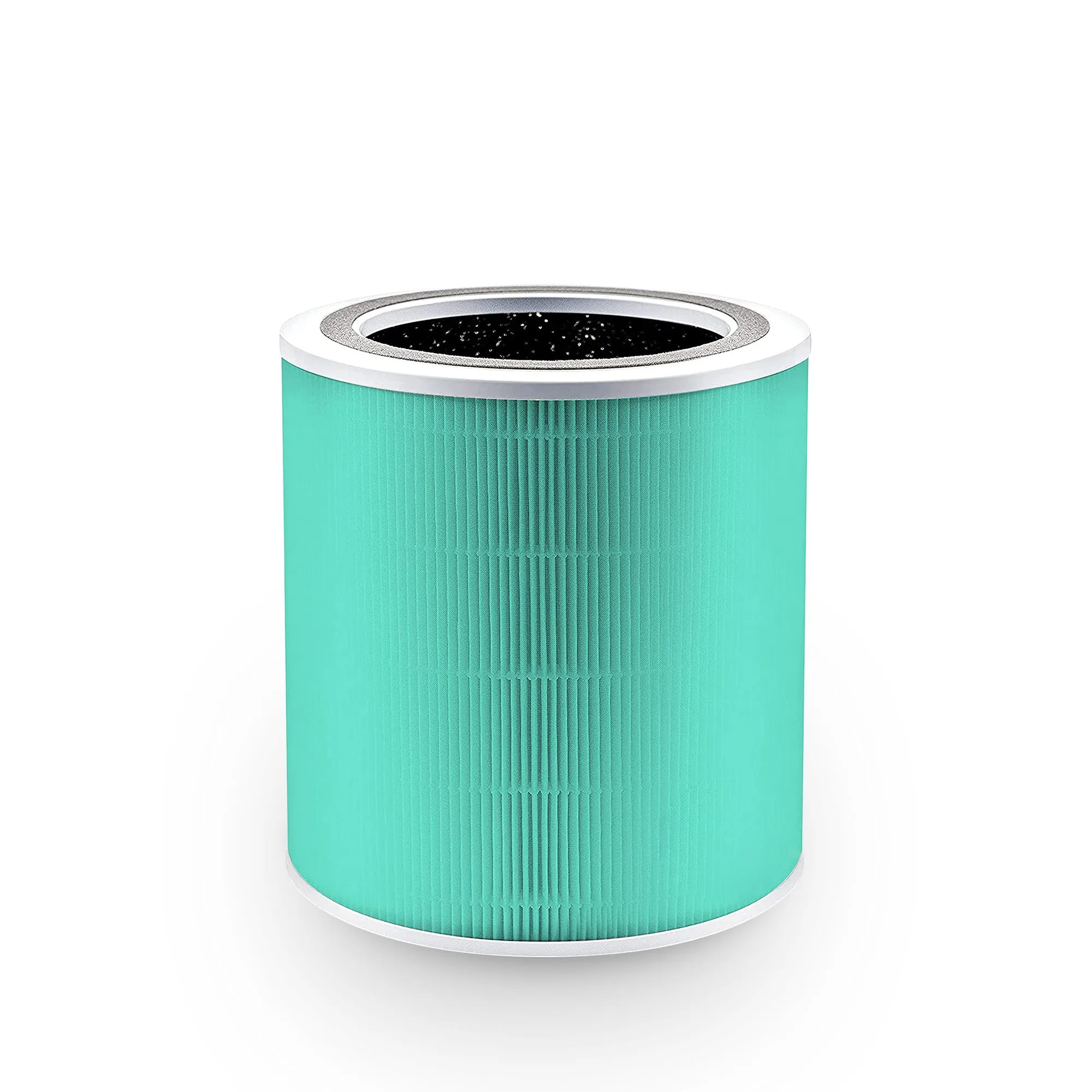
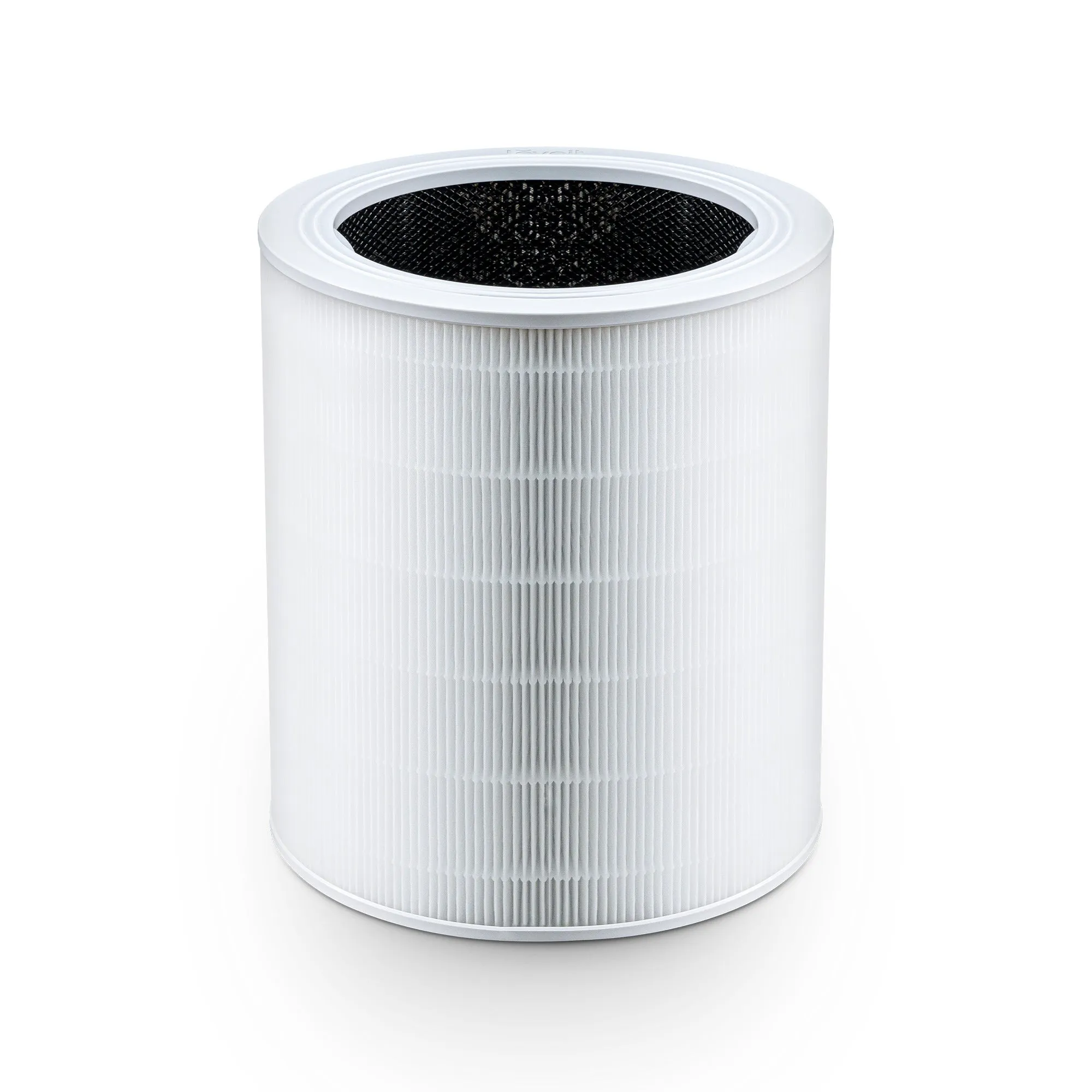
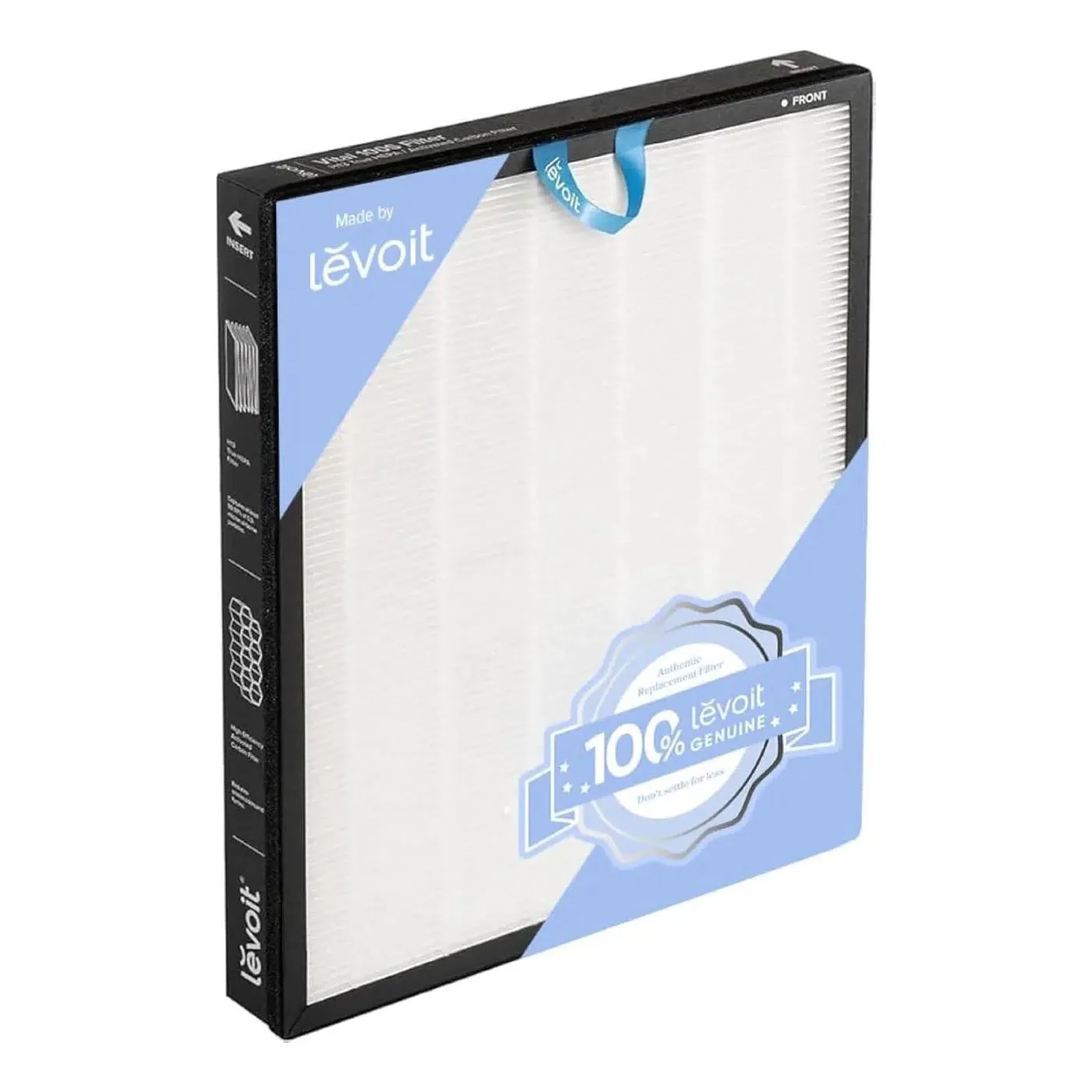
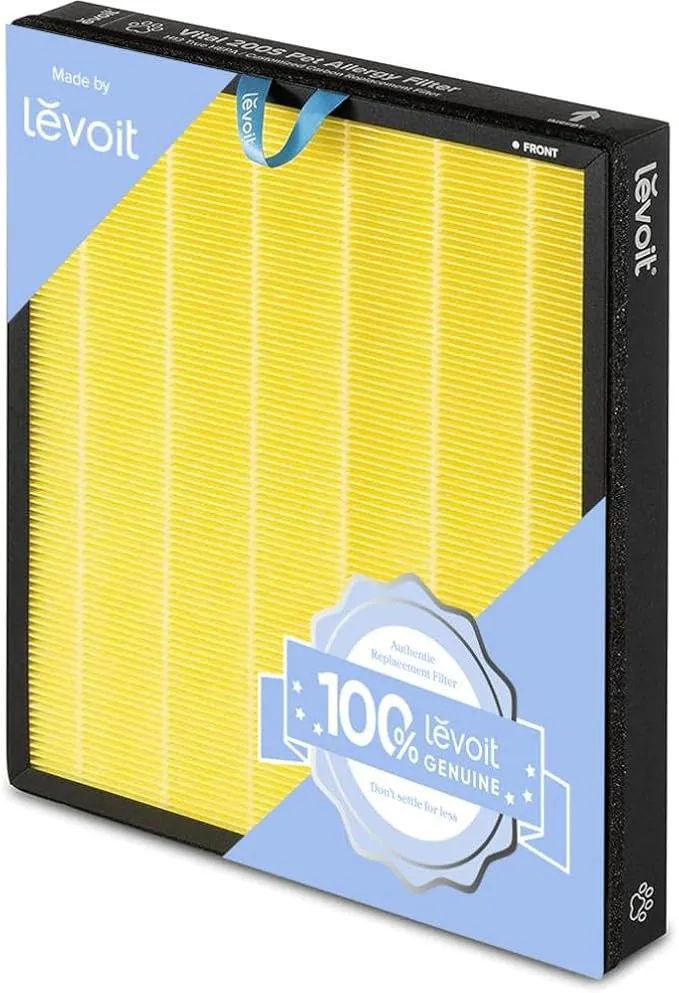
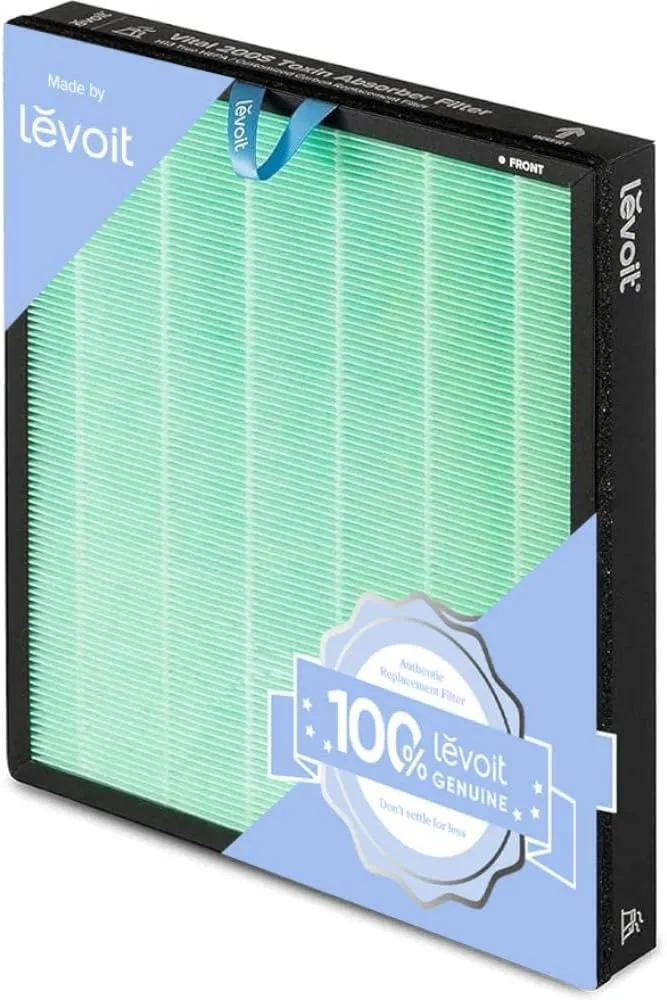
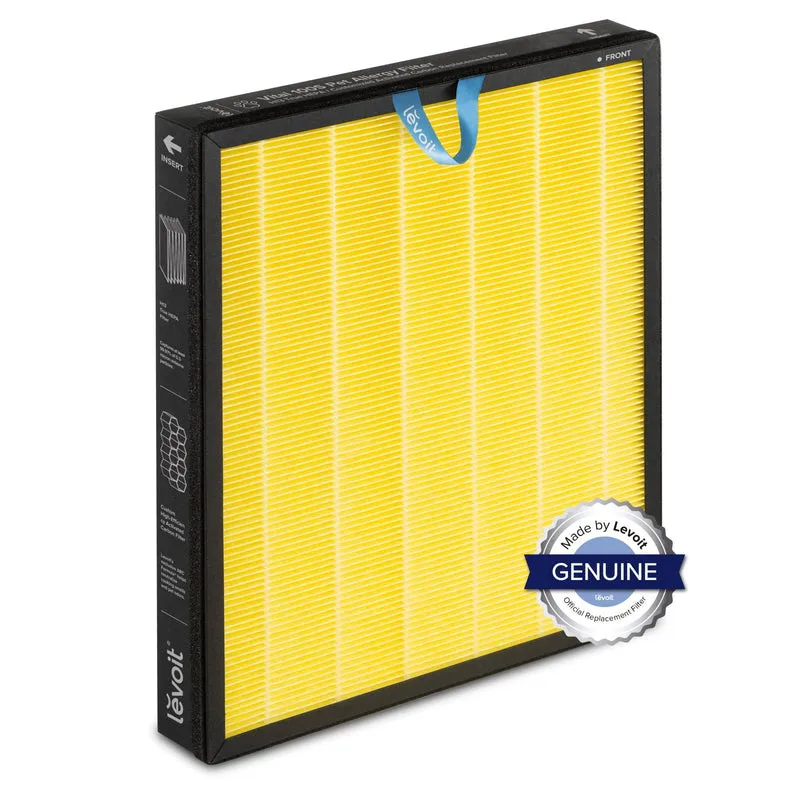
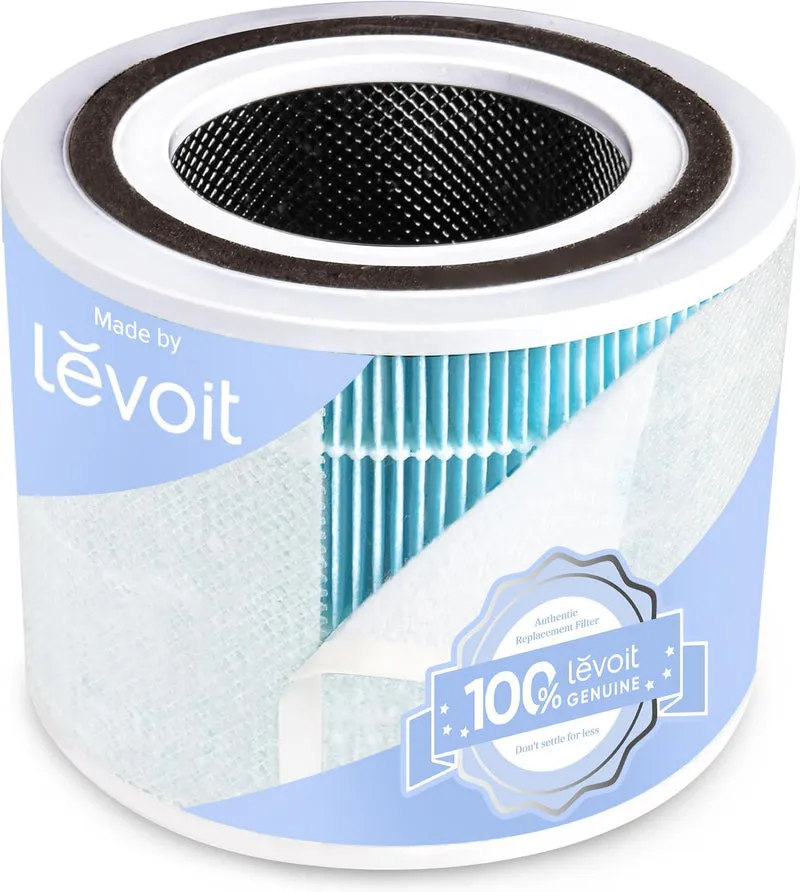
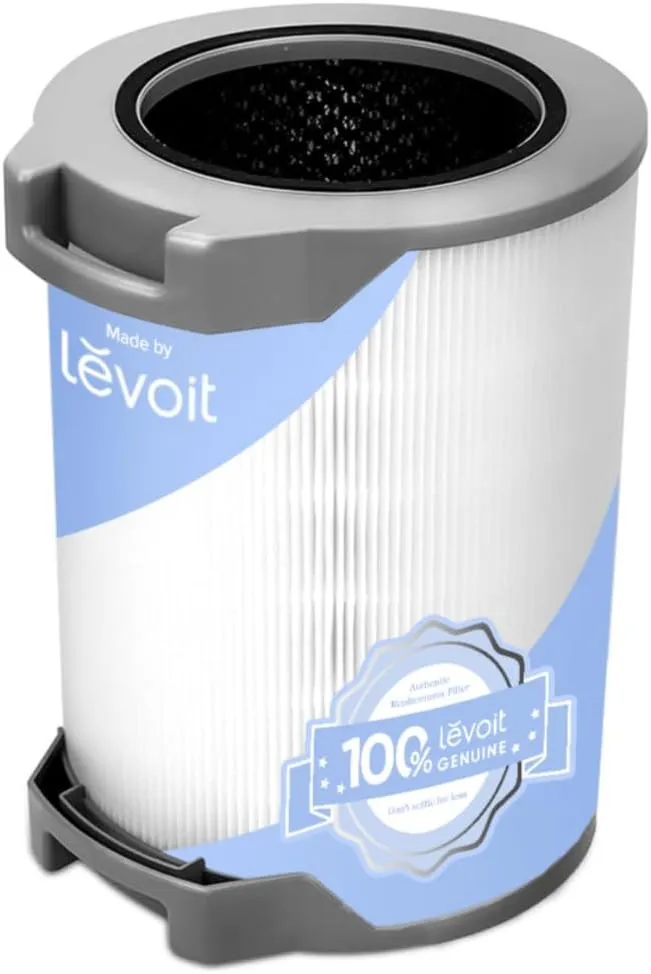
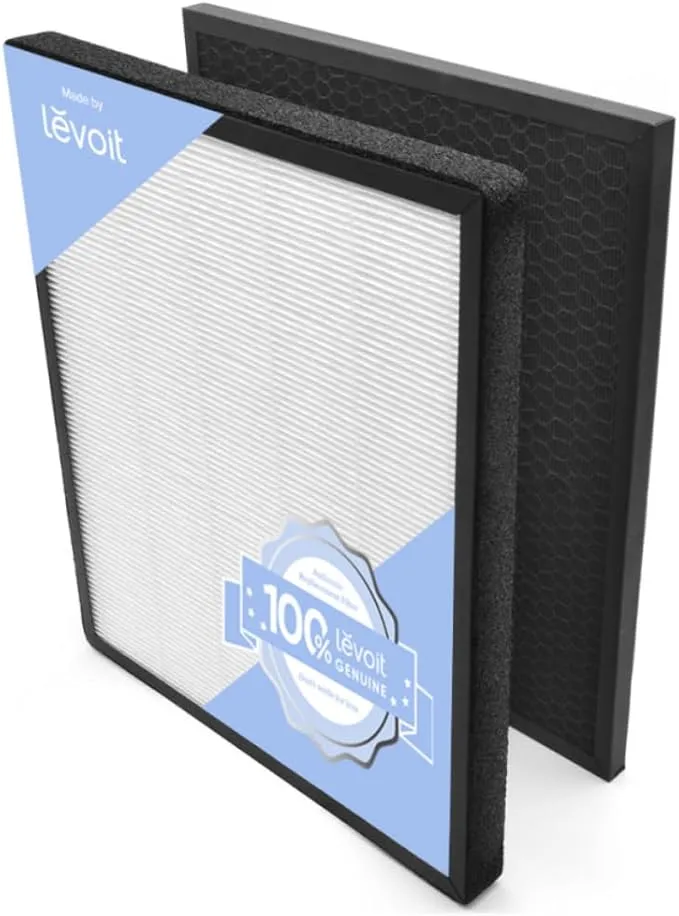
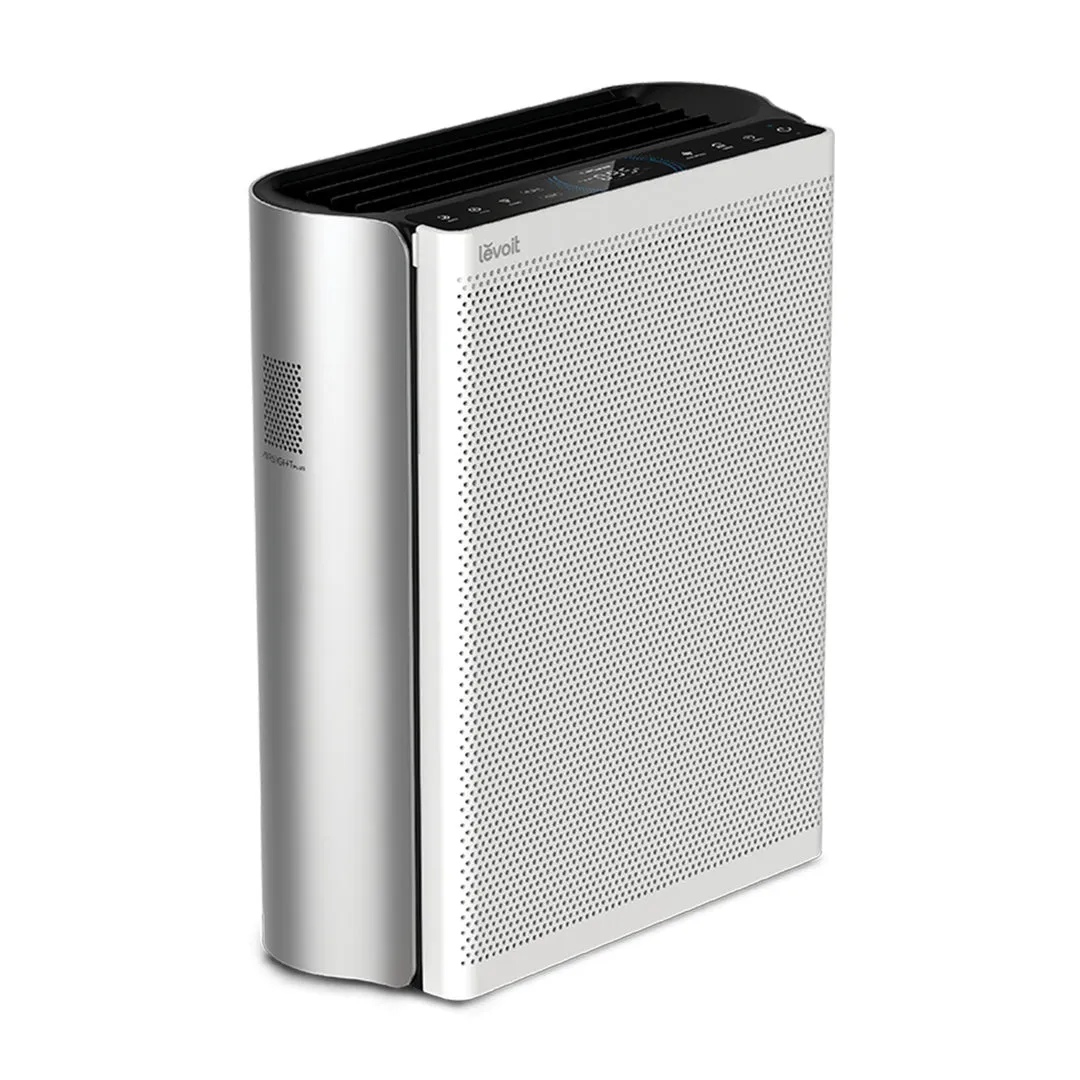
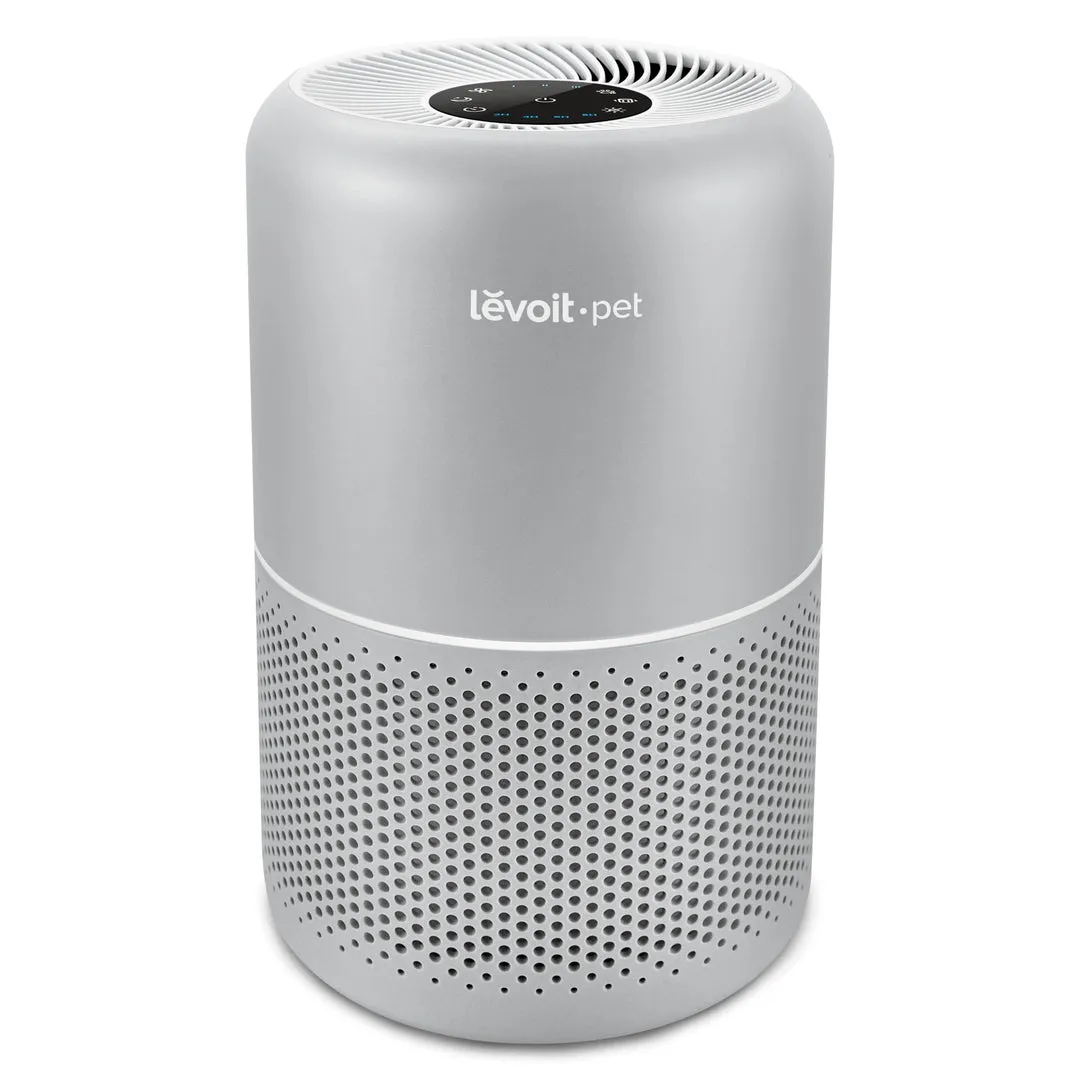
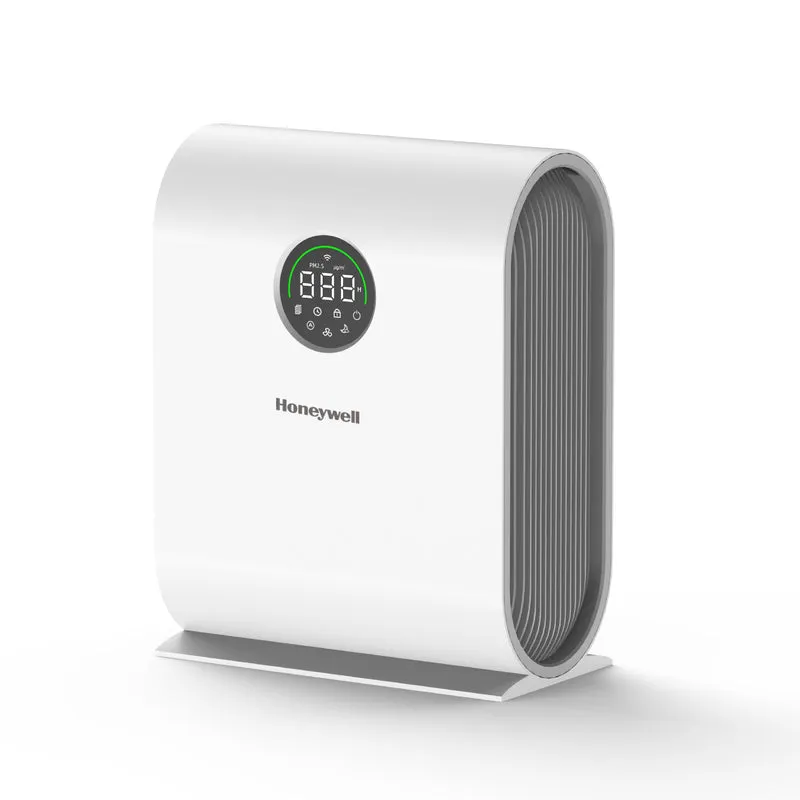
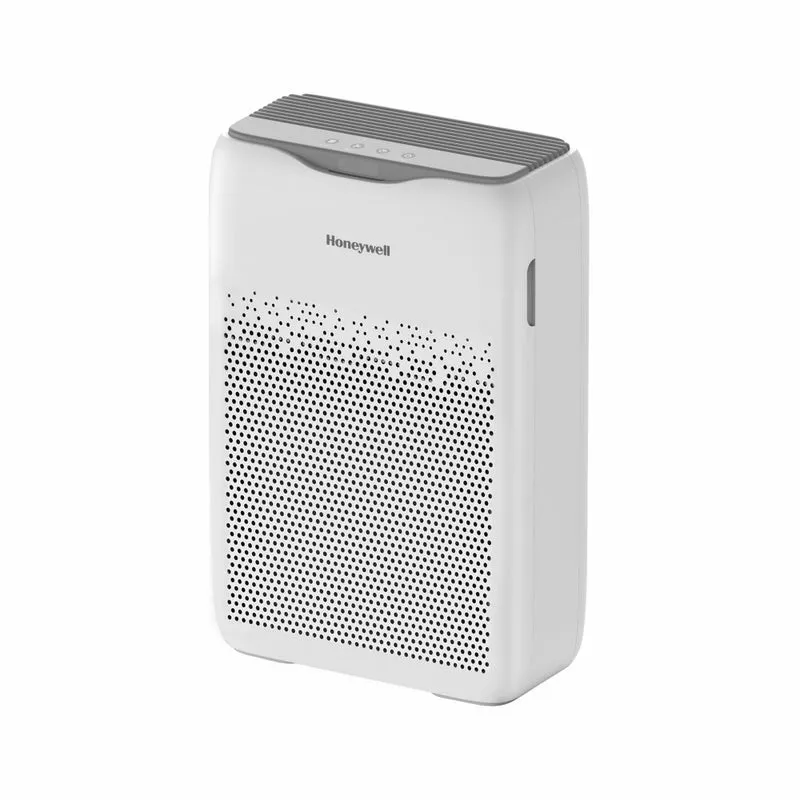
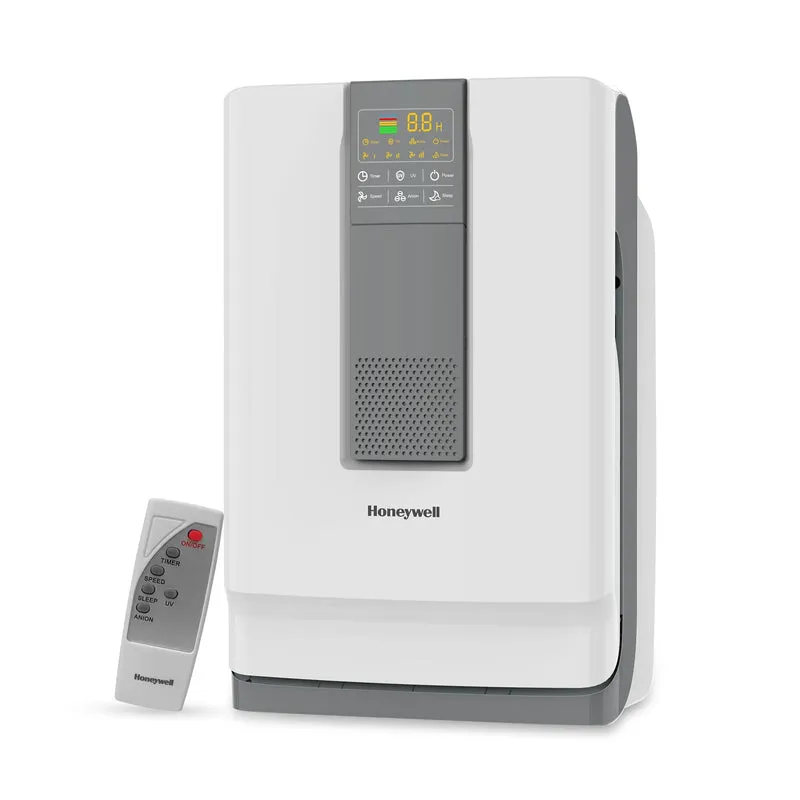
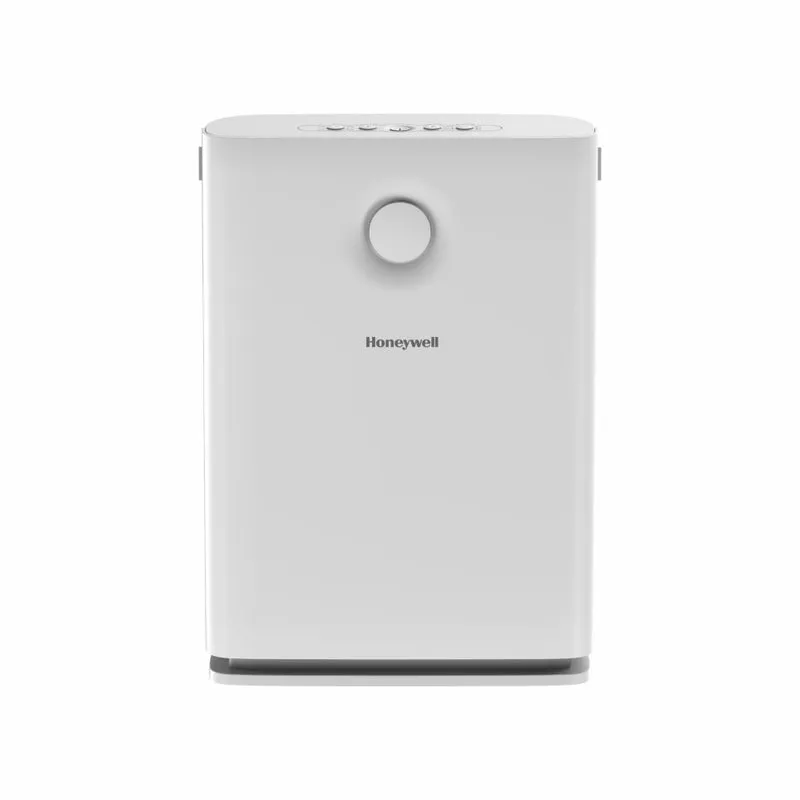
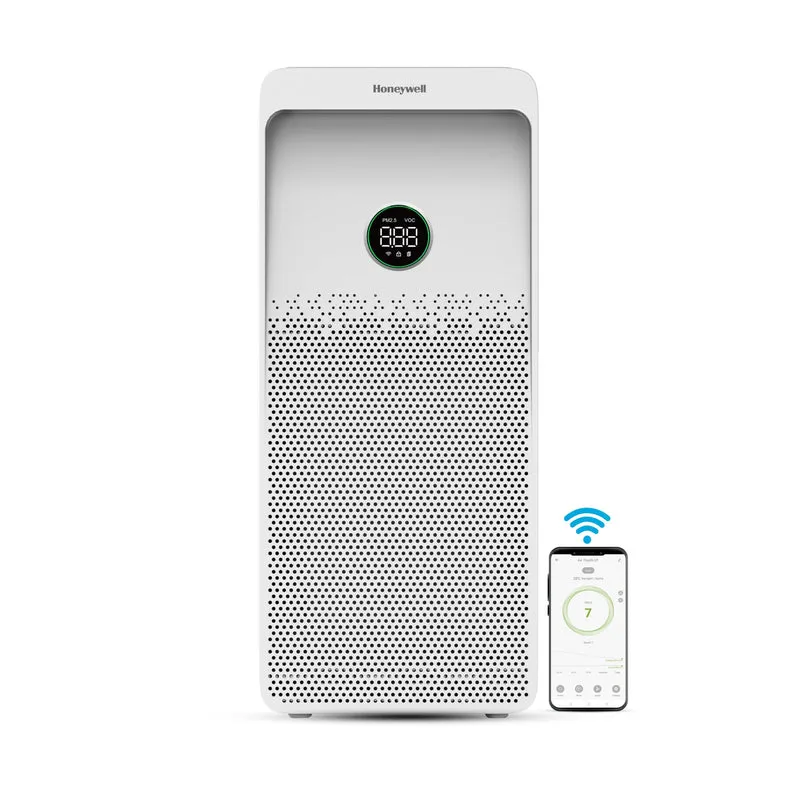
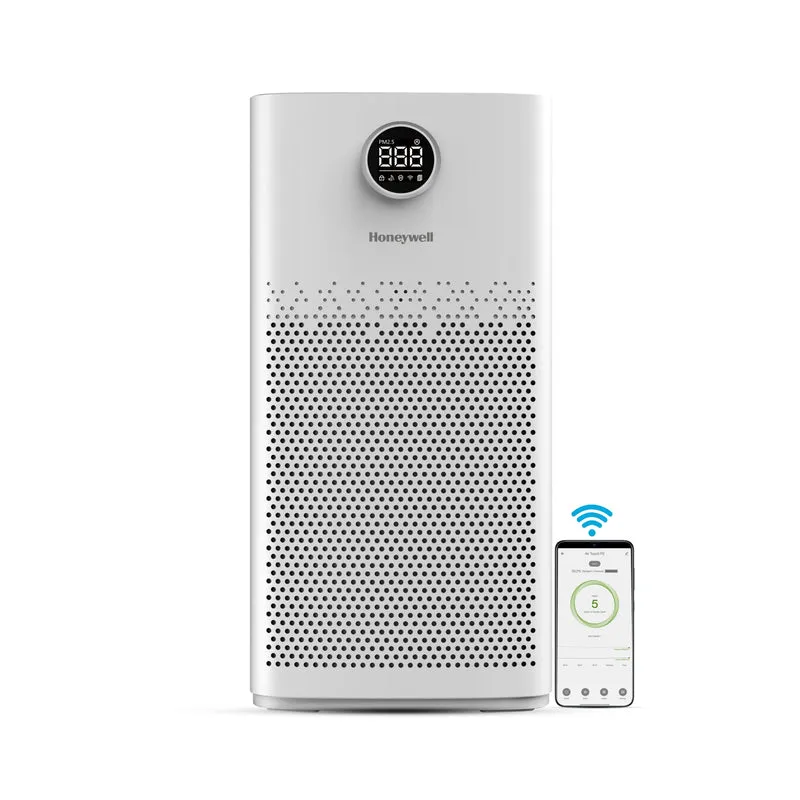
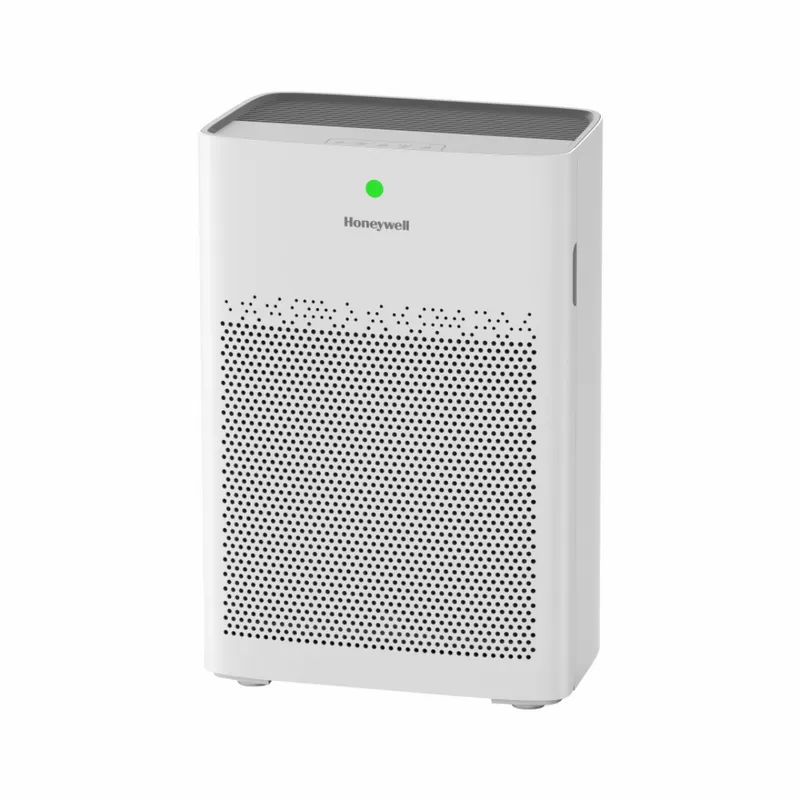
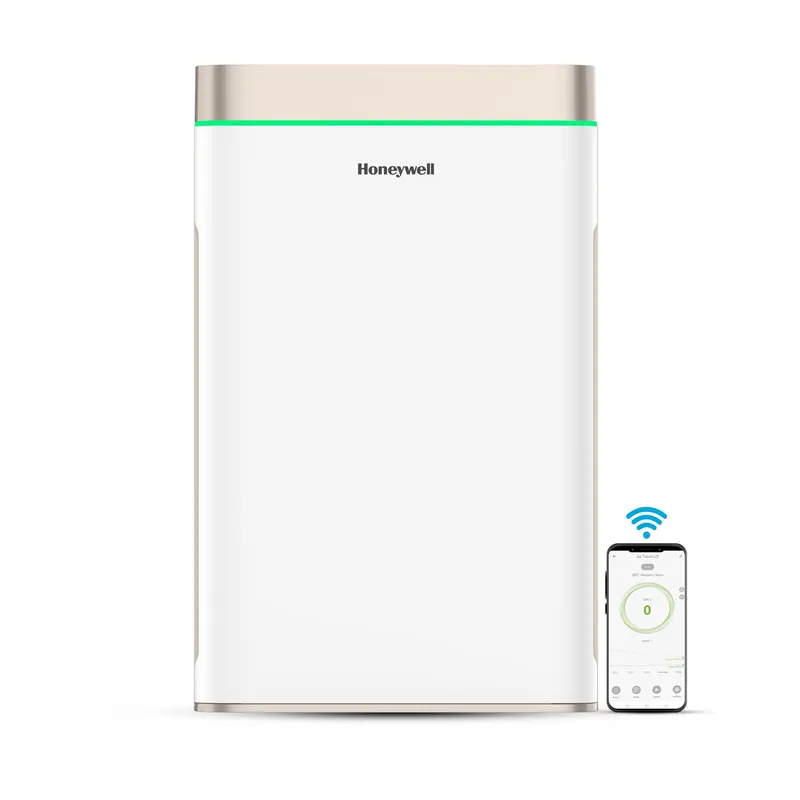
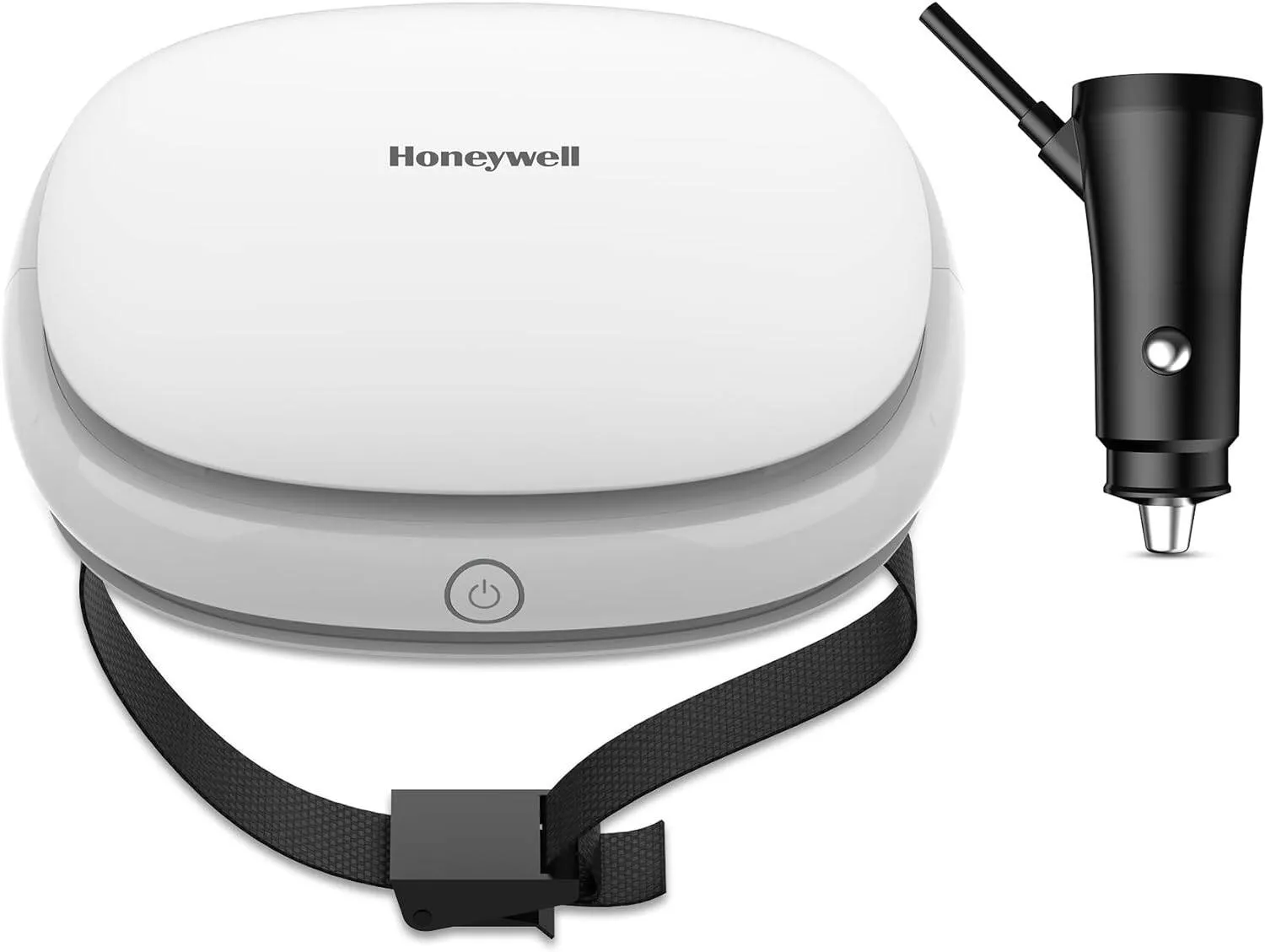
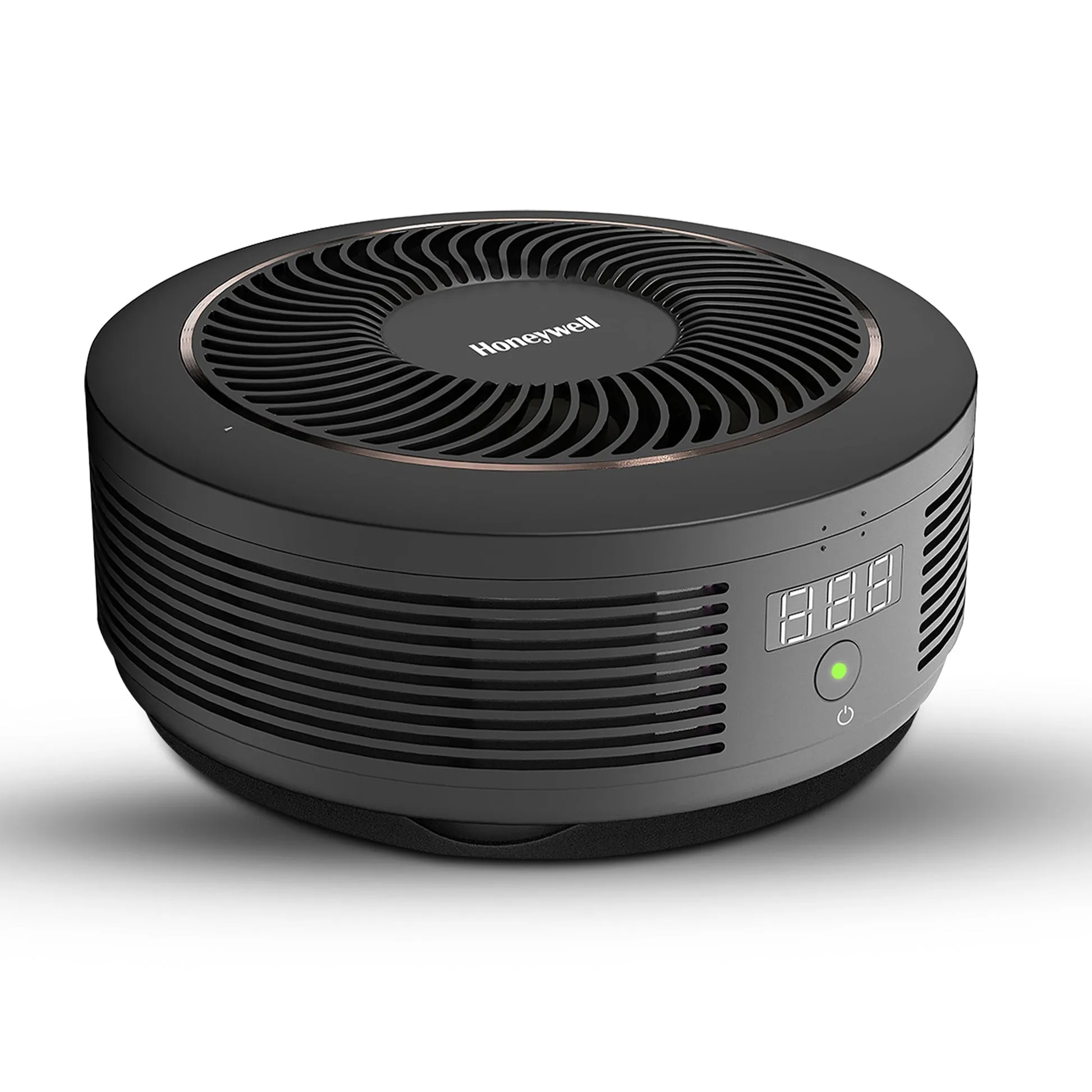
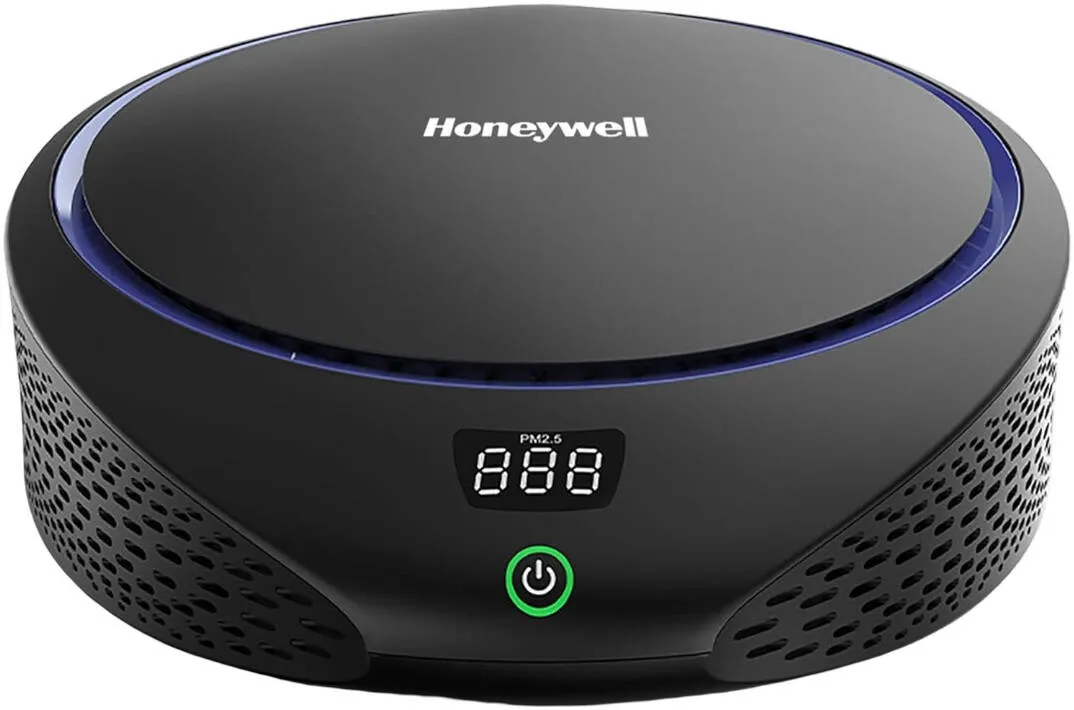
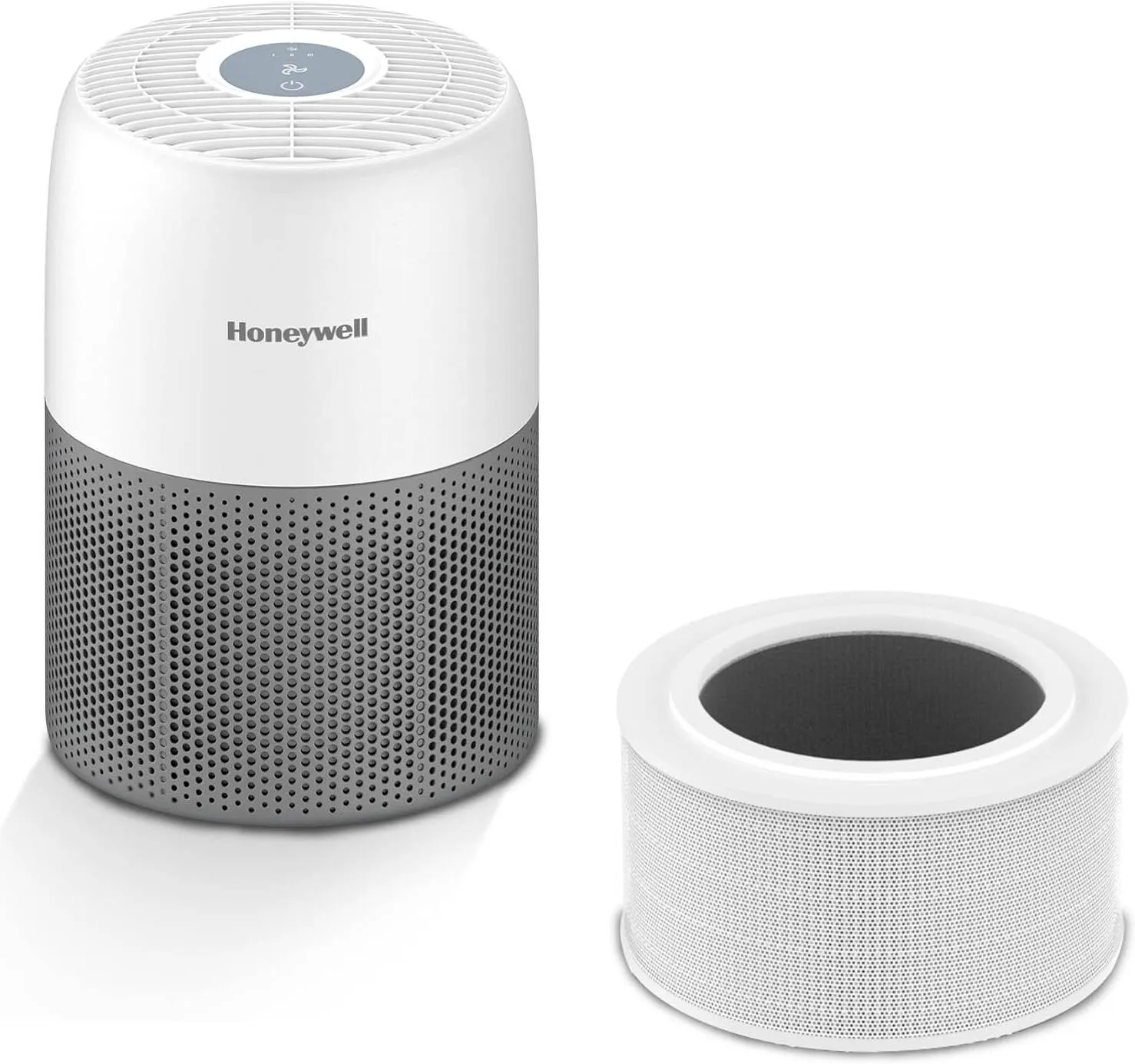
Cleanair-ae stocks air purifiers from Blueair, Honeywell, and Levoit, all featuring activated carbon and HEPA filtration suited to UAE homes and offices. These units address the full range of indoor odors, from cooking and tobacco to VOCs from furnishings, after source control and ventilation are in place. For those exploring options beyond a standard purifier, the 8 proven odor control methods guide covers additional approaches worth considering. Replacement filters are available with free UAE delivery on orders over 49 AED, covering Dubai, Abu Dhabi, and the wider UAE. For a full product comparison, the 2026 air purifier buying guide helps you select the right unit for your space and odor type.
FAQ
Why reduce indoor odors rather than just masking them?
Masking adds chemical irritants without removing the pollutant source. True odor reduction eliminates the compound causing the smell, which directly improves air quality and reduces health risks.
What health problems do indoor odors cause?
Indoor odors trigger headaches, nausea, respiratory irritation, and stress responses via the vagus nerve. Chronic exposure also disrupts sleep and contributes to mental fatigue over time.
Do HEPA filters remove indoor odors?
HEPA filters capture particles but not gases or VOCs. Odor removal requires an activated carbon filter, which adsorbs the gaseous compounds responsible for most indoor smells.
How does ventilation help with indoor odors?
Ventilation dilutes and expels odor-laden air. Natural ventilation is cost-effective but depends on outdoor air quality; mechanical ventilation provides more consistent airflow control.
How often should I replace activated carbon filters?
Replacement frequency depends on usage and pollutant load, but most manufacturers recommend every 3 to 6 months for households with persistent odor sources such as cooking, pets, or tobacco.