
Uncategorised
How air purifiers transform pet-friendly homes for allergy relief
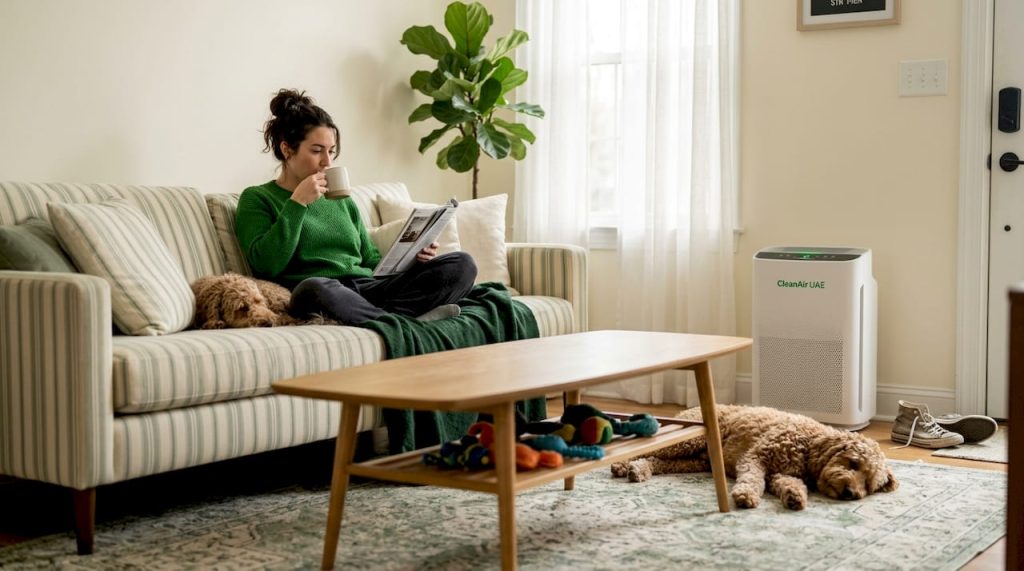
Pet owners in the UAE who vacuum daily, groom their animals regularly, and wash bedding every week are often shocked to learn their indoor air still carries significant levels of allergens. Continuous HEPA operation can reduce airborne pet allergens by 85 to 95% in multi-pet homes, a result no mop or vacuum cleaner can match. This guide covers exactly why surface cleaning falls short, how air purifiers target the particles that cleaning misses, and what UAE pet owners need to know to choose, place, and use the right unit for real, measurable relief.
Table of Contents
- Why typical cleaning isn’t enough: The hidden world of pet allergens
- How air purifiers actually work against pet allergens
- Choosing and using the right air purifier: Keys to success in UAE homes
- What to expect: Real-world results and limitations
- Why focusing on air circulation is the real game changer for pet owners
- Ready to breathe easier with the right air purifier?
- Frequently asked questions
Key Takeaways
| Point | Details |
|---|---|
| HEPA filters lower allergens | Independent data shows HEPA units reduce up to 95% of pet dander and allergens in air within an hour. |
| Proper placement is crucial | Air purifiers should be correctly sized and positioned away from corners in main living and sleeping areas for best results. |
| Avoid ozone and ionizers | Only use HEPA-based purifiers, as ionizers and ozone generators can be harmful to pets. |
| Cleaning isn’t enough | Traditional cleaning misses much of the airborne allergen problem addressed by quality air purifiers. |
Why typical cleaning isn’t enough: The hidden world of pet allergens
Most people picture pet allergens as visible fur on the sofa or dust bunnies under the bed. The real problem is far smaller and far more persistent. Pet dander, which is microscopic flakes of skin shed by cats, dogs, birds, and other animals, measures between 2.5 and 10 microns. Particles that small stay suspended in the air for hours after a pet walks through a room, shakes itself, or simply breathes.
Here is what makes dander so difficult to control with cleaning alone:
- Dander is lightweight. It floats back into the air every time someone walks past, opens a door, or turns on a fan. Vacuuming lifts it off the floor and sends a portion straight back into the breathing zone.
- It sticks to fabrics. Curtains, sofas, mattresses, and clothing act as reservoirs. Even after washing, residual allergens can re-release into the air within hours.
- Saliva and urine proteins are just as problematic. The protein Fel d 1, the primary cat allergen, is carried on dried saliva particles that are even smaller than dander and can remain airborne for extended periods.
- UAE homes recirculate air intensively. Central air conditioning systems, which run almost year-round in Dubai and Abu Dhabi, push air through ducts and spread allergens from room to room unless filters are changed very frequently.
Surface cleaning addresses what you can see. Airborne allergens require an airborne solution.
Standard vacuum cleaners without HEPA filters actually worsen the situation by exhausting fine particles back into the room. Even HEPA vacuums only capture what has already settled. The particles still floating in the air, which represent the majority of what you actually breathe, remain untouched.
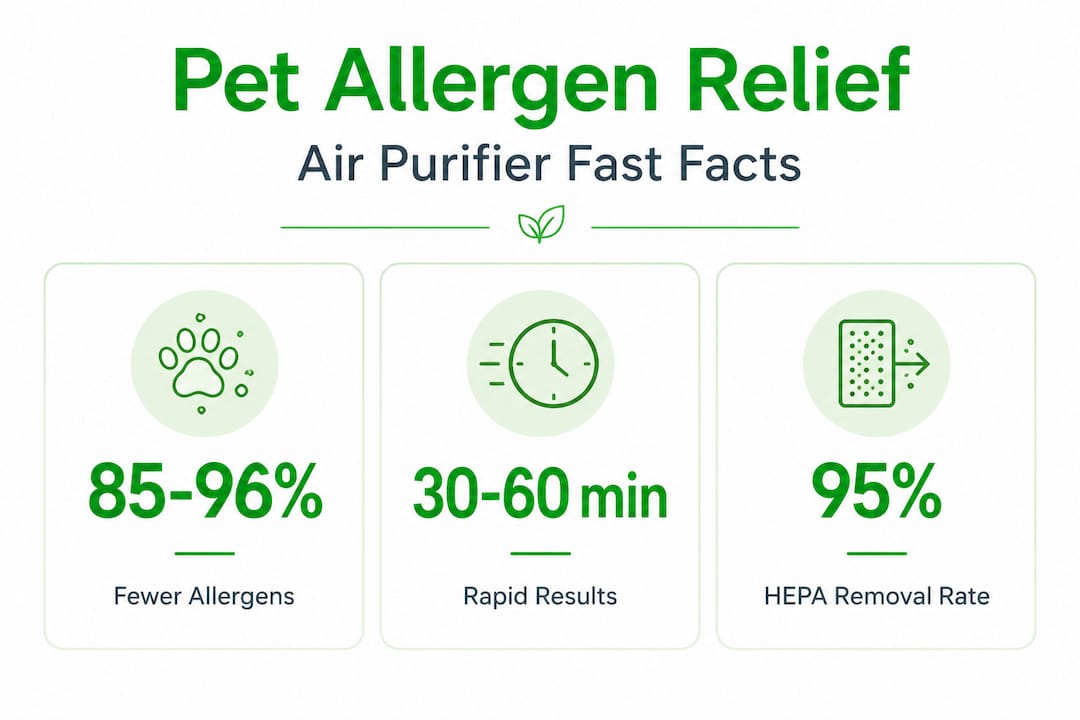
That is where air purifiers make a measurable difference. 85 to 95% reductions in airborne pet allergens have been recorded in multi-pet homes running HEPA purifiers continuously. No cleaning routine comes close to those numbers.
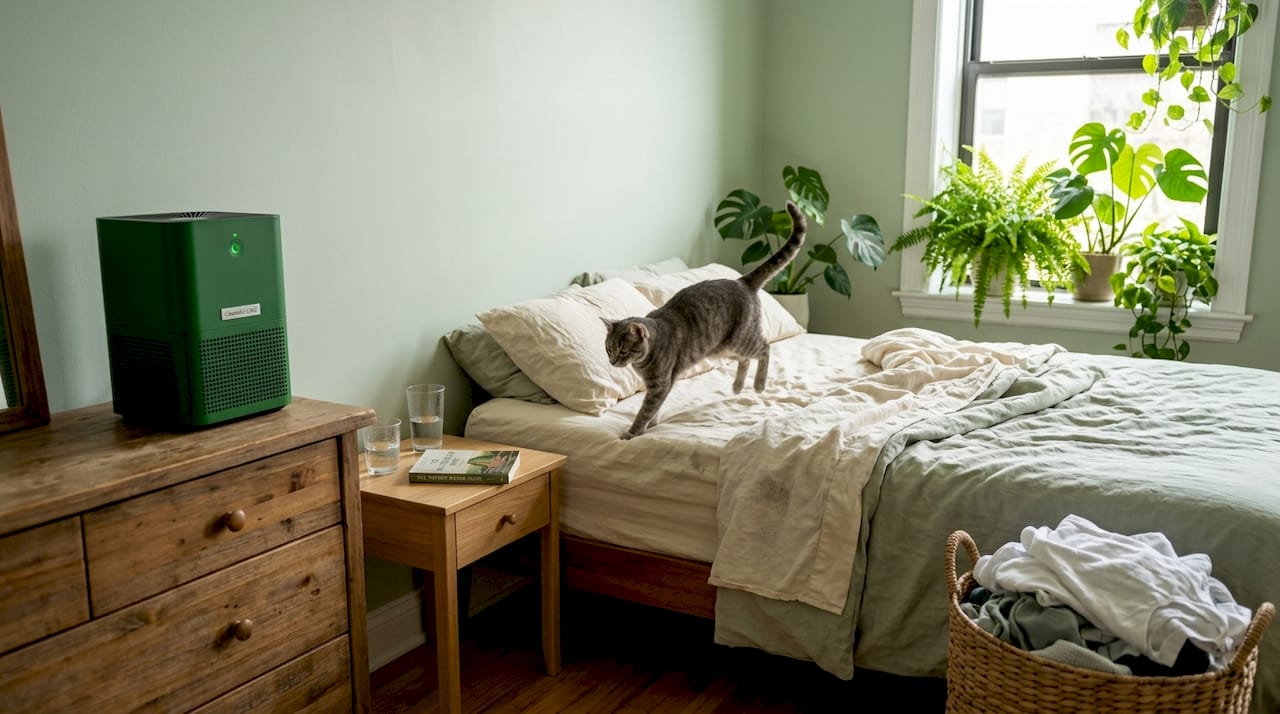
Pro Tip: Run your air purifier continuously rather than switching it on only when allergies flare up. Allergen levels build up gradually, and continuous operation keeps them consistently low rather than allowing peaks and valleys.
How air purifiers actually work against pet allergens
Understanding the mechanism helps you evaluate products more accurately and avoid wasting money on units that sound impressive but underperform in real pet homes.
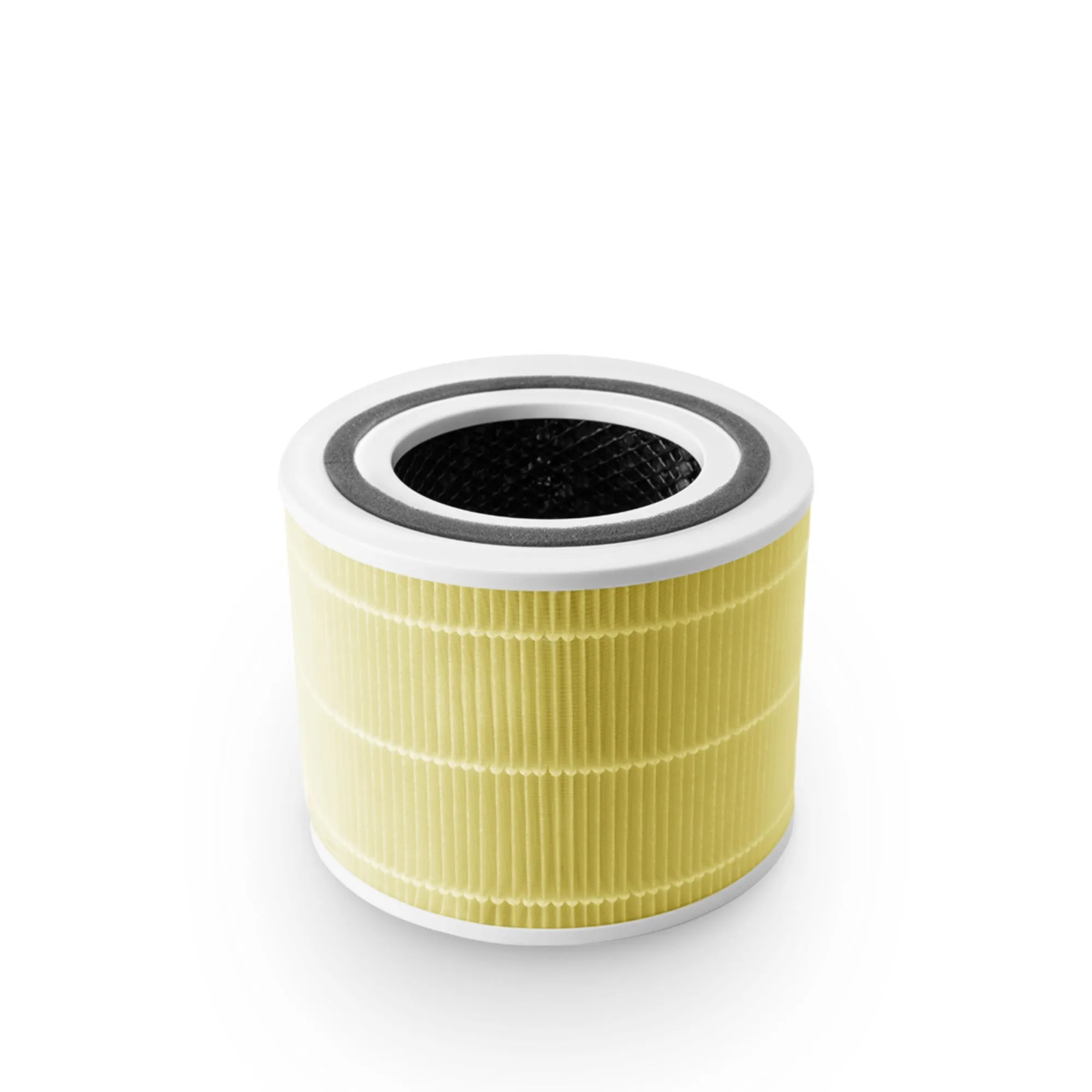
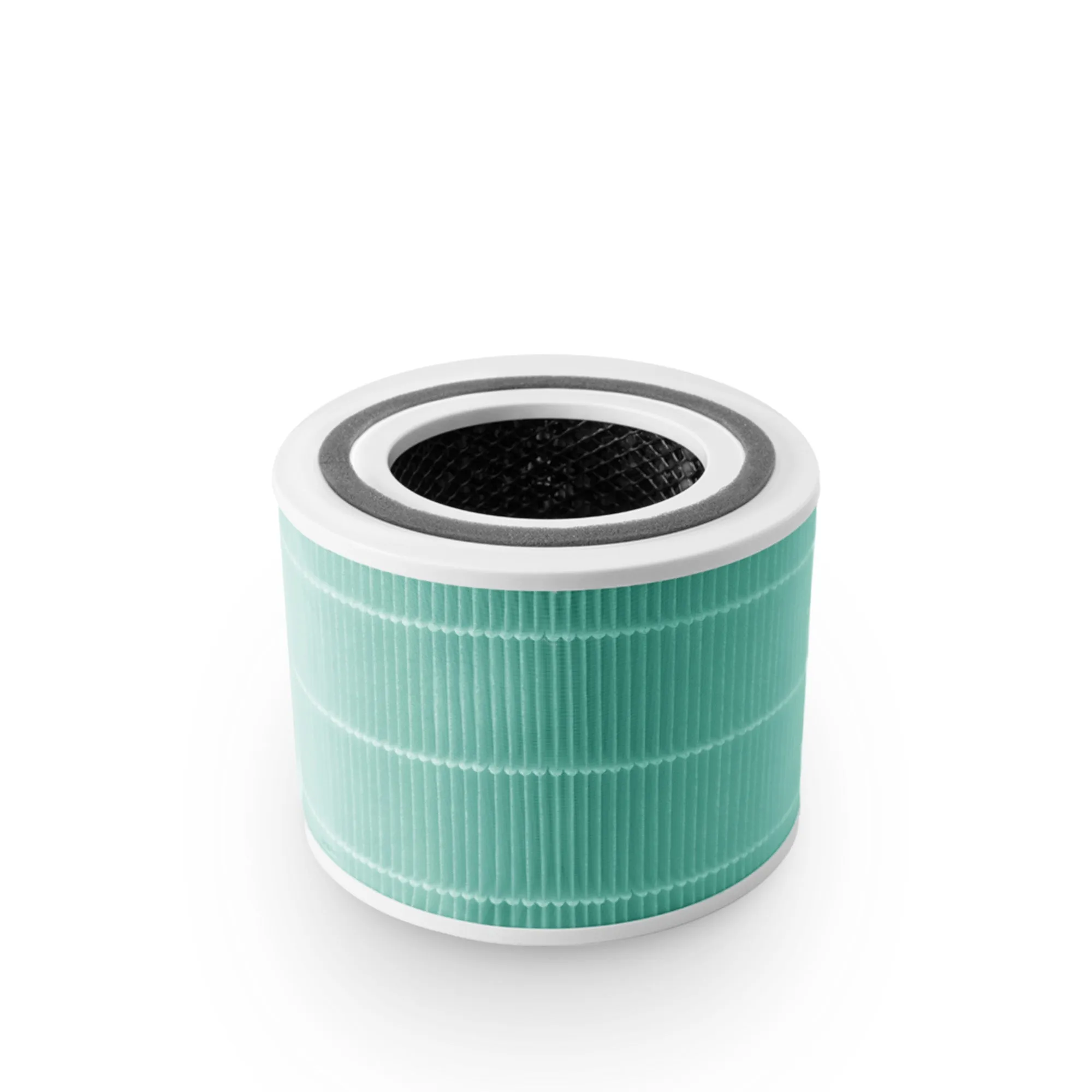
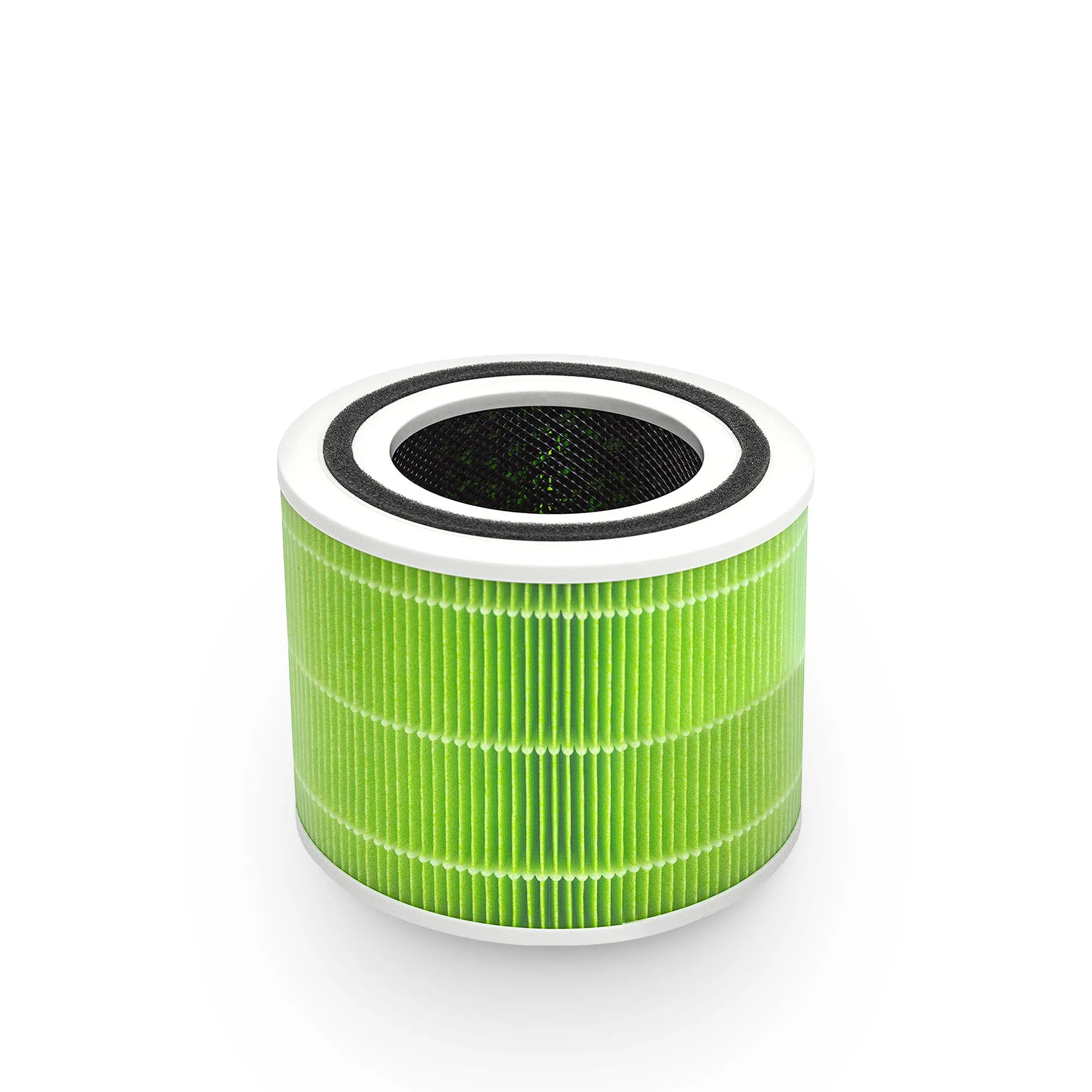
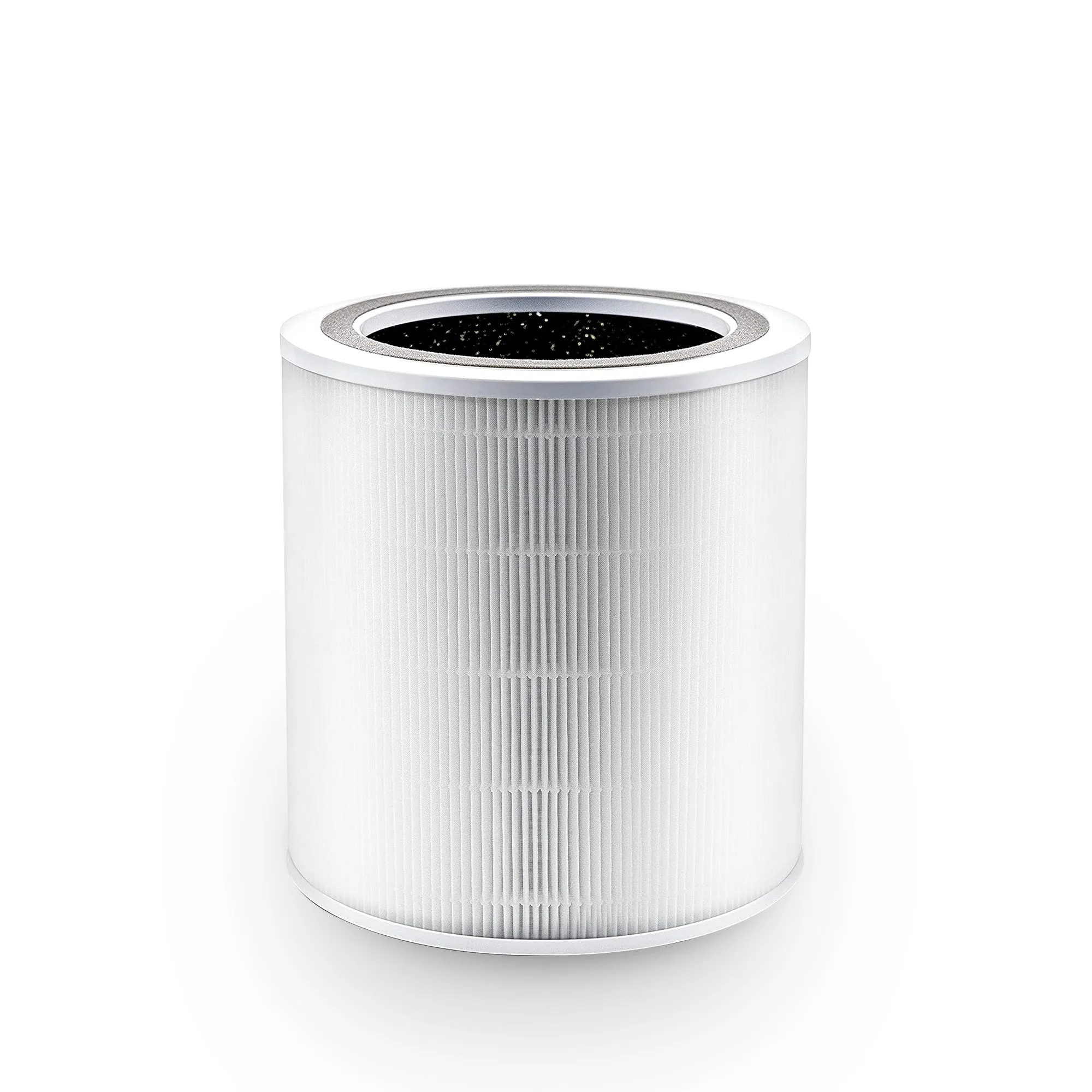
A true HEPA filter, which stands for High Efficiency Particulate Air, captures 99.97% of particles at 0.3 microns in size. Pet dander, dried saliva proteins, and fine hair fragments all fall within the size range that HEPA filters are designed to catch. The filter works through three physical processes: interception (particles following airflow get caught on fibers), impaction (larger particles slam into fibers and stick), and diffusion (the smallest particles move erratically and collide with fibers). None of these processes require chemicals or electricity beyond the fan motor.
How a quality air purifier processes air step by step:
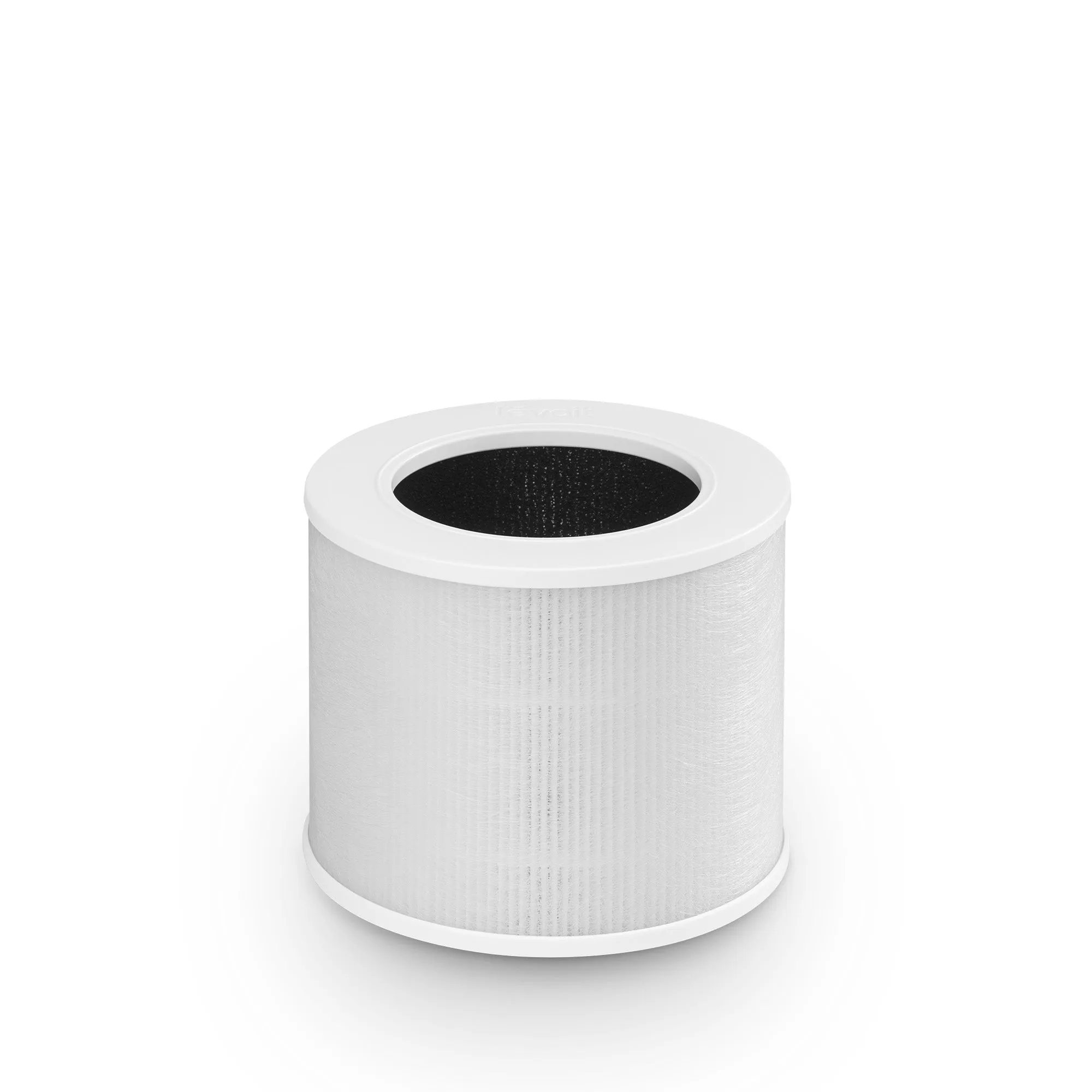
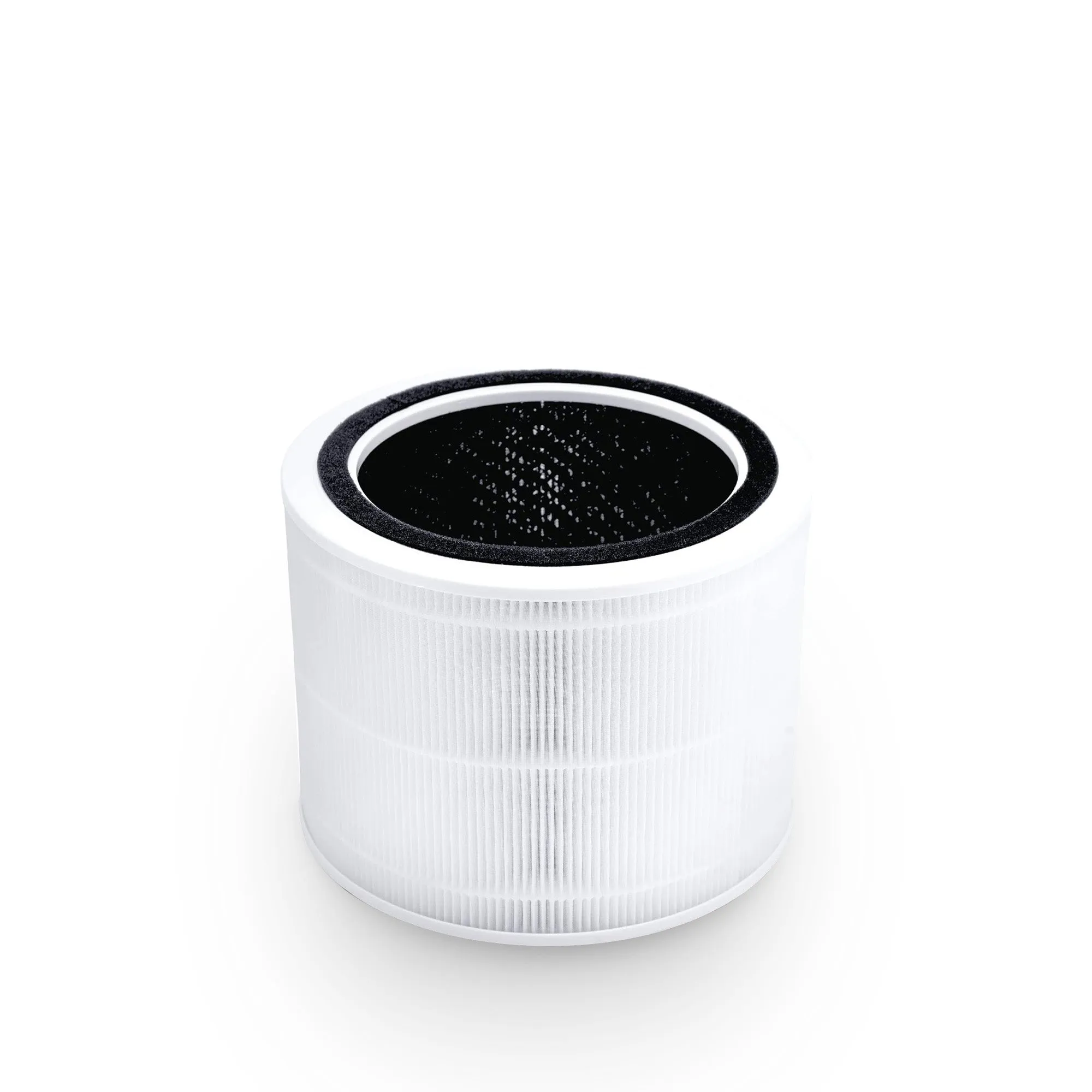
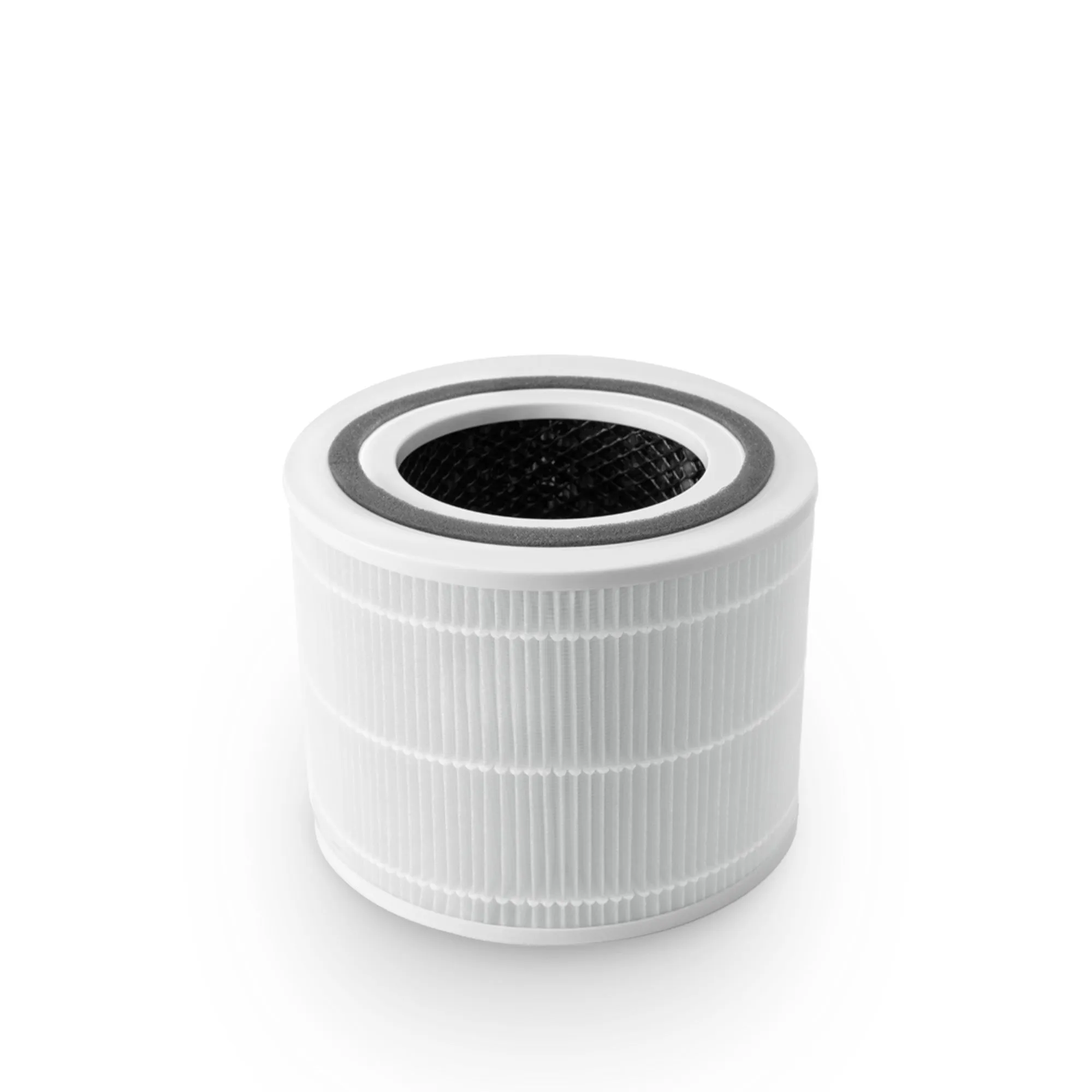
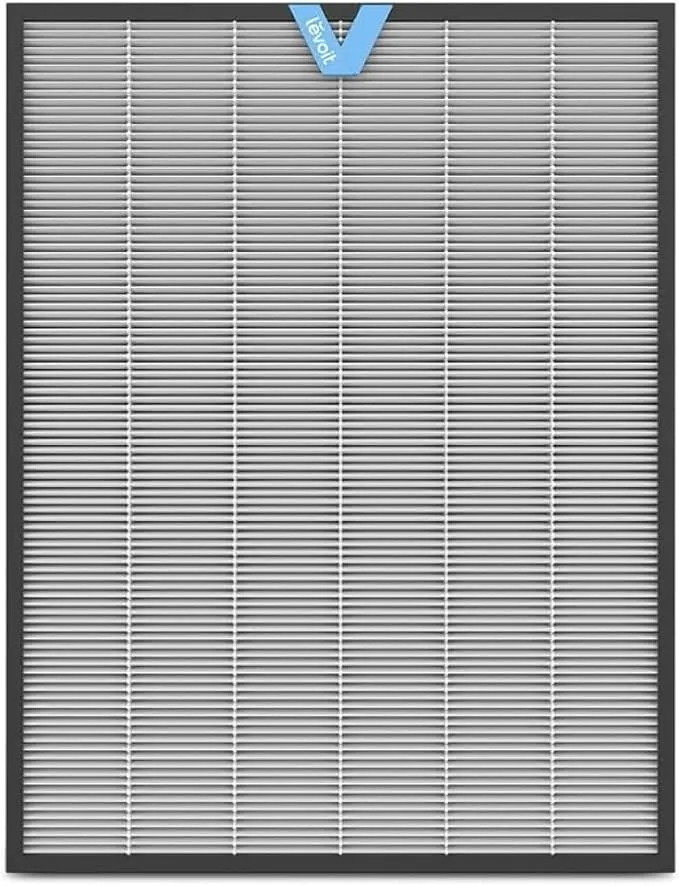
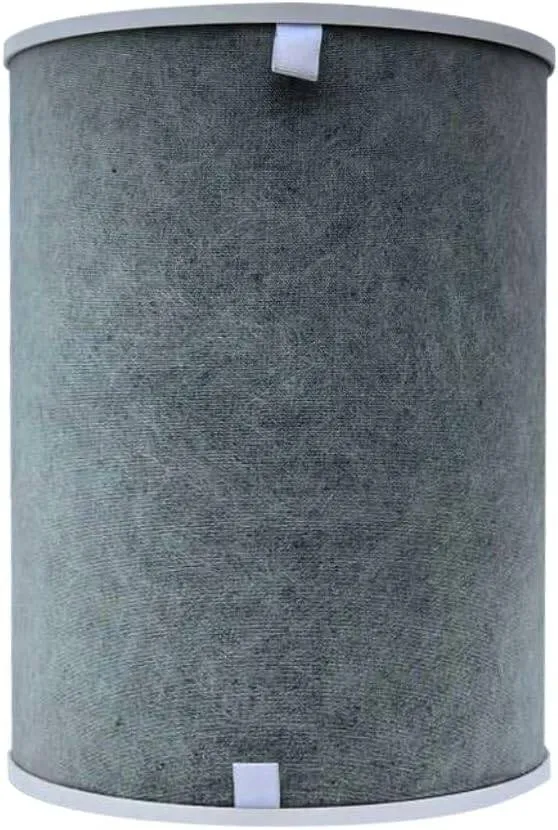
- Pre-filter stage. A coarse mesh captures large particles like visible pet hair and dust. This protects the HEPA filter and extends its lifespan.
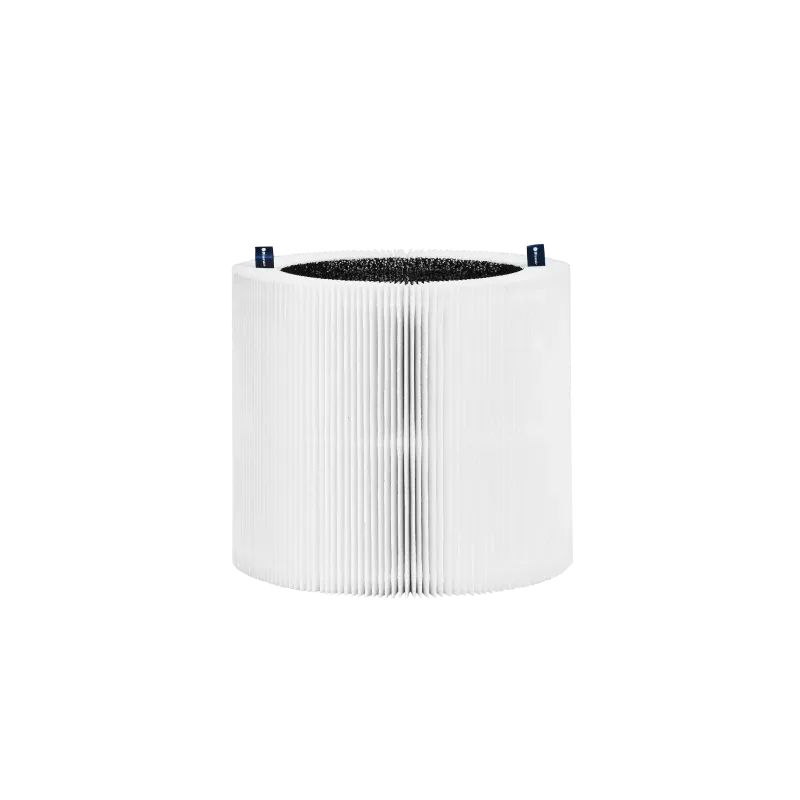
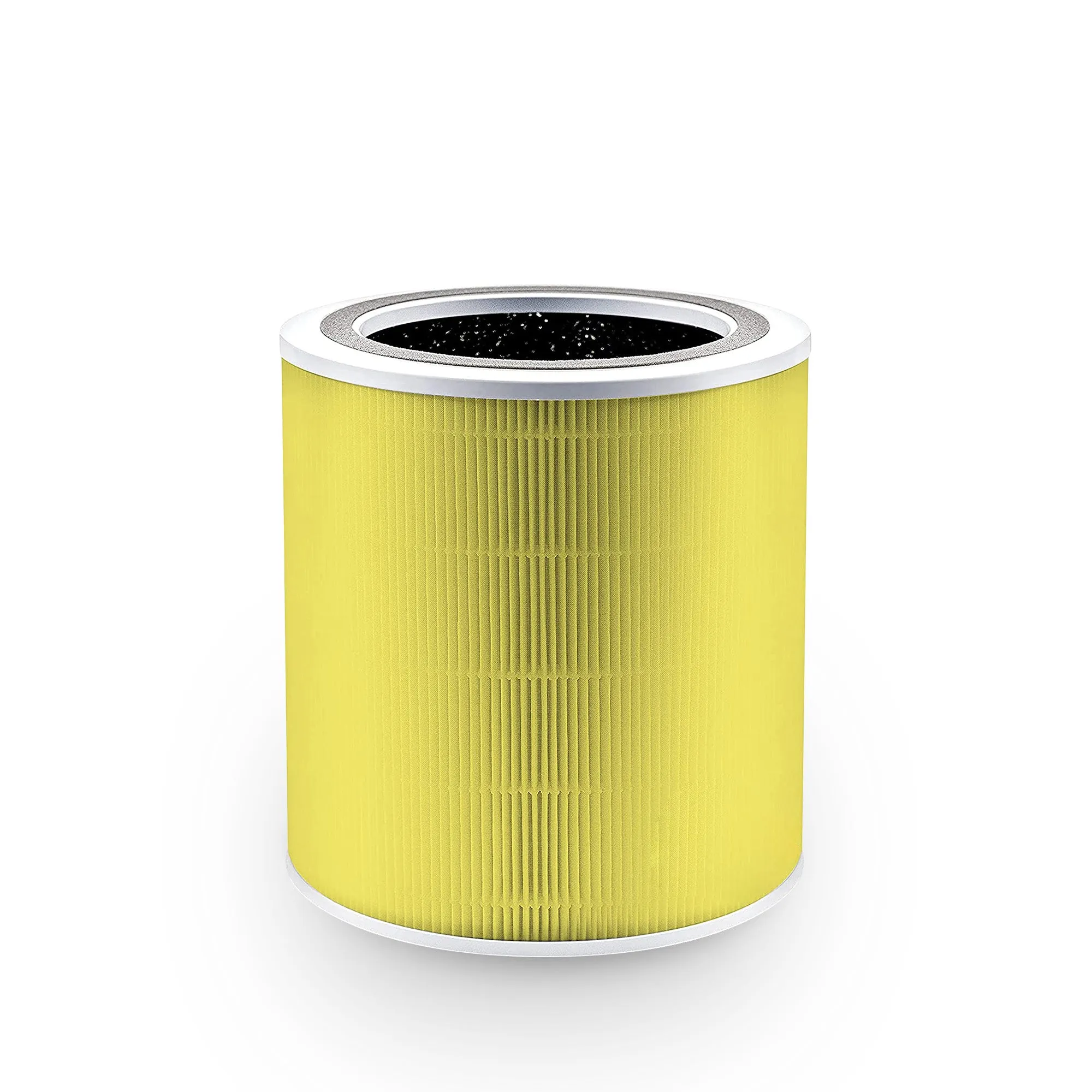
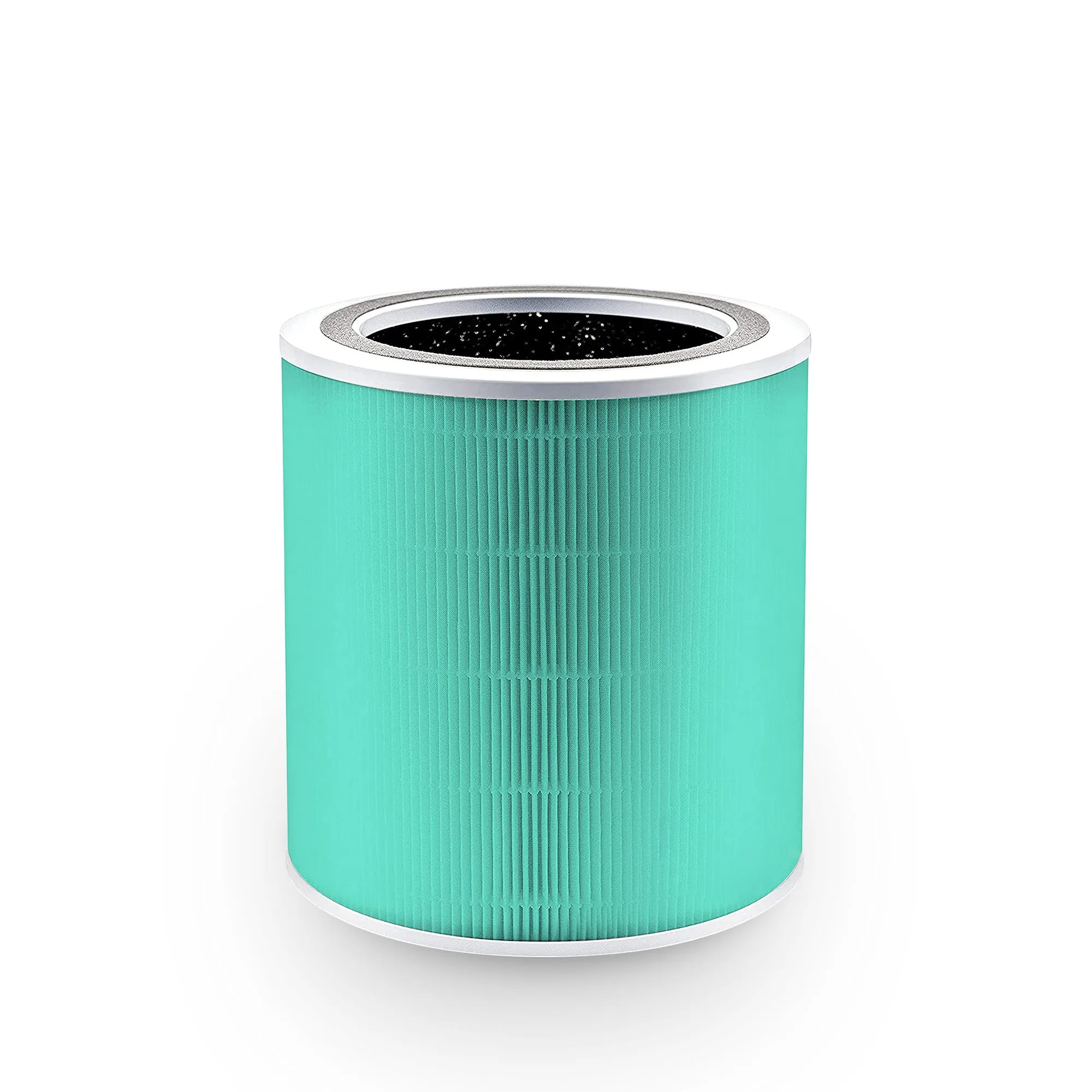
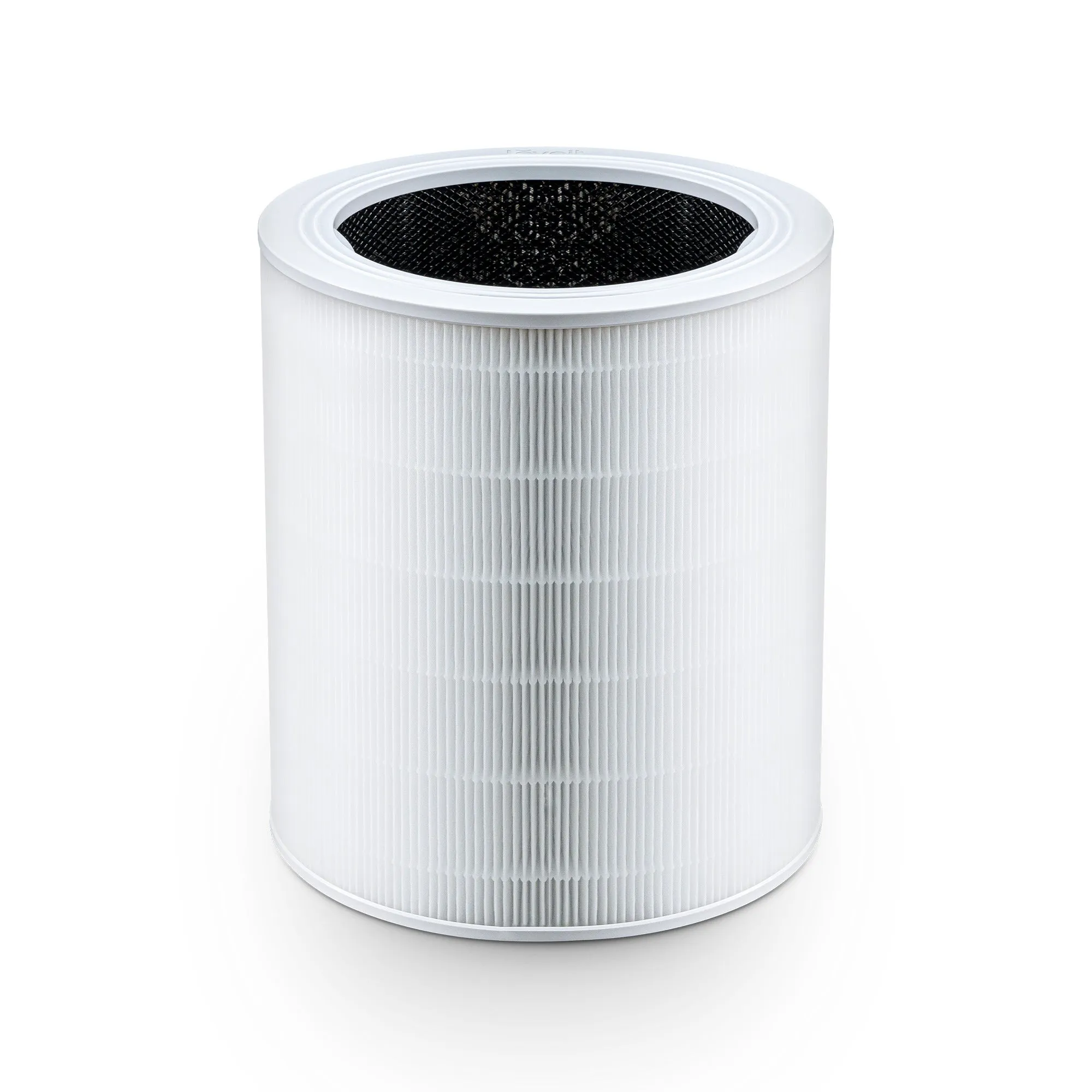
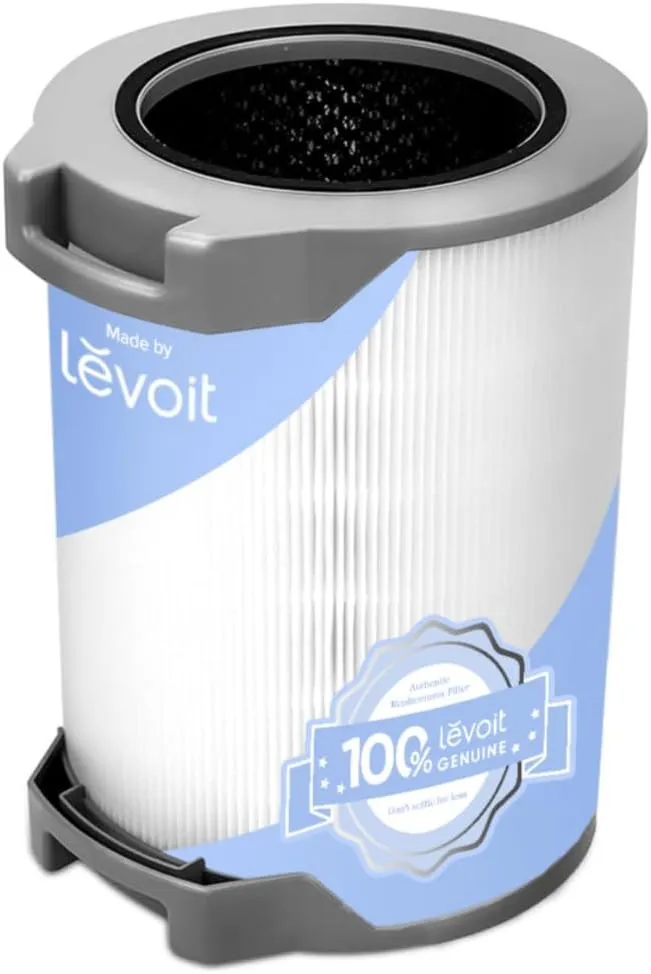
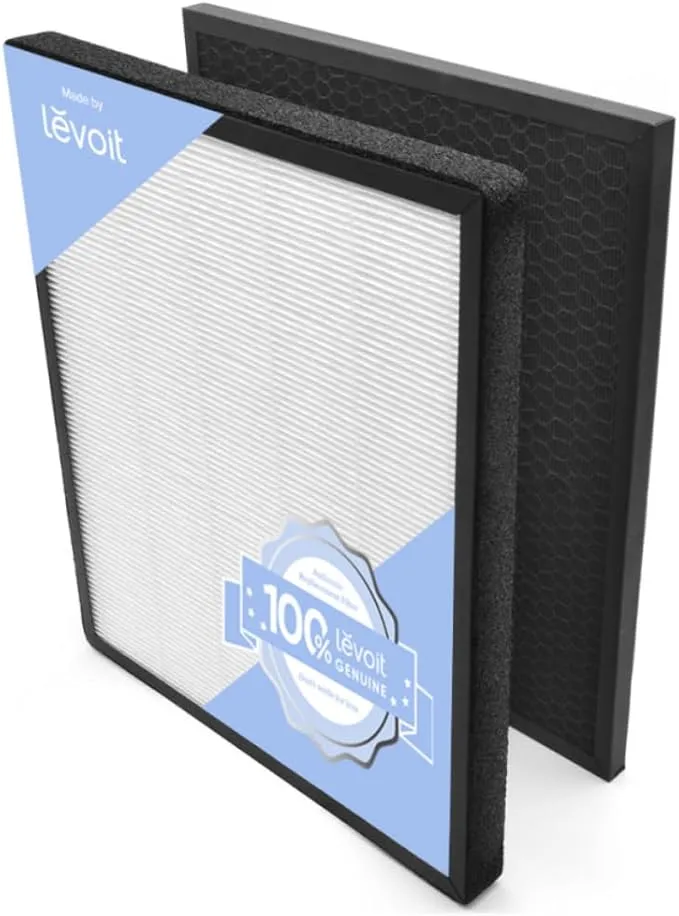
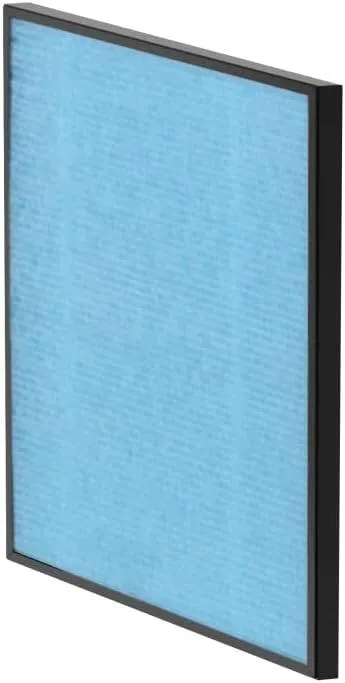
- HEPA filtration. The main filter captures fine dander, pollen, mold spores, and other particles down to 0.3 microns.
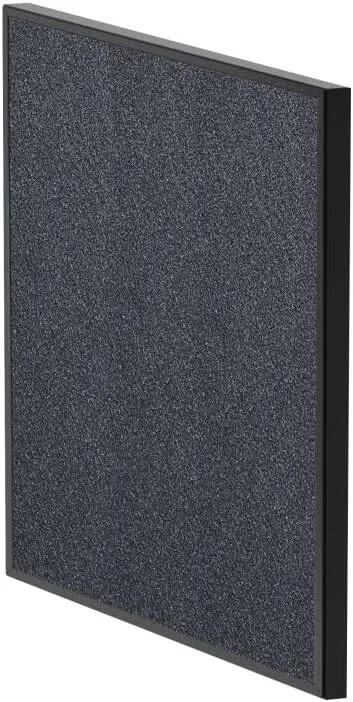
- Activated carbon stage. A carbon layer adsorbs odor molecules, including the volatile compounds responsible for the characteristic “pet smell” in many homes.
- Clean air output. Filtered air returns to the room, gradually replacing allergen-laden air with each cycle.
Real-world testing confirms the process works quickly. 94 to 96% PM2.5 and dander reductions have been recorded within one hour of operation, with 70 to 90% reductions achievable in as little as 30 to 60 minutes. Those are the numbers that matter when someone with a cat allergy is about to visit your home.
HEPA purifiers vs. ionizers and ozone generators: A direct comparison
| Feature | HEPA air purifier | Ionizer | Ozone generator |
|---|---|---|---|
| Removes dander physically | Yes | Partially (deposits on surfaces) | No |
| Safe for pets | Yes | Questionable | No |
| Removes odors | Yes (with carbon) | No | Yes (but harmful) |
| Produces byproducts | None | Trace ozone | High ozone levels |
| Maintenance required | Filter replacement | Minimal | Minimal |
| Recommended for pet homes | Yes | No | No |
Ionizers work by charging particles so they cling to surfaces rather than floating in the air. That sounds useful, but those particles are still in your home and re-enter the air easily. Ozone generators are actively dangerous for pets, particularly birds, whose respiratory systems are extremely sensitive to ozone. HEPA purifiers remain the clear choice for pet households.
Choosing and using the right air purifier: Keys to success in UAE homes
Buying the right unit matters as much as buying one at all. An undersized purifier in a large living room will run constantly but deliver minimal allergen reduction. Proper sizing and placement are what separate a unit that works from one that sits in the corner looking expensive.
Key metrics to check before buying:
- ACH (Air Changes per Hour). This tells you how many times the purifier processes the entire room’s air volume in one hour. For pet homes, 4 to 5 ACH with CADR 300+ CFM is the recommended minimum. Lower ACH means allergens accumulate between cycles.
- CADR (Clean Air Delivery Rate). Measured in cubic feet per minute (CFM), this tells you how much clean air the unit produces. A CADR of 300+ CFM is appropriate for rooms up to roughly 500 square feet.
- Filter type. Confirm the unit uses a true HEPA filter, not a “HEPA-type” or “HEPA-style” filter, which are marketing terms for filters that do not meet the 99.97% efficiency standard.
- Carbon filter. Essential for pet odor control. Without it, you may reduce allergens but still notice the smell.
Placement rules that most people get wrong:
- Avoid corners. Air purifiers placed in corners pull from a limited area and miss most of the room’s air volume.
- Center placement or near the pet’s main resting area works best. If your cat sleeps on the sofa, the purifier should be in the same room, not the hallway.
- Bedrooms are the highest priority. You spend 7 to 8 hours breathing bedroom air every night. Allergen reduction in that space has the biggest impact on how you feel.
- Elevate the unit slightly. Placing the purifier on a low table rather than directly on the floor improves air intake, since dander tends to settle but also gets kicked back up near floor level.
Pro Tip: In UAE apartments with open-plan layouts, a single large-capacity unit placed centrally often outperforms two smaller units placed in separate corners. Check the CADR against your actual floor area before buying.
Avoid these common mistakes:
- Running the purifier only on low speed. Low speed is quiet but may not achieve the ACH needed for meaningful allergen reduction. Use medium or high when pets are active.
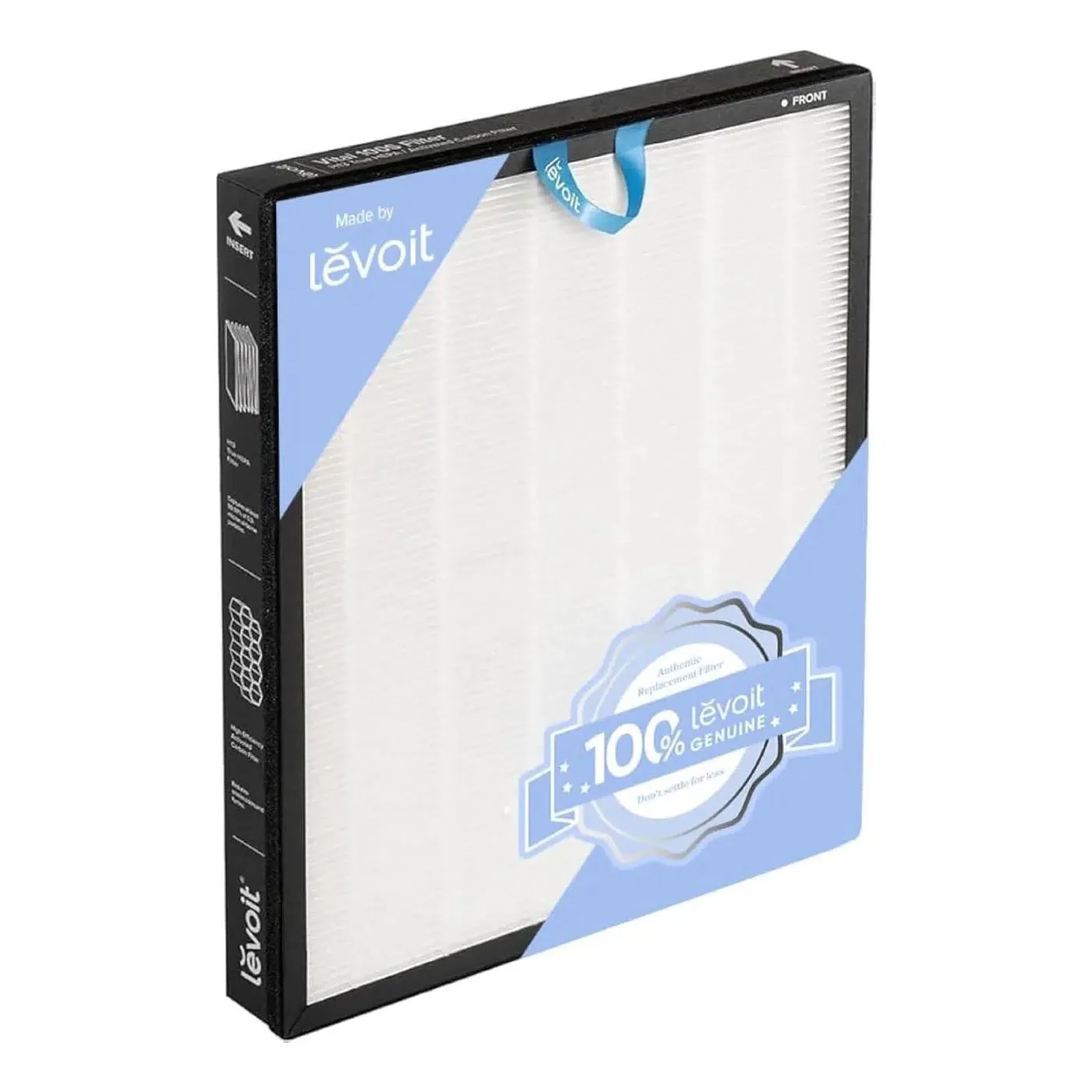
- Skipping filter replacements. A clogged HEPA filter loses efficiency quickly. In pet homes, filters may need replacement every 6 months rather than the standard 12.
- Assuming one unit covers the whole apartment. Purifiers work best in the room where they are placed. Multi-room homes typically need multiple units or a unit for each high-use space.
What to expect: Real-world results and limitations
Air purifiers work, but they are not magic. Setting realistic expectations helps you use them correctly and notice when something is off.
Timeline for allergen reduction:
- 0 to 30 minutes. The purifier begins cycling air. Coarse particles like visible hair are captured almost immediately.
- 30 to 60 minutes. Fine dander and allergen levels drop significantly. Most studies report 70 to 90% reductions in this window.
- 1 hour. Near-maximum reduction is typically reached. Real-world data shows 94 to 96% PM2.5 reductions at the one-hour mark in well-sized rooms.
- Ongoing. Continuous operation maintains low allergen levels. Turning the unit off allows levels to rebuild within 30 to 60 minutes of pet activity.
The purifier is not a one-time fix. It is an ongoing system. Treat it like your air conditioning: always on, always working.
Where results fall short:
Not every situation delivers the headline numbers. In high-activity or crowded rooms, PM2.5 reductions can drop to 18 to 67% even at 5.6 air changes per hour. This happens because people and pets constantly disturb settled particles, reintroducing them into the air faster than the purifier can capture them. A party with 20 guests and two dogs is a harder environment than a quiet bedroom.
Factors that reduce effectiveness include:
- Wrong room size. A unit rated for 200 square feet in a 500 square foot room will underperform significantly.
- Open windows. UAE outdoor air carries dust, sand, and pollen. Open windows during shamal (sandstorm) conditions flood the room with particles the purifier cannot keep up with.
- Infrequent filter changes. A saturated filter restricts airflow and reduces CADR, sometimes dramatically.
- Pet activity levels. More active pets shed more dander more frequently. Households with multiple pets or very active breeds may need higher-capacity units.
How to monitor results:
Affordable air quality monitors that measure PM2.5 in real time are widely available. Placing one in your main living area gives you a direct readout of how well your purifier is performing. If PM2.5 levels stay elevated despite the purifier running, check filter condition, room sizing, and placement before assuming the unit is faulty.
Why focusing on air circulation is the real game changer for pet owners
Most pet owners approach allergen control as a cleaning problem. They vacuum more, groom more, and wash more. Those steps help at the margins. But the real variable that determines how much allergen you actually breathe is how quickly contaminated air gets replaced with filtered air.
A HEPA purifier in the wrong room, or one that is too small for the space, delivers almost no benefit regardless of how good the filter is. The filter quality matters far less than whether enough air is actually passing through it. This is the part that most product reviews and buying guides underemphasize.
Think about it practically. A cat spends most of its time in one or two rooms. The allergen concentration in those rooms will always be higher than in rooms the cat rarely enters. Placing your best purifier in the guest bedroom because it is quieter there does nothing for the air you breathe in the living room where the cat actually sleeps.
The other overlooked factor is timing. Many people run purifiers on a schedule, turning them off at night to reduce noise. Allergen levels rebuild within an hour of the unit switching off. If your purifier runs from 8am to 10pm and then stops, you spend the first few hours of sleep breathing air that has been rebuilding allergen levels since 10pm. Running a purifier on low overnight in the bedroom is almost always more effective than running it on high during the day in a room you are not sleeping in.
Technology is only as effective as the strategy behind it. The right unit, in the right room, running continuously, with filters changed on schedule, delivers the results the studies report. Any one of those variables missing and the numbers drop sharply.
Ready to breathe easier with the right air purifier?
After understanding how pet allergens behave and what it actually takes to reduce them, the next step is finding a unit that fits your home, your pets, and your budget.
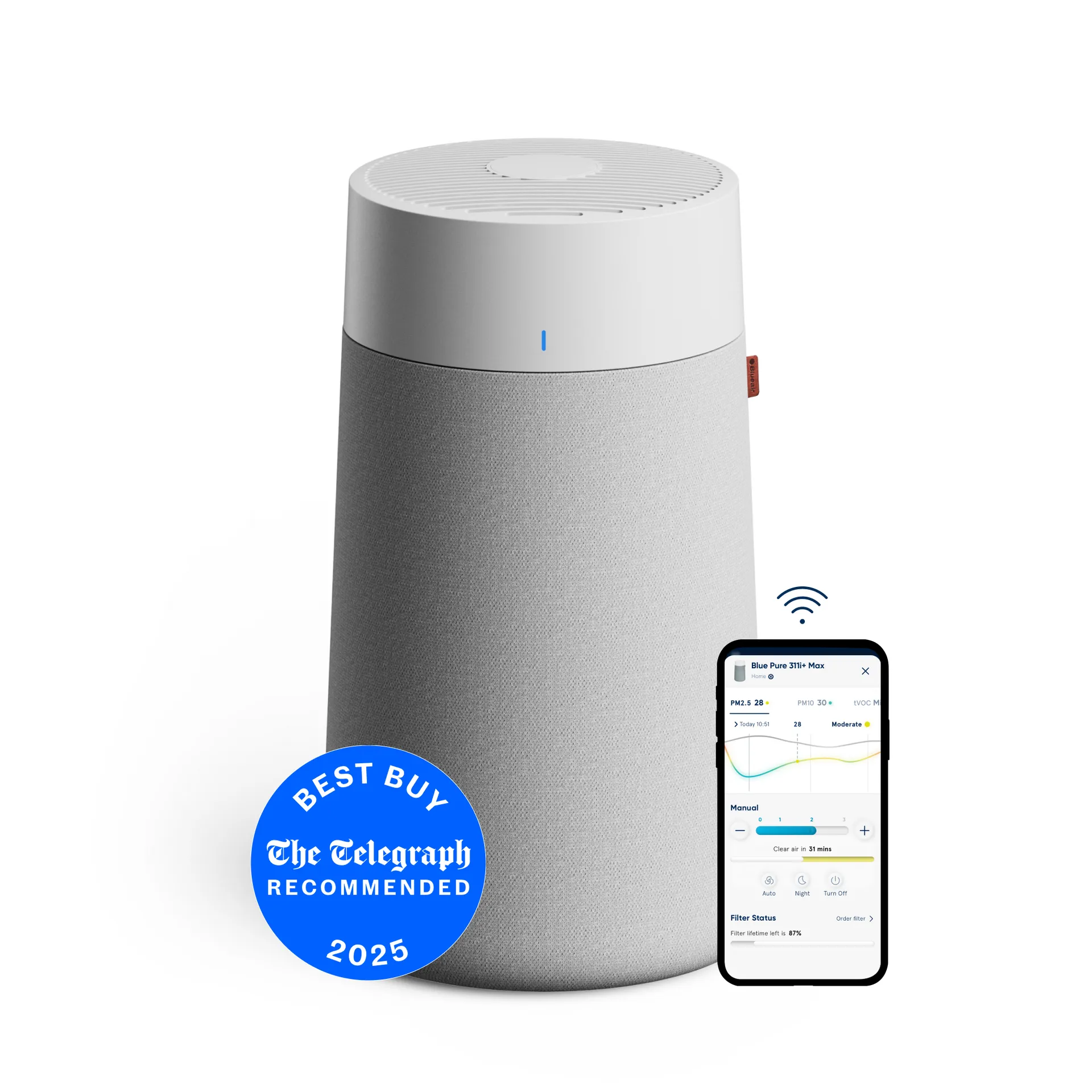
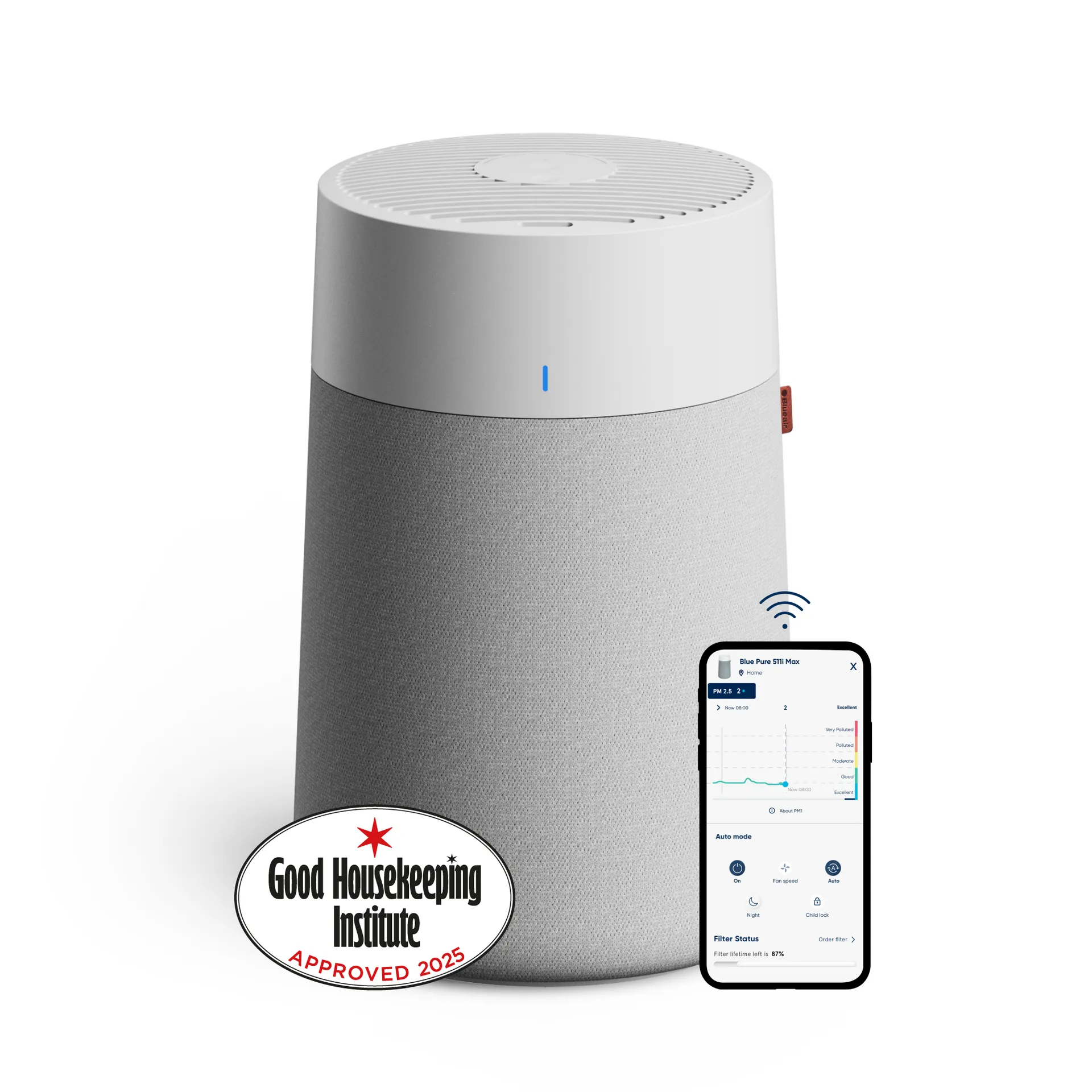
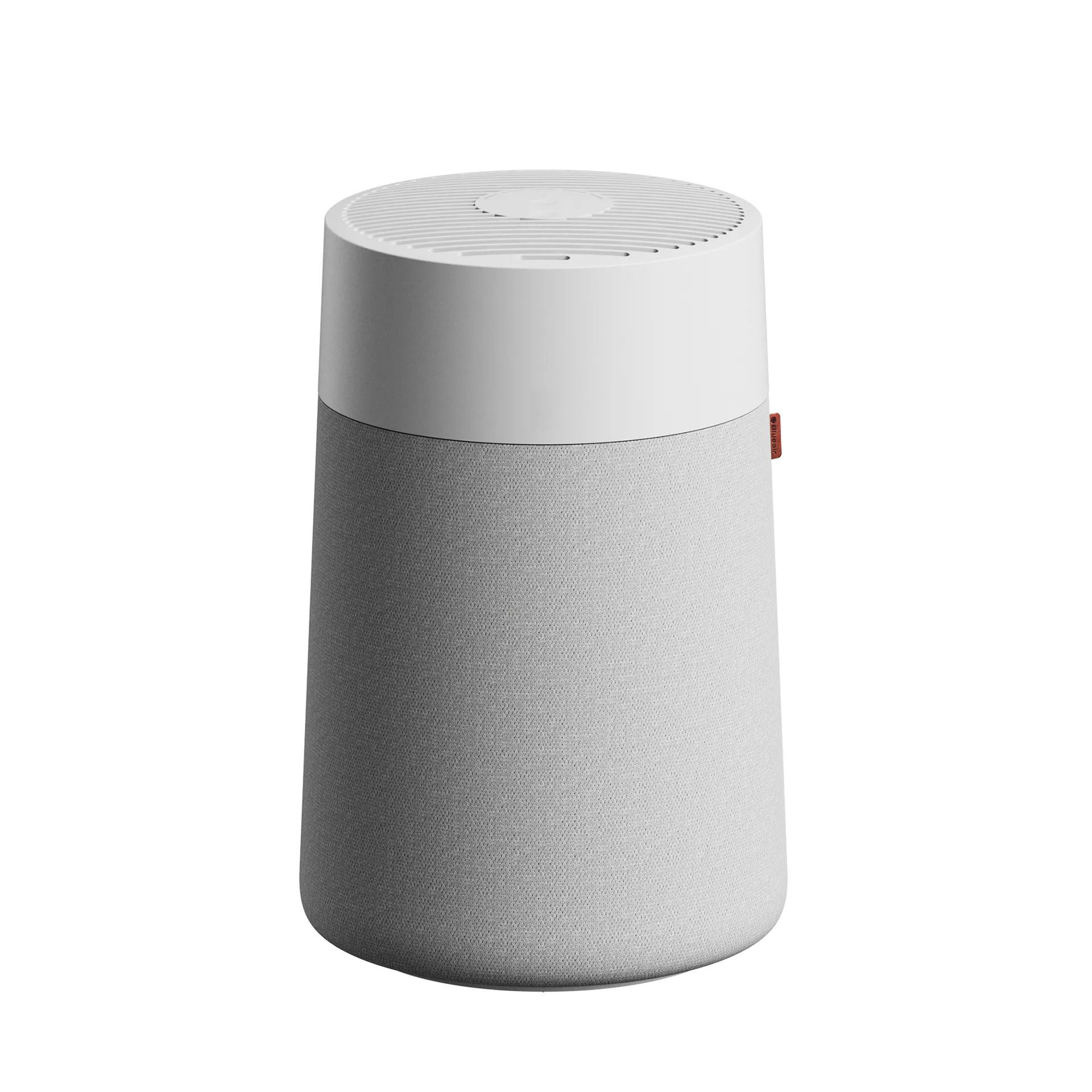
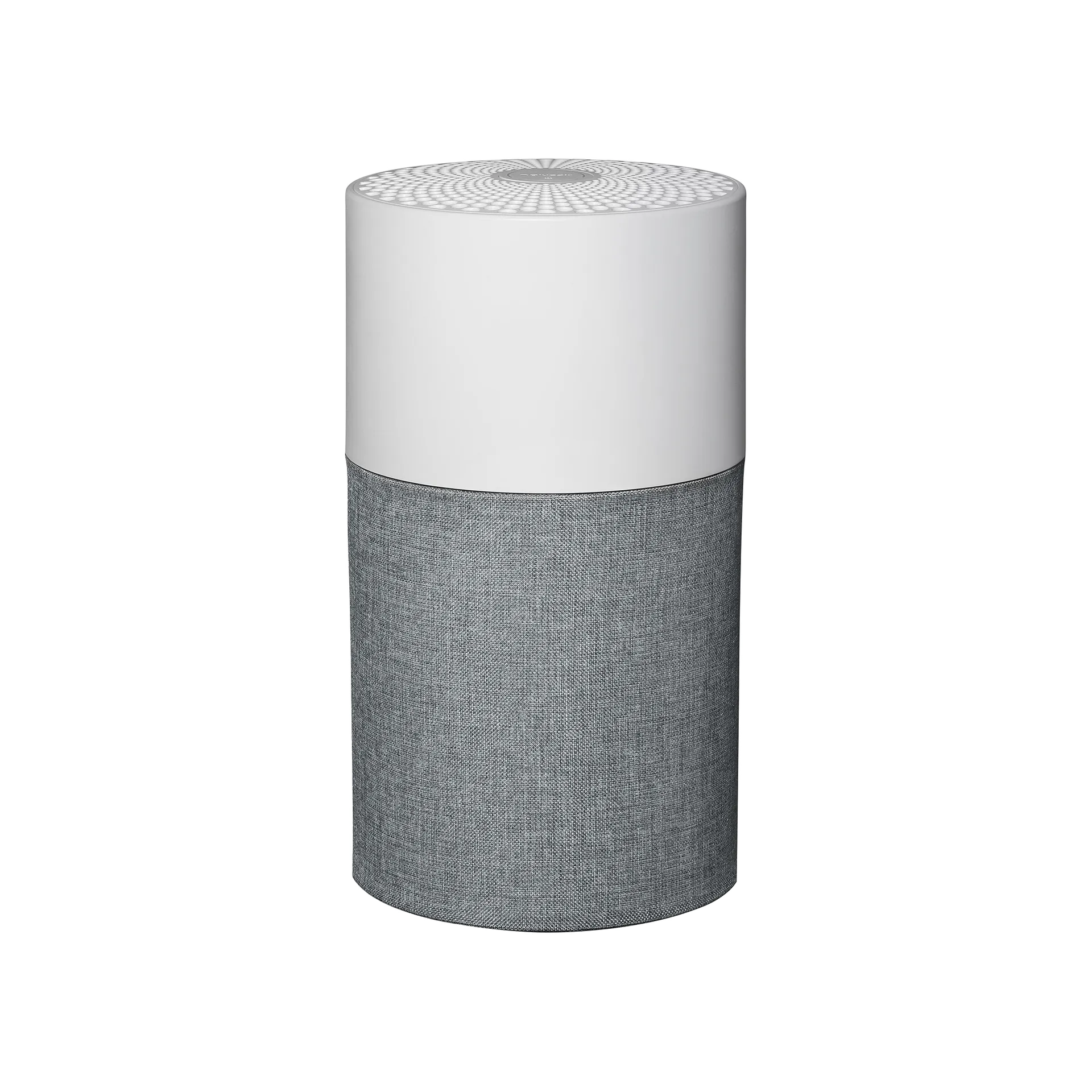
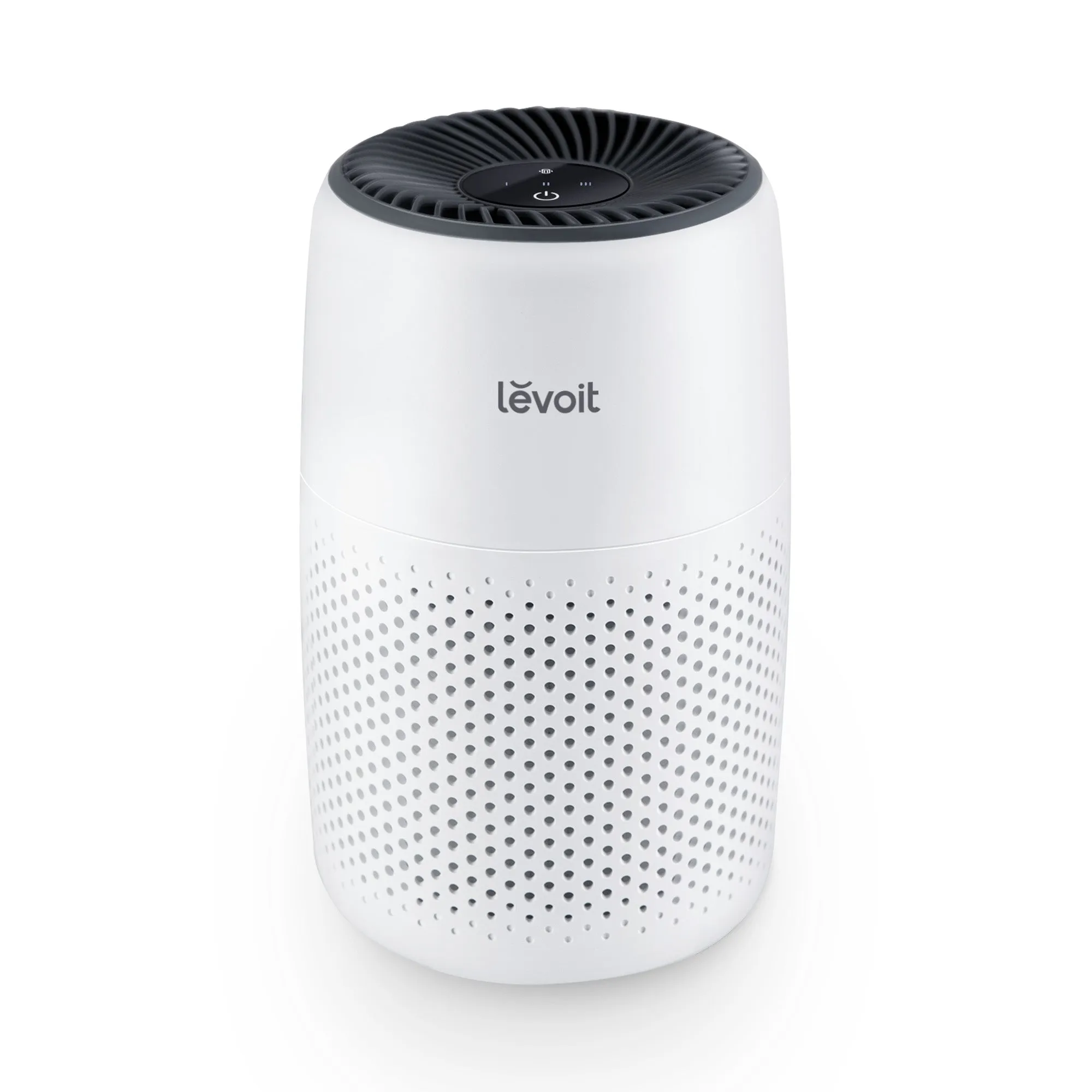
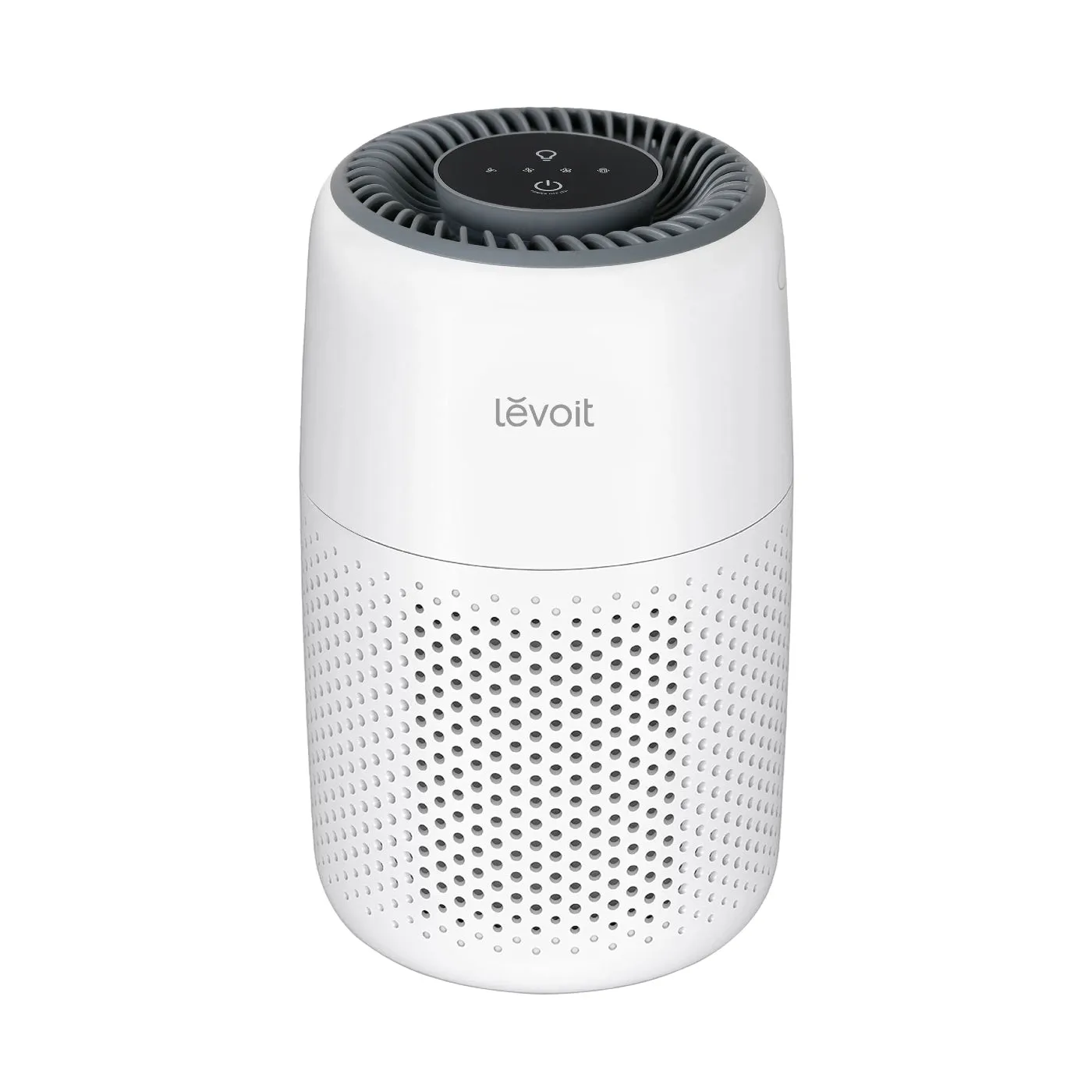
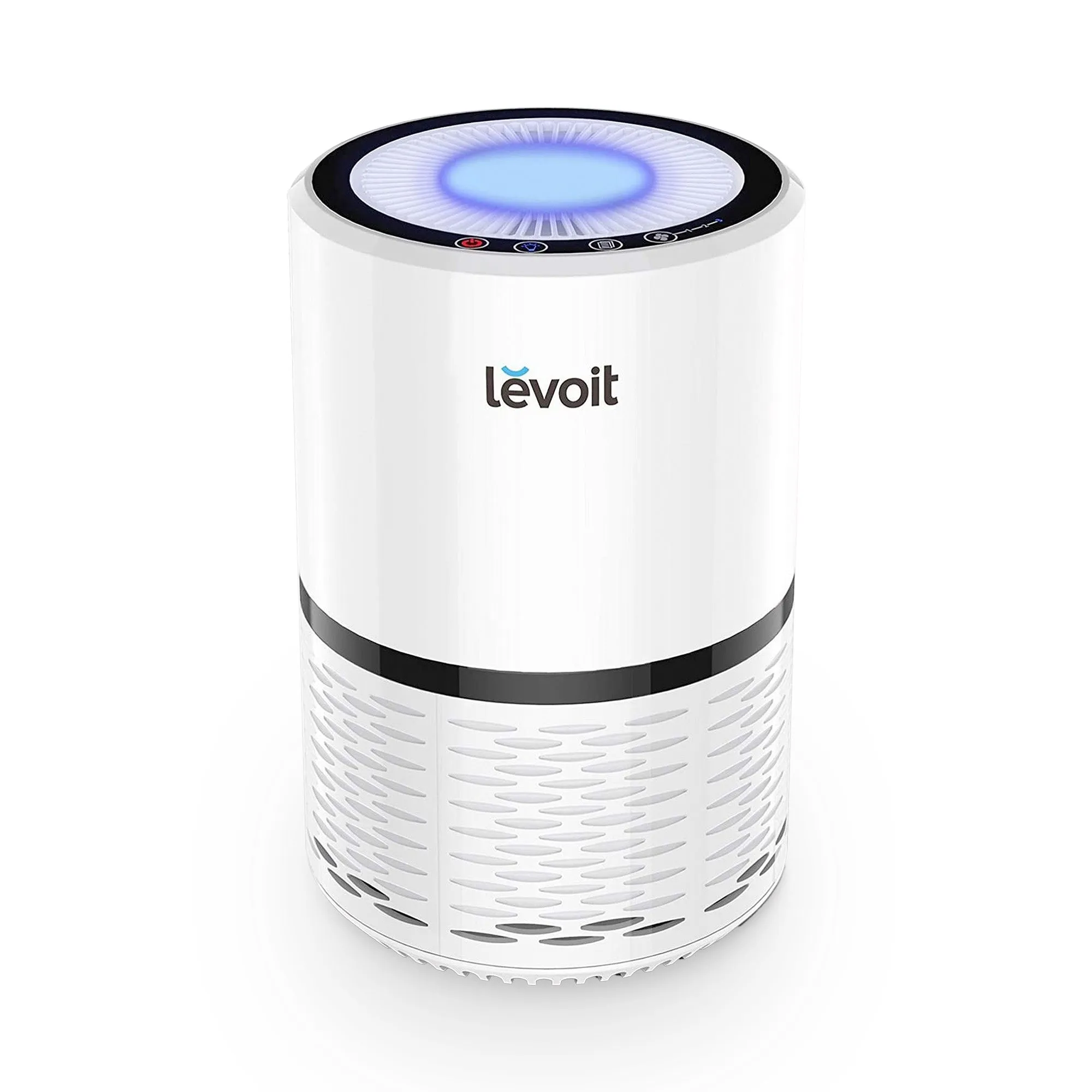
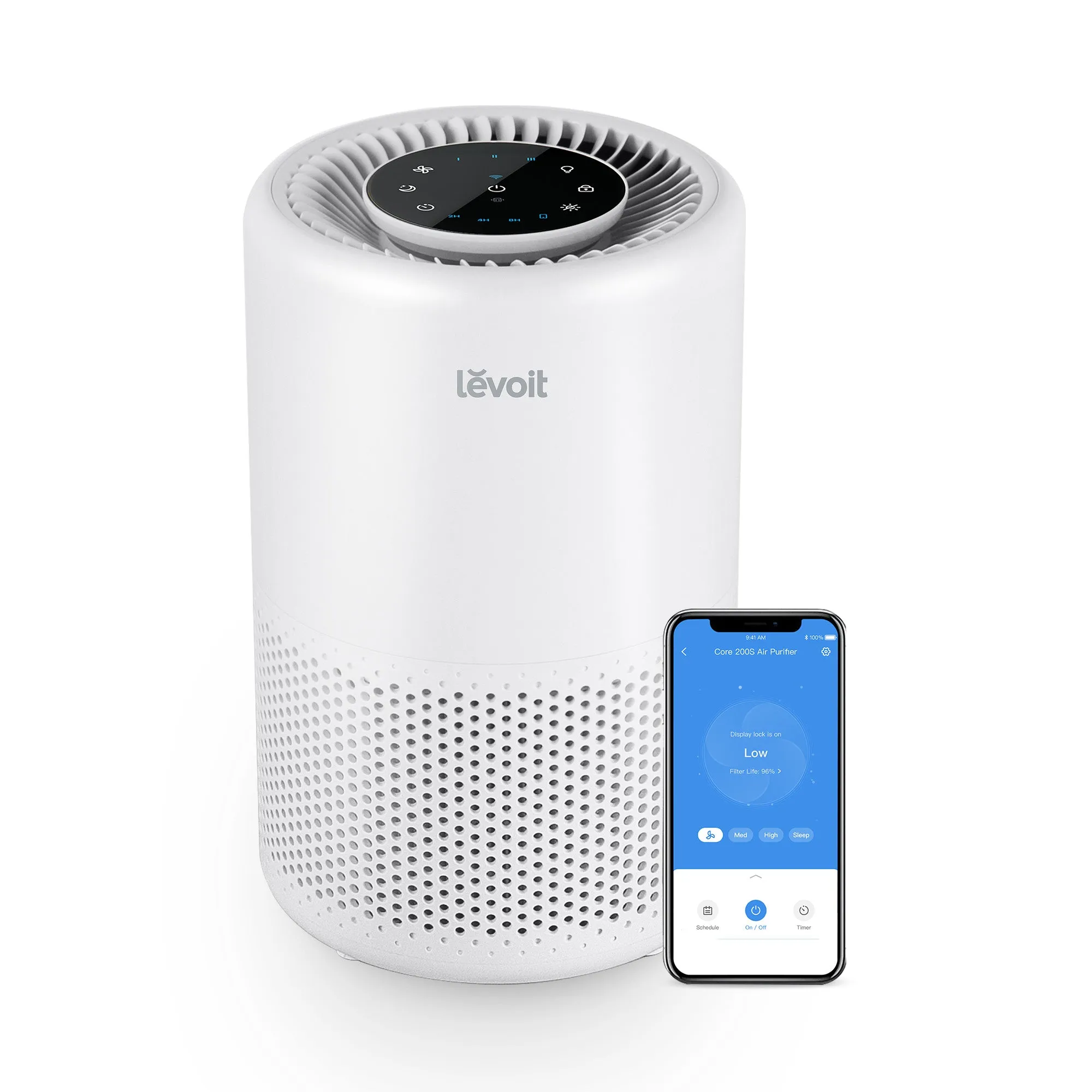
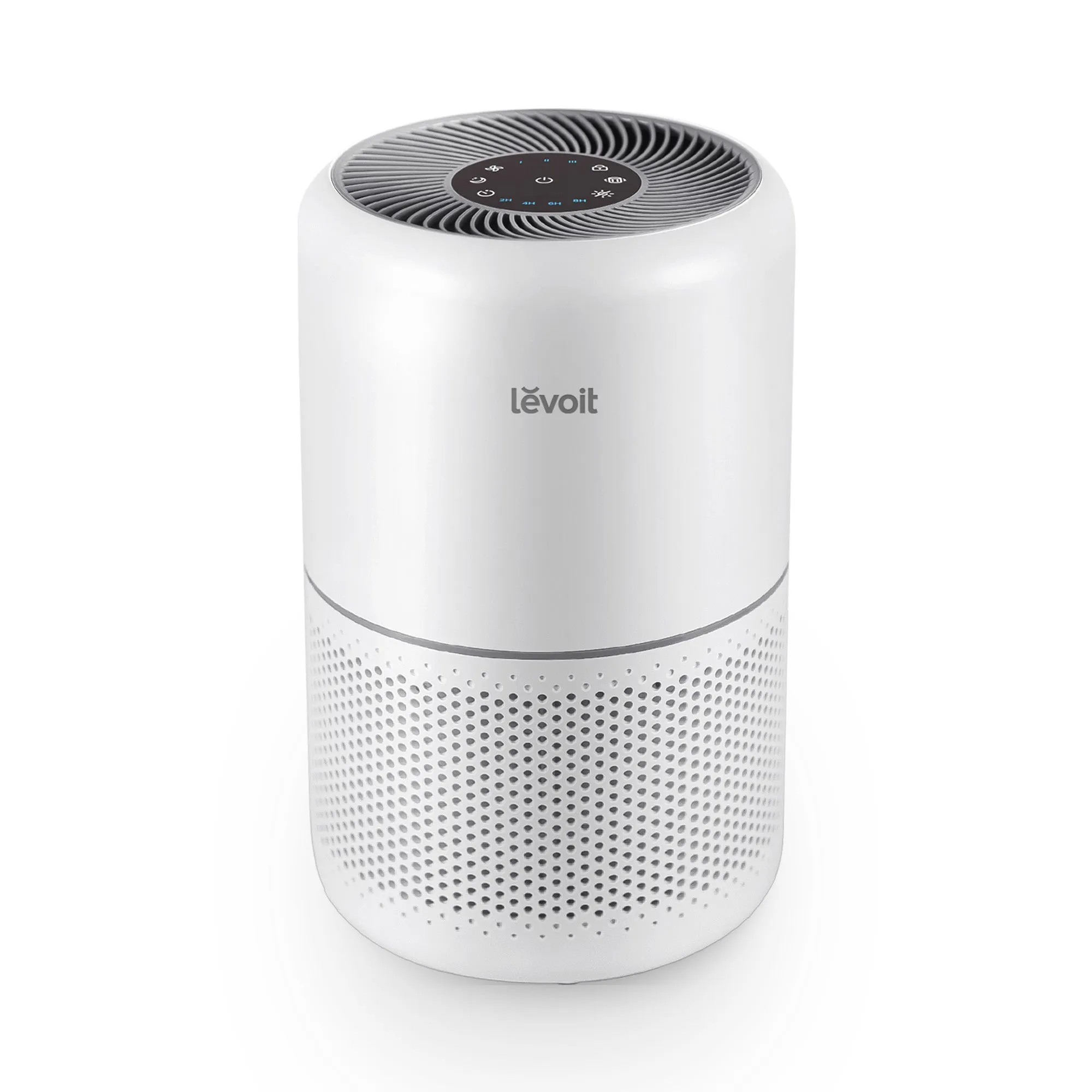
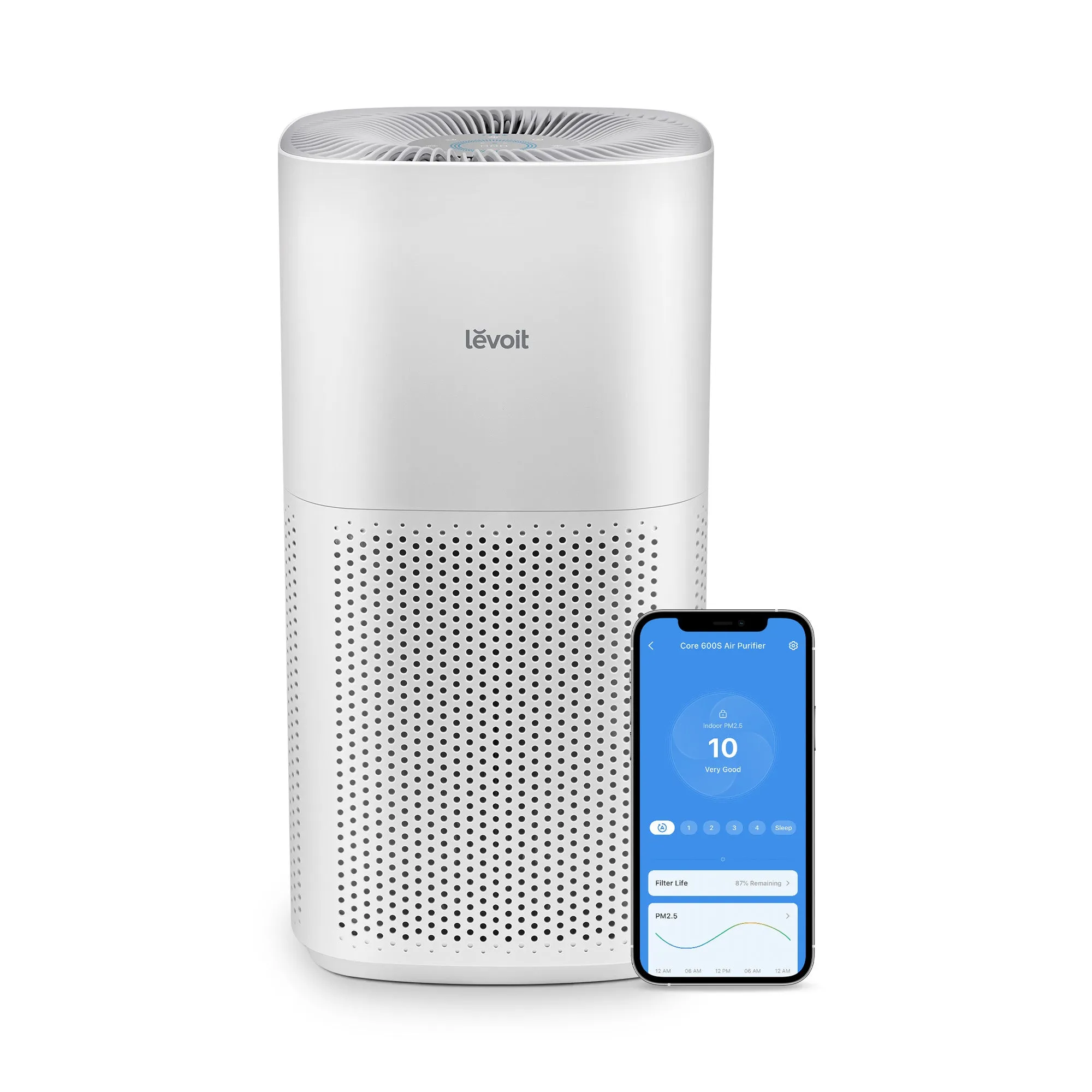
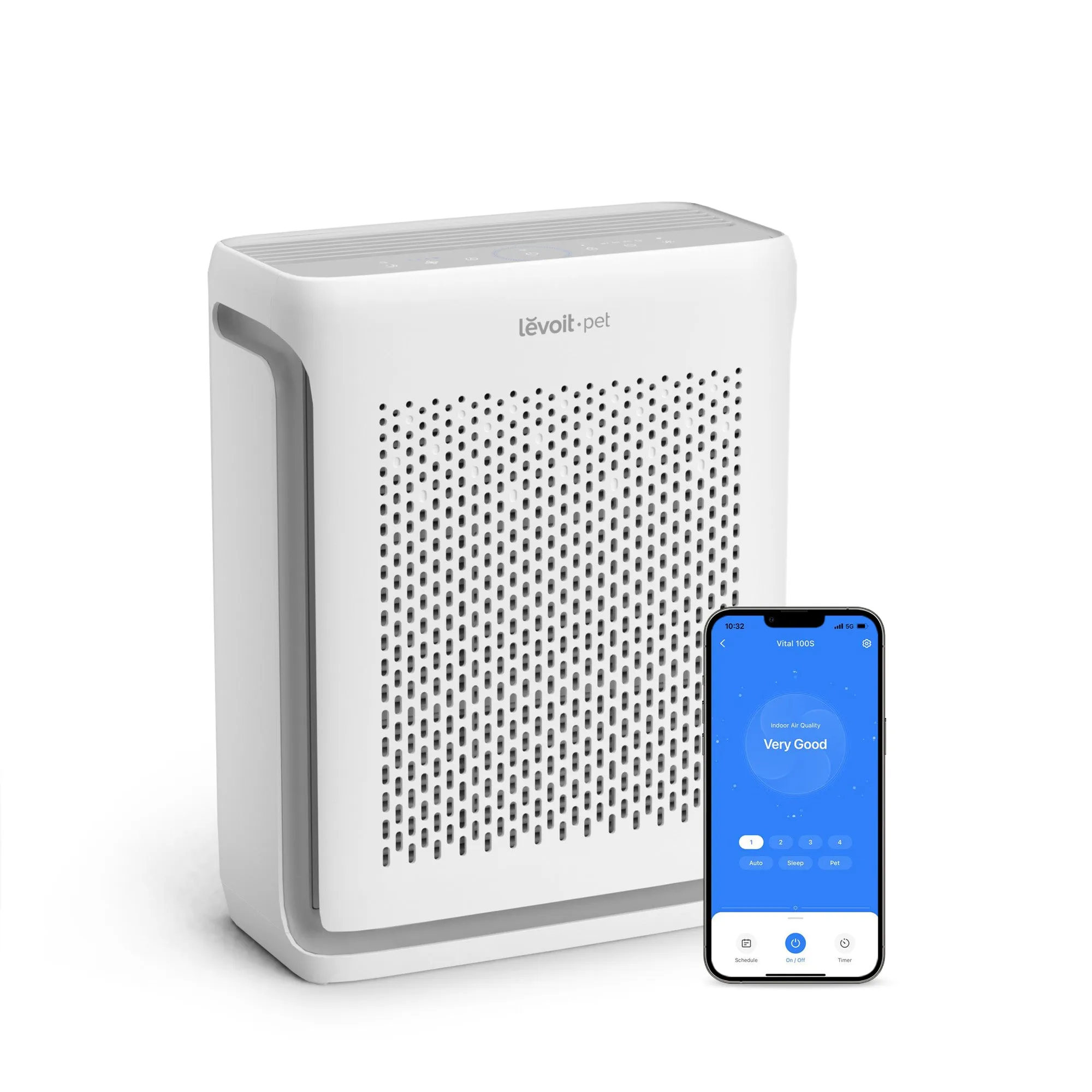
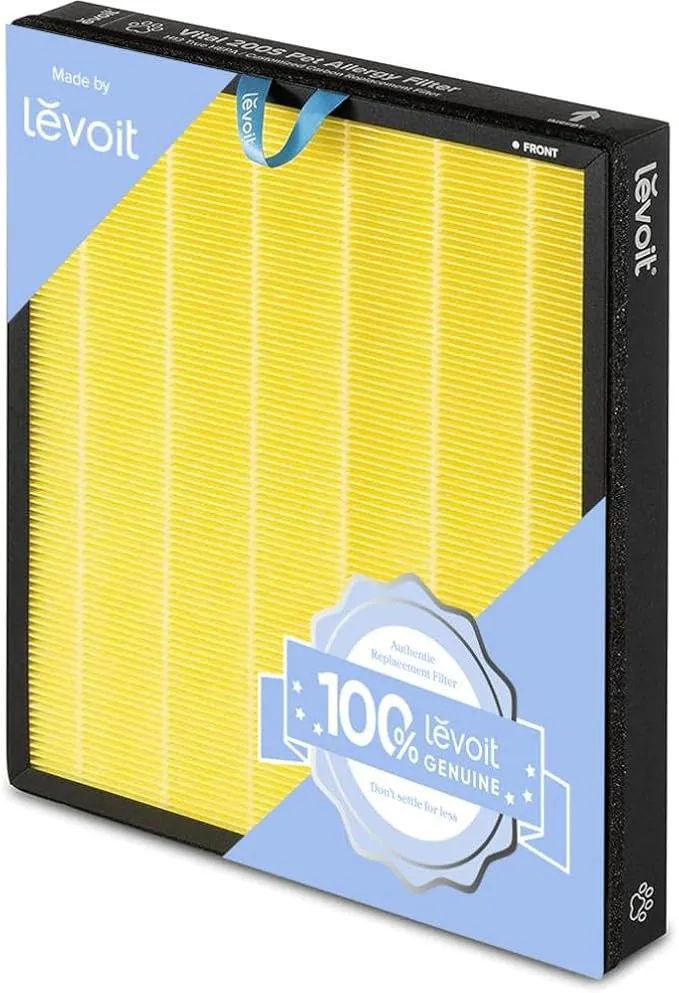
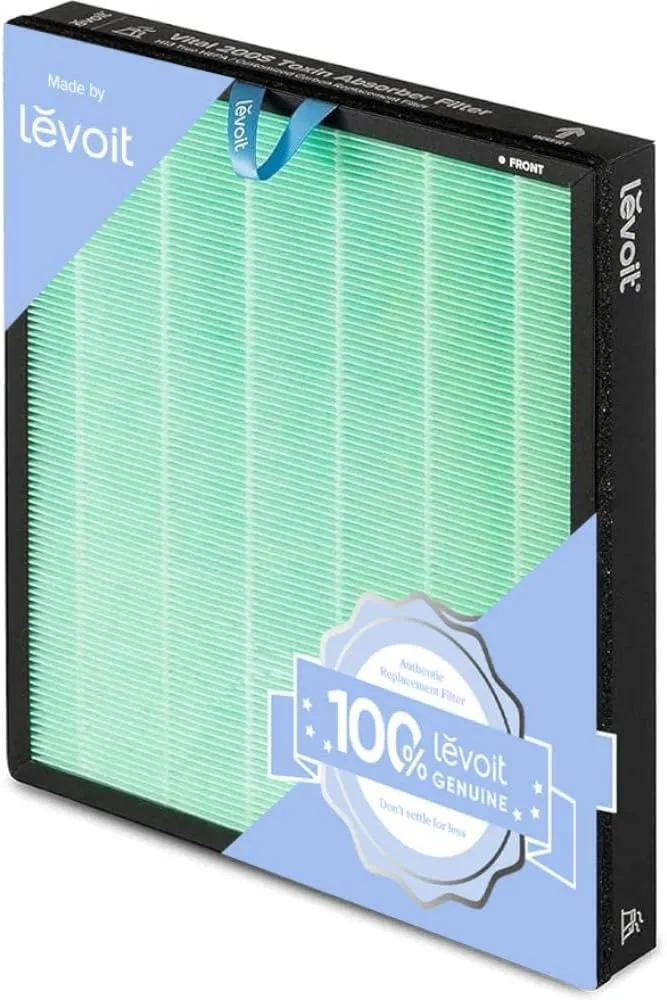
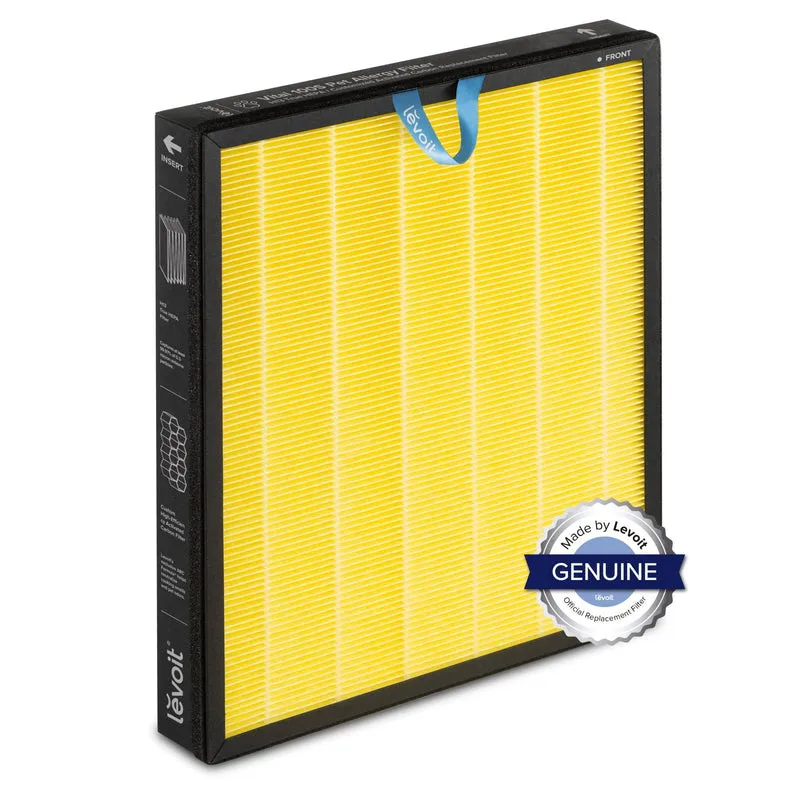
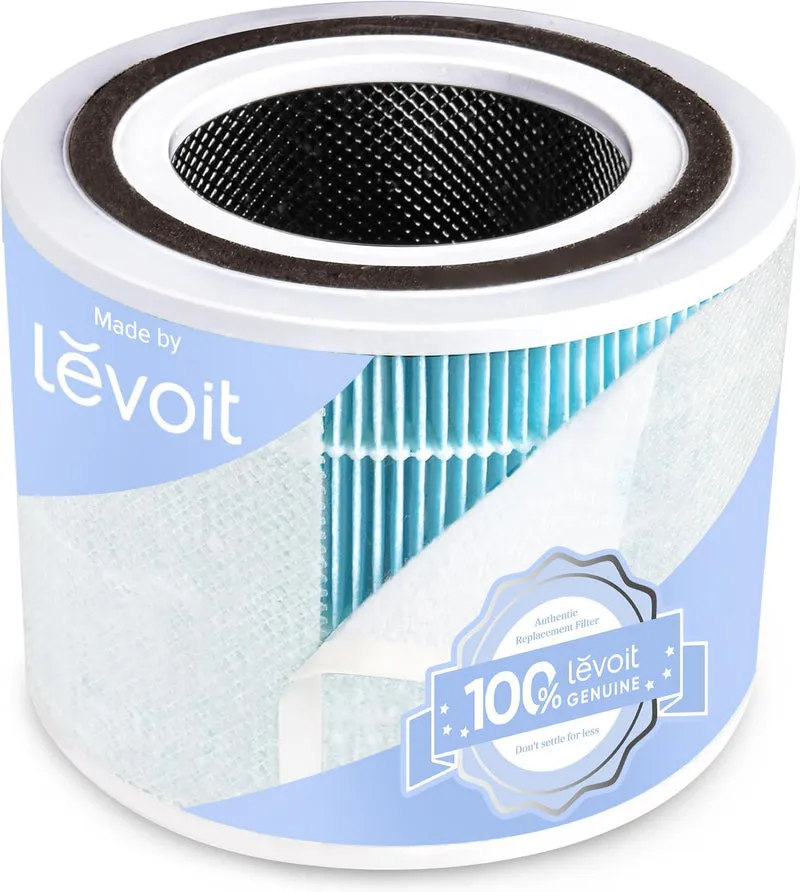
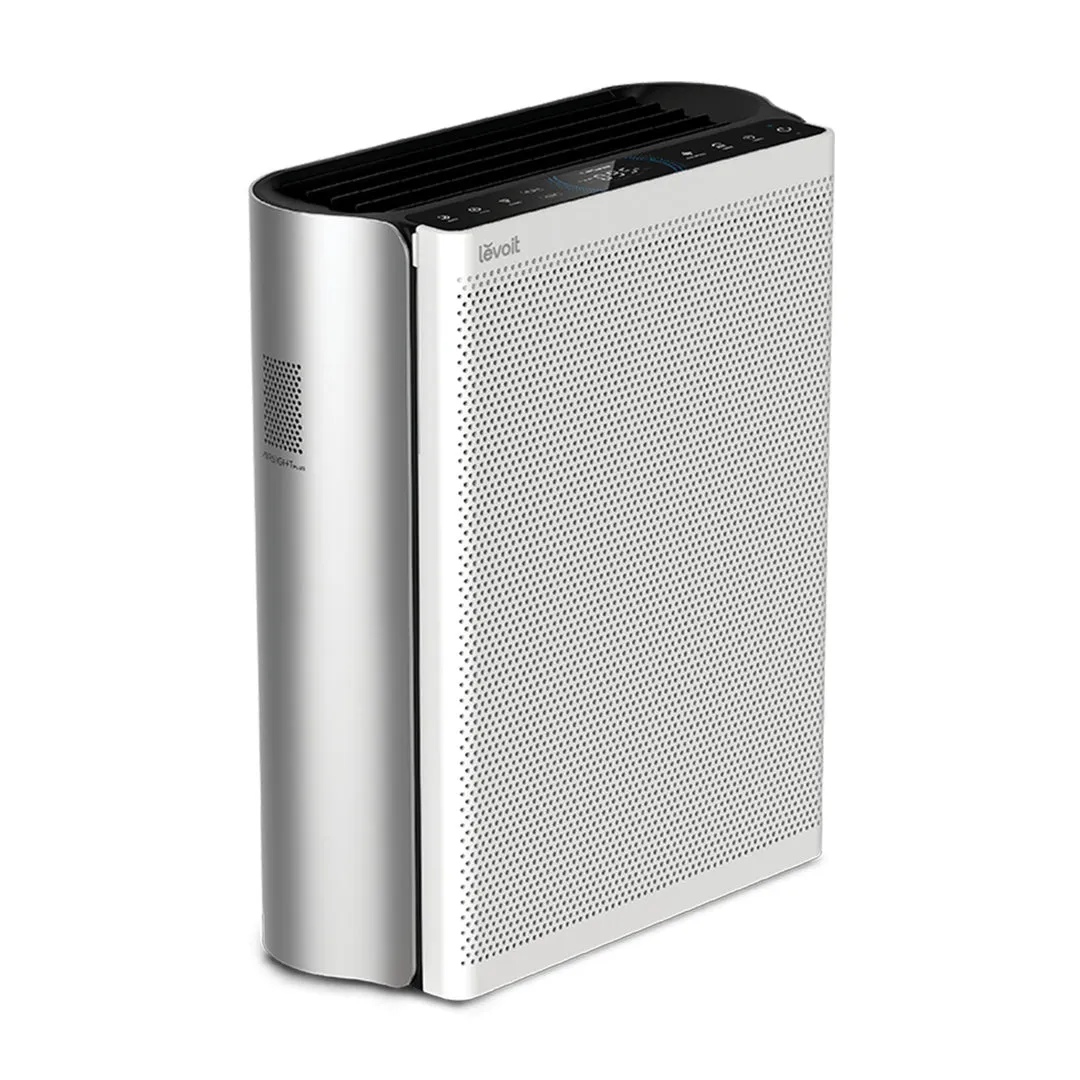
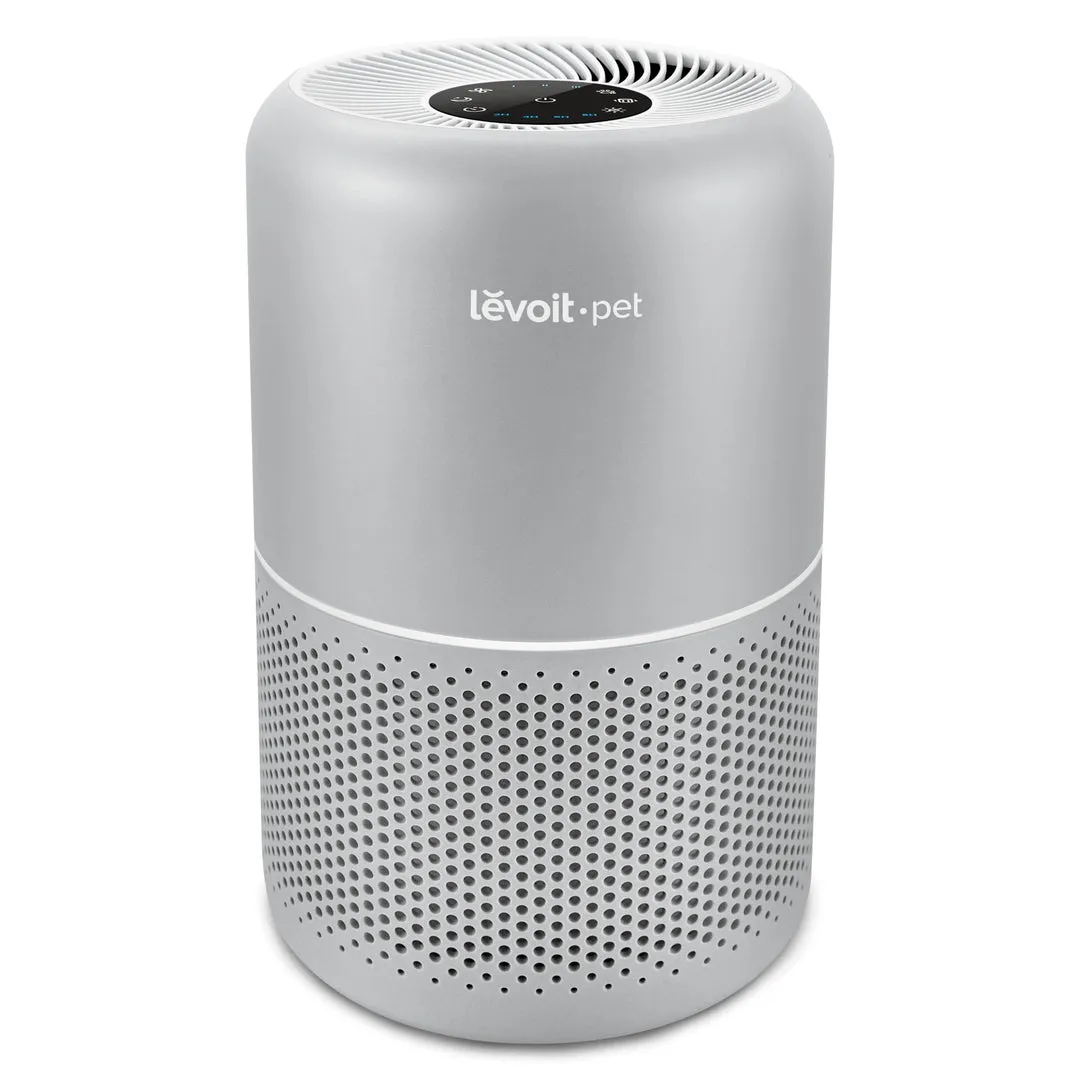
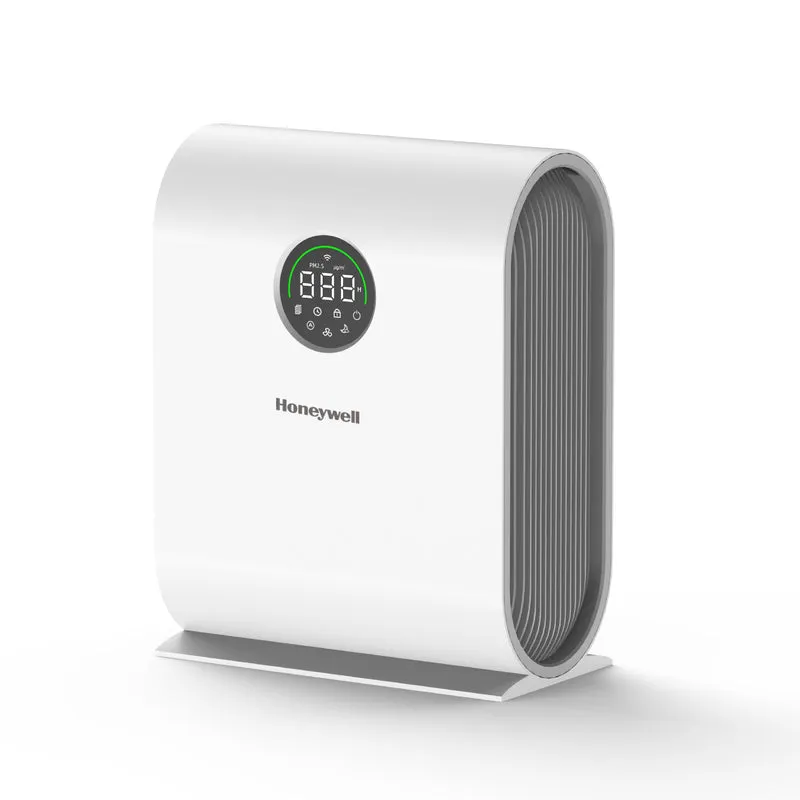
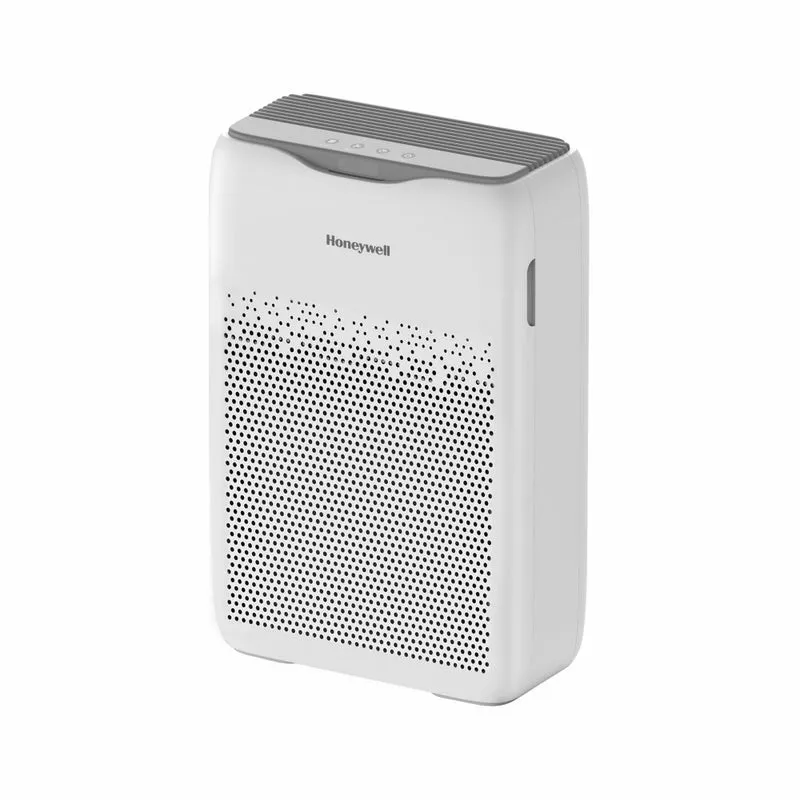
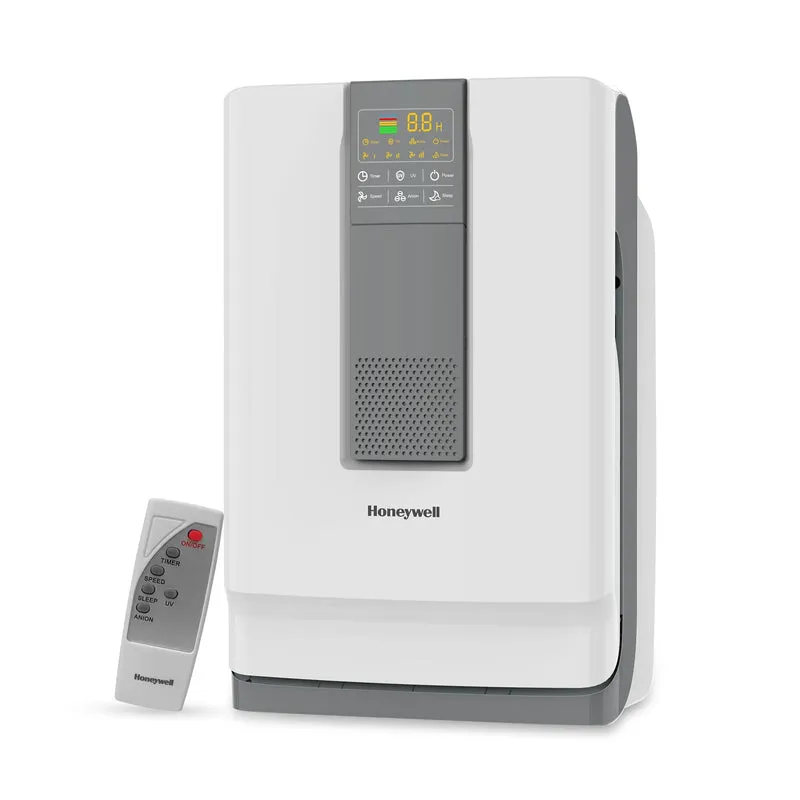
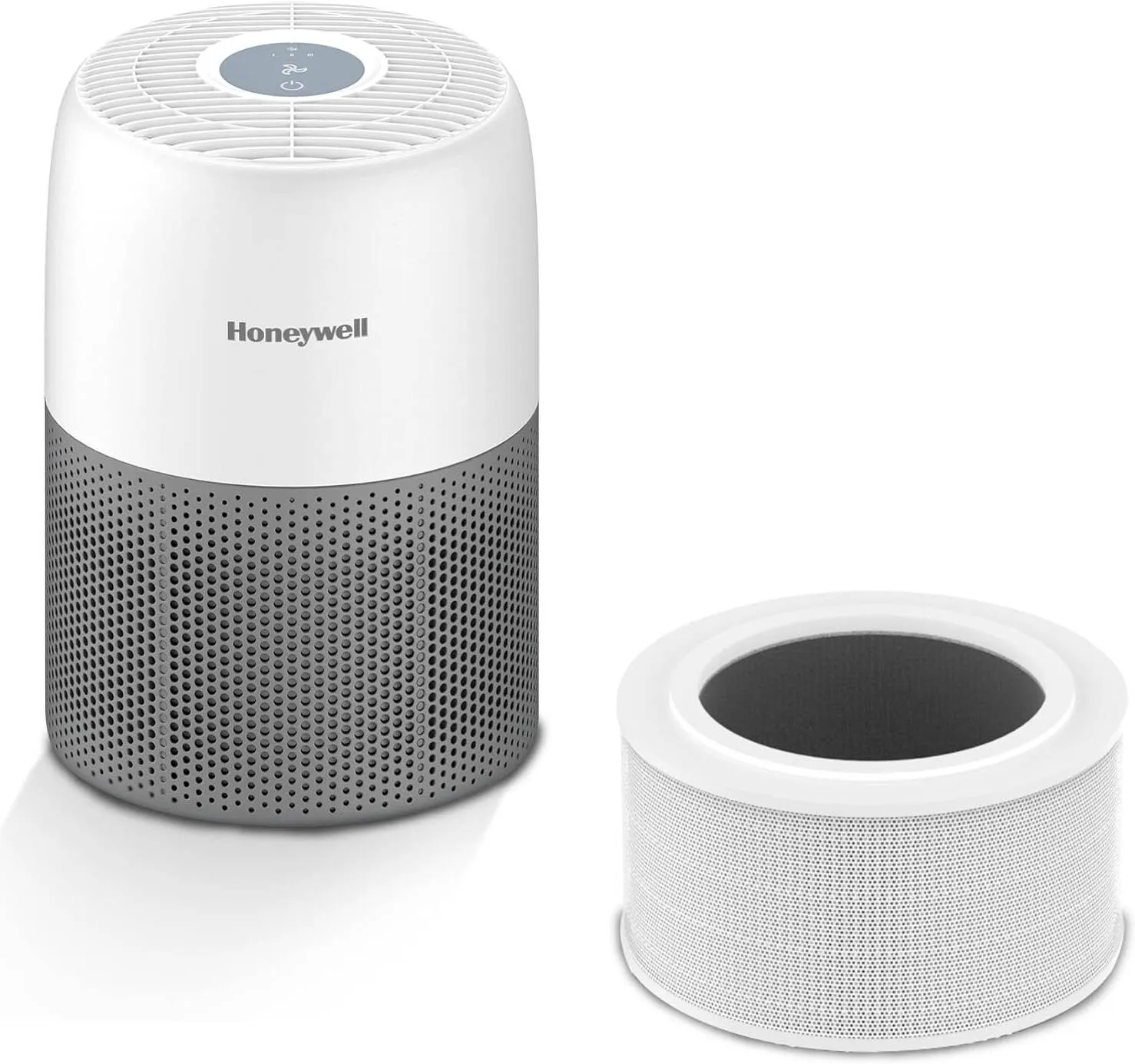
CleanAir UAE offers a curated selection of air purifiers from trusted brands including Blueair, Honeywell, and Levoit, with models suited for single rooms, open-plan apartments, and larger spaces across Dubai and Abu Dhabi. Replacement filters, fast UAE delivery, and product support are all available in one place. Whether you have one cat or three dogs, there is a correctly sized option ready to ship. Browse the full range, check CADR ratings against your room size, and make a selection based on the numbers rather than guesswork.
Frequently asked questions
How quickly do air purifiers reduce pet allergens?
Significant reductions are usually noticeable within 30 to 60 minutes, with up to 96% reduction in PM2.5 and dander recorded at the one-hour mark in real-world testing.
Are all air purifiers safe for pets?
No. Ionizers and ozone generators can harm pets, particularly birds and small animals. Ionizers and ozone generators are considered unsafe for pet households. True HEPA purifiers with carbon filters are the recommended choice.
How do I choose the right-size air purifier for my room?
Select a unit with 4 to 5 ACH and CADR 300+ CFM for rooms used by pets. Match the unit’s rated coverage area to your actual room size, and size up if you have multiple pets.
Where should I put my air purifier for maximum effect?
Place the unit away from corners, in the room where pets spend the most time, with bedroom placement as the top priority for allergy sufferers who need clean air during sleep.